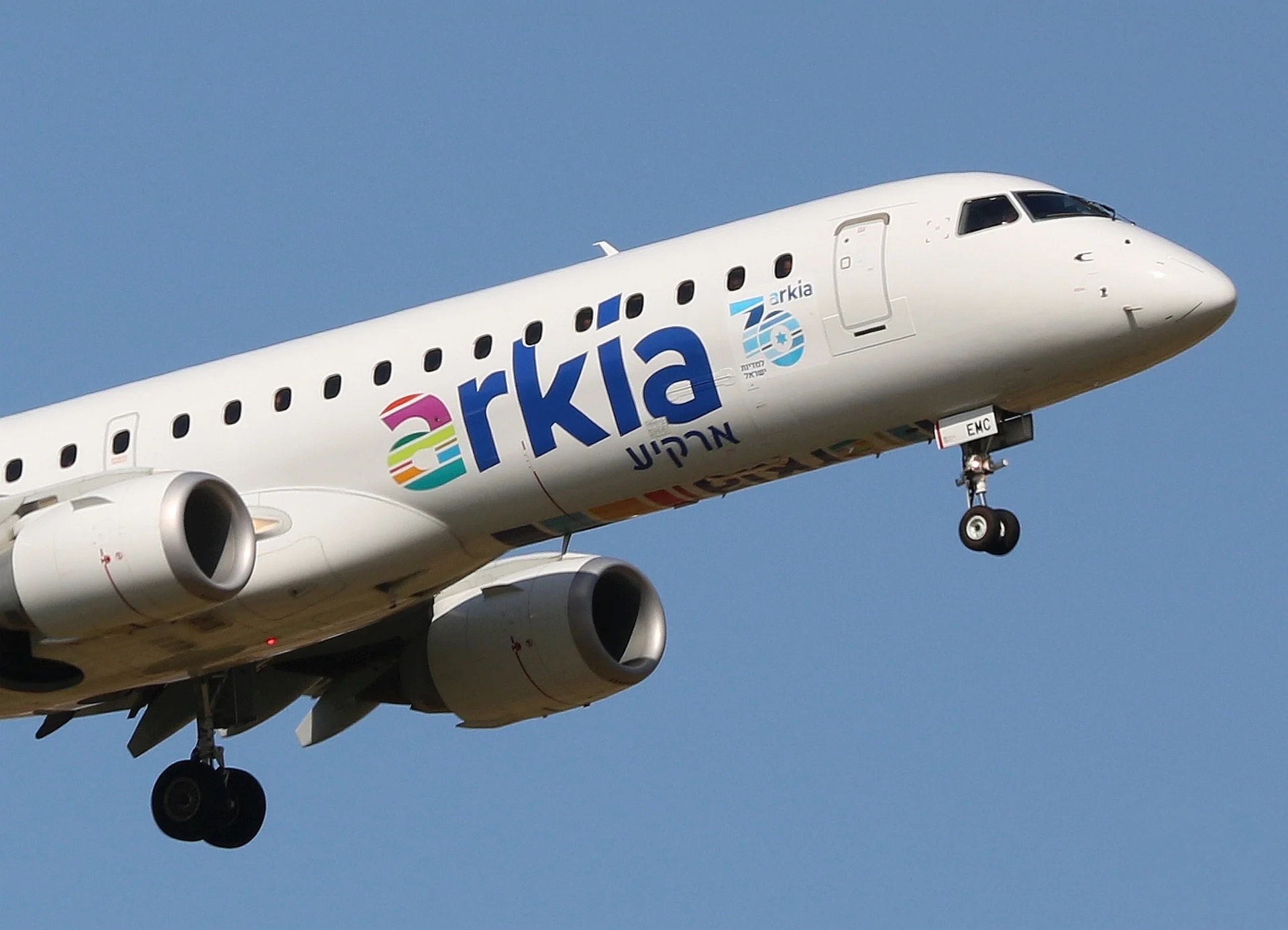
Marrakech – Israeli carrier Arkia announced on Wednesday that it will restart direct service to Marrakech on August 24, marking the first such flights since 2023. The route had been suspended following the onset of Israel’s offensive in Gaza, which the International Court of Justice (ICJ) found plausible grounds to characterize as genocide.
Flights will operate twice weekly, on Mondays and Wednesdays, using Airbus A320 aircraft. One-way fares will start at $329. Arkia noted that Israeli passport holders must obtain a visa before entering Morocco and urged travelers to prepare in advance.
The route, originally launched in summer 2021, once ran three times weekly through Arkia, Israir Airlines, and El Al. Israel’s national carrier has not yet announced plans to resume service to North Africa.
‘Fantastic news’
Arkia attributed the restart to a lengthy coordination process with aviation and security authorities. The announcement drew immediate reactions across the Israeli tourism sector.
“The resumption of direct flights to Marrakech is fantastic news for the Israeli public, and we are already seeing tremendous demand for the destination,” Yoni Waxman, deputy chairman of Israel’s Ophir Tours, told JNS.
Shirley Cohen Orkaby, vice president for marketing at Eshet Tours, described Marrakech as one of the most sought-after destinations for Israeli tourists and called the route’s return a sign of renewed airline confidence in Israeli market demand.
Yet the revival carries uncertainty. Mark Feldman, CEO of Jerusalem-based Ziontours, offered a measured assessment. “The fact that Arkia has announced the resumption of flights to Morocco with the Israeli security apparatus supporting the decision is quite promising,” he told JNS. “Sadly, if the Iran war heats up, Arkia may postpone that resumption as Israelis are concerned that attacks on Israel will resume.”
In the streets of Morocco, however, a very different current has run since October 2023. Thousands of pro-Palestinian demonstrations have swept across the kingdom’s cities, with protesters demanding the reversal of the 2020 normalization agreement with Israel under the Abraham Accords.
Many of such marches and sit-ins were organized by the Moroccan Front for the Support of Palestine and Against Normalization, and their total number reached approximately 10,000 nationwide.
Moroccans ‘remember the Israeli tourists fondly’
But the protests have never targeted Jewish visitors as such, and there remains a clear distinction between political opposition to normalization and the deep-rooted ties between Moroccans and Jews.
An estimated one million Israeli citizens trace their ancestry to Morocco, and even during the three-year suspension of direct flights, many continued arriving via connecting routes.
They came for heritage tours, visits to historic mellahs and synagogues, and above all for the hillulot – the annual pilgrimages to the tombs of revered Jewish saints scattered across cities like Meknes, Fez, Ouazzane, and Marrakech. These traditions, rooted in centuries of shared Judeo-Muslim spiritual practice, have persisted uninterrupted.
In Marrakech, local tourism operators expressed enthusiasm. Ronen Elmalich, an Israeli residing in the city, told Mako that Moroccan business owners, drivers, and guides “remember the Israeli tourists fondly and are waiting to see them return in large numbers.”
Mohammed Manadel, a veteran tour guide in Marrakech, told the same Hebrew publication that he views tourism as the best path to building bridges between peoples. “Israeli visitors continued coming even without direct flights,” he noted. “That alone proves the desire to visit never stopped.”
Tamar Garzon, CEO of Israel’s Gulliver Tours, described the route’s return as a step toward expanding travel options for Israeli tourists, particularly ahead of the autumn and holiday season.
Approximately 200,000 Israelis traveled to Morocco in 2022, many on roots trips retracing their family histories.