


 Join on WhatsApp
 Join on Telegram
Rabat – FIFA has defended the referee’s decision to allow Jude Bellingham’s equalizing goal in England’s 2-1 World Cup semifinal qualification at the expense of Norway after the Scandinavian side claimed the ball struck an overhead spidercam wire in the buildup.
FIFA said data from the connected match ball found “no evidence” of any contact, despite protests from Norway’s players and coaching staff.
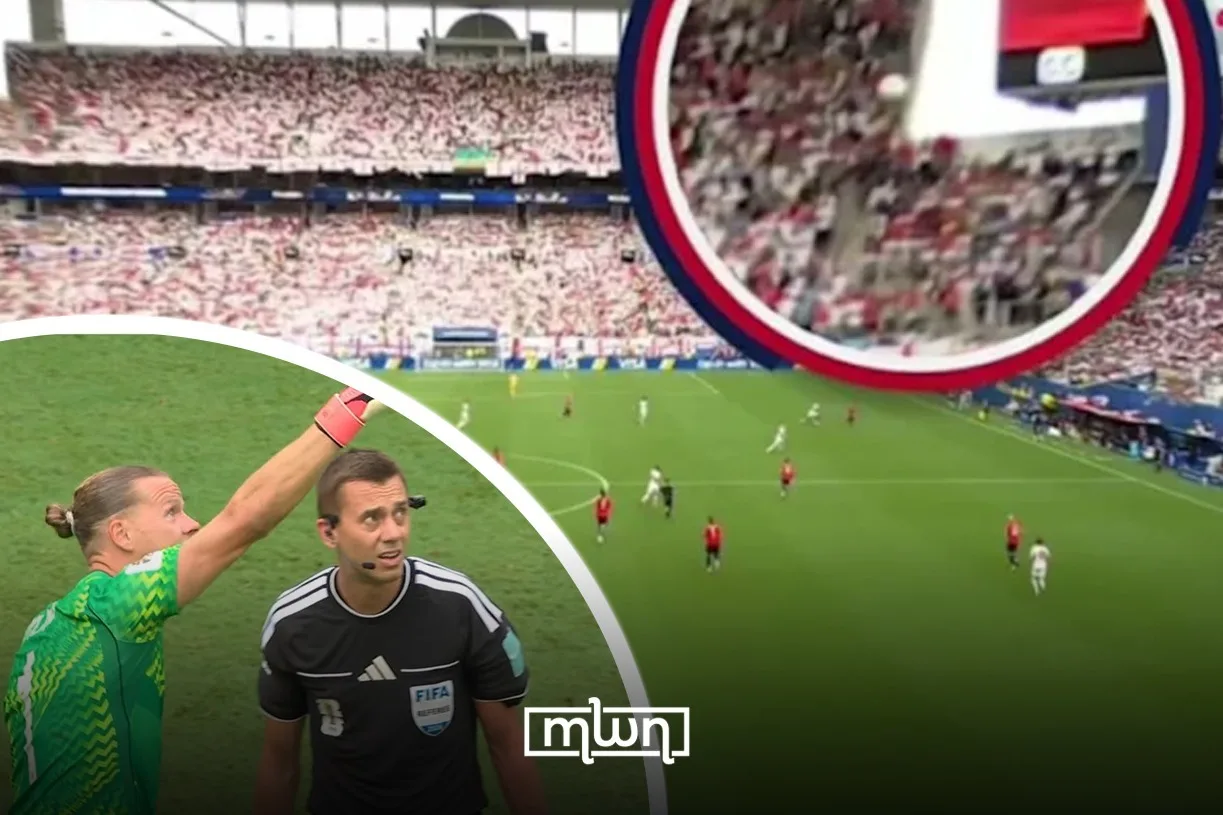
The controversy unfolded minutes before halftime when Ørjan Nyland’s goal kick appeared to change direction before Elliot Anderson collected the ball and launched the attack that ended with Bellingham scoring.
Norway players and coaching staff immediately protested to referee Clément Turpin, saying that the goal was assisted to Bellingham by one of the spidercam cables suspended above the pitch—a scenario that, according to FIFA’s rules, would have required play to restart with a dropped ball.
Norway midfielder Sander Berge criticized the decision after the match, calling the incident “ridiculous”, while captain Martin Ødegaard said the margins had not fallen in his team’s favor.
Head coach Ståle Solbakken also questioned the sequence of events, saying several people on the Norwegian bench believed the ball had made contact with the wire, although he accepted the referee could only rely on the technology available.
After the match, FIFA released an official statement explaining that the connected ball’s internal sensor detected no impact while the ball was in the air, meaning there was no evidence it had touched the wire.
England manager Thomas Tuchel supported the decision, noting that the ball’s chip is designed to detect even minimal contact, and admitted his side had benefited from key moments during the match.
England’s 2-1 victory secured them a place in the World Cup semifinals to face 2022 World Cup title winners Argentina, while Norway’s spectacular journey came to an end amid lingering frustration over one of the competition’s most debated incidents.


