 Join on WhatsApp
 Join on Telegram
Casablanca – Morocco’s impressive run at the 2026 FIFA World Cup has once again highlighted one of the county’s biggest strengths off the pitch: its ability to identify, recruit, and convince elite dual-national footballers to represent the Atlas Lions.
Nineteen of Morocco’s 26-man World Cup squad were born outside the country, with players coming from France, Spain, Belgium, the Netherlands, and Canada.
Rather than relying solely on domestic development, Morocco has spent more than a decade building one of football’s most organized diaspora recruitment networks.
The strategy has become a cornerstone of Morocco’s emergence as one of Africa’s leading football nations.
A recruitment system years in the making
Morocco’s modern recruitment project began in 2014 following the arrival of Royal Moroccan Football Federation(FRMF) Fouzi Lekjaa.
Instead of approaching dual-national players on an individual basis, the federation established a dedicated department responsible for scouting Moroccan talent across Europe.
Today, that department is coordinated by Rabie Takassa and supported by scouts stationed across France, Spain, Belgium, the Netherlands, Germany, Italy, and Scandinavia.
According to Takassa, the federation maintains a database containing nearly 3,000 players of Moroccan heritage.
Scouting begins remarkably early.
“We start identifying them at eight or nine years old,” Takassa told The Athletic. “We monitor them and add them when they are 12 or 13.”
The objective is not simply to monitor performances, but to establish relationships with both players and their families long before senior international football enters the picture.
Selling a football project not just a national team
Morocco’s approach extends beyond recruitment calls.
Federation officials introduce young prospects to the country’s football infrastructure, particularly the Mohammed VI Football Complex near Rabat, widely regarded as one of the world’s most advanced training facilities.
The complex rivals Europe’s biggest clubs, Takassa argues, stressing: “It has everything. Anyone coming from Barcelona, Real Madrid, Chelsea or Manchester City wouldn’t notice the difference.”
But facilities alone are rarely enough.
Moroccan officials believe family identity, cultural ties, and a sense of belonging often prove just as influential as sporting considerations.
Many of the players regularly visit Morocco with their families and maintain strong connections to the country despite growing up abroad.
“It’s important that the player lives in a Moroccan environment, with Moroccan traditions,” Takassa explained.
Success on the pitch strengthens Morocco’s appeal
Morocco’s recruitment efforts became significantly easier as results improved.
Before 2018, the Atlas Lions had not qualified for a World Cup since 1998, making it difficult to persuade top prospects to turn down established European national teams.
That changed after Morocco returned to the World Cup in Russia before making history in Qatar four years later by becoming the first African nation to reach the semifinals.
Those achievements transformed perceptions of the national team.
Instead of joining an underdog project, dual-national players increasingly viewed Morocco as a nation capable of competing with football’s traditional powers.
Brahim Diaz: years of patience rewarded
Perhaps no recruitment battle better illustrates Morocco’s persistence than that of Brahim Diaz.
Born in Malaga, the Real Madrid playmaker represented Spain throughout the youth ranks and even earned a senior appearance in 2021.
Yet Morocco continued pursuing the Brahim Diaz project.
Former coach Herve Renard initiated contact during Brahim’s Manchester City academy years, while former coach Walid Regragui later travelled to Italy to meet the midfielder during his loan spell at AC Milan.
Federation president Fouzi Lekjaa also became personally involved.
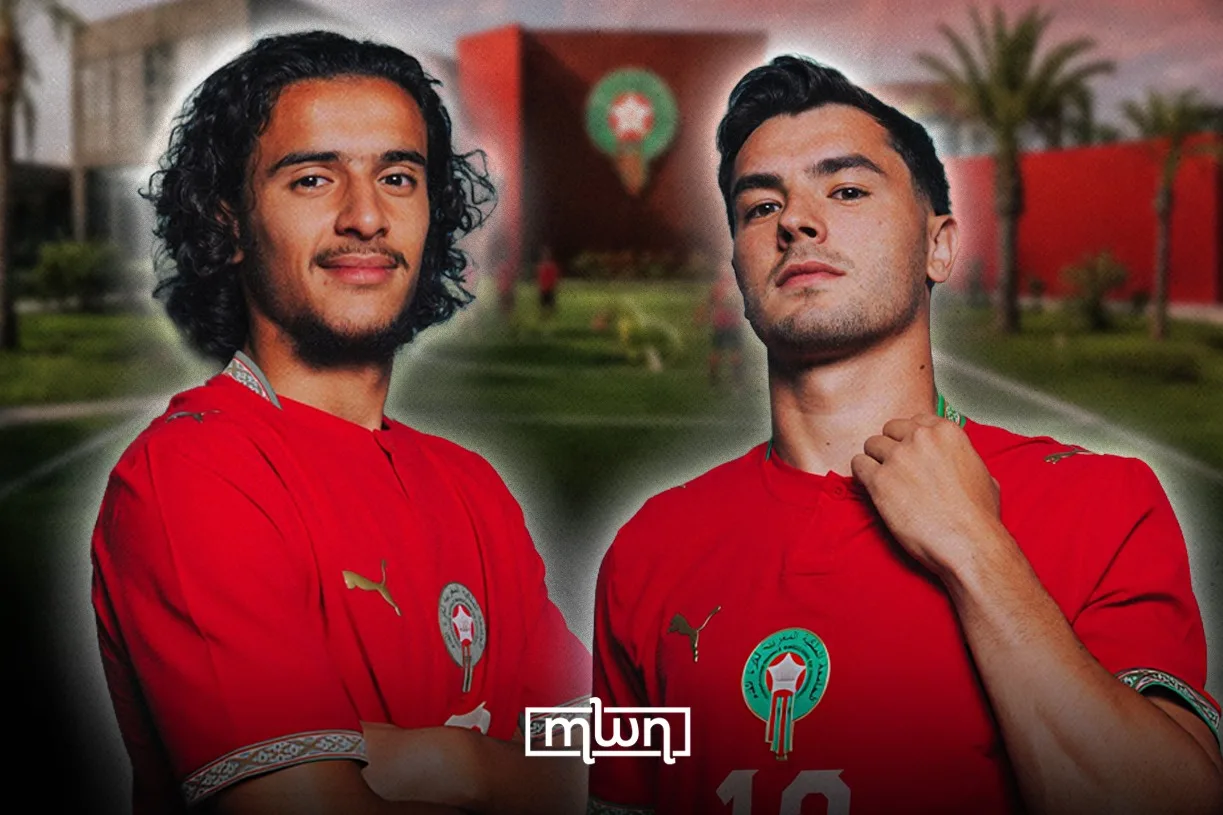
After years of discussions, Brahim officially switched allegiance before becoming one of Morocco’s most influential players during the 2026 World Cup.
Bouaddi becomes Morocco’s latest success story
If Brahim demonstrated Morocco’s patience, Ayyoub Bouaddi showcased its ability to move quickly when opportunity arose.
The Lille midfielder represented France’s youth teams as recently as March before switching to Morocco shortly before the World Cup.
The decision followed months of conversations between Bouaddi, his family, federation president Lekjaa, and Morocco Under-23 coach at the time Mohamed Ouahbi.
Since then, Bouaddi has emerged as one of the breakout performers of the tournament, with composed displays in midfield earning praise across Europe.
French Football Federation technical director Hubert Fournier described his decision as a “significant loss” for France.
For Morocco, however, Bouaddi represents another example of a recruitment strategy bearing fruit.
Not every battle is won
Despite its recent successes, Morocco has not secured every dual-national star. Barcelona sensation Lamine Yamal was one of the federation’s highest-profile targets.
Regragui personally travelled to Barcelona to present Morocco’s sporting project, while Lekjaa also met with the player’s family.
Yet Yamal ultimately chose Spain, where he was rapidly promoted into the senior national team.
Rather than criticizing the decision, Moroccan officials publicly accepted it.
“We respect the choice of every player,” Lekjaa said following Yamal’s decision.
A broader football vision
Morocco’s recruitment model is only one part of a wider football strategy.
The country has invested heavily in infrastructure, youth development, and international hosting rights, including staging the 2025 Africa Cup of Nations tournament and three consecutive Women’s Africa Cup of Nations tournaments, as well as co-hosting the 2030 FIFA World Cup alongside Spain and Portugal.
Its success in attracting elite dual-national players reflects that broader ambition.
Rather than relying solely on domestic production or isolated recruitment efforts, Morocco has built a long-term system that combines scouting, investment, cultural identity, and competitive success.
With players such as Bouaddi joining established stars including Achraf Hakimi, Brahim Diaz, and Yassine Bounou, that strategy continues to shape one of African football’s most ambitious projects.