


 Join on WhatsApp
 Join on Telegram
Casablanca – Morocco’s ambitions for the 2030 FIFA World Cup are becoming increasingly visible, with the future Stade Hassan II taking shape as both an architectural landmark and a symbol of the country’s growing influence in world football.
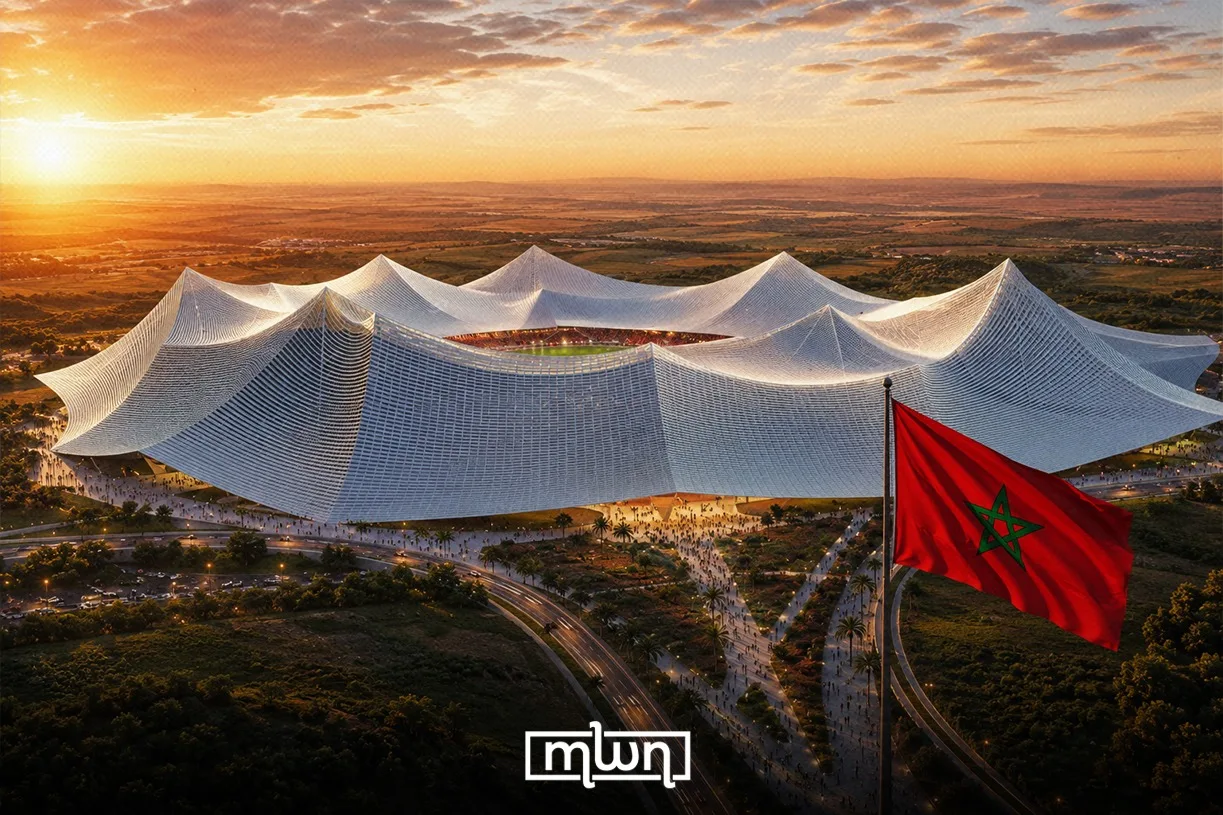
A new report by Architectural Digest offers a closer look at the 115,000-seat venue currently under construction near Casablanca, describing it as far more than a sporting arena.
Designed by architecture firms Oualalou + Choi and Populous, the stadium is intended to become one of the world’s largest football venues and a lasting symbol of Morocco’s role as co-host of the 2030 World Cup alongside Spain and Portugal.
A stadium built for the future
Located on a 100-hectare site in El Mansouria, near Casablanca, Stade Hassan II has been designed to meet FIFA’s highest standards, making it eligible to host the 2030 World Cup final.
The stadium will feature 115,000 seats, extensive hospitality areas, training facilities and transport links connecting it to Casablanca and Rabat. According to Architectural Digest, the surrounding landscape will also play a key role, with wooded areas and botanical gardens incorporated into the project to create a greener environment for supporters.
Its most distinctive feature is a vast tent-inspired roof influenced by Morocco’s traditional moussem festivals. Beyond its striking appearance, the structure is designed to provide natural ventilation and shade, helping spectators cope with Morocco’s summer temperatures while reducing the environmental impact of the venue.
“The design draws inspiration from ancient and primordial figures: the moussem, the tent, and the garden,” architect Tarik Oualalou told Architectural Digest. “It is a generous space, open to the world and respectful of the nature it protects.”
More than architecture
The project also reflects Morocco’s long-term strategy of positioning itself as a global football destination.
The stadium has already become central to the country’s World Cup plans as Morocco continues investing heavily in football infrastructure ahead of 2030.
The timing is particularly notable after recent reports suggested Casablanca is emerging as a serious contender to host the World Cup final. While Madrid’s Santiago Bernabéu has long been considered the favourite, The Athletic recently reported that Morocco’s preparations and growing influence within international football have significantly strengthened Casablanca’s bid.
A legacy beyond 2030
Once the World Cup ends, Stade Hassan II is expected to remain an active sporting venue rather than becoming a tournament relic.
According to the report, the stadium will serve as the home of two local football clubs while continuing to function as a community hub, ensuring the investment leaves a lasting legacy beyond the month-long competition.
With construction already underway, Morocco is aiming not only to deliver one of the tournament’s headline venues, but also to create a stadium capable of joining the ranks of iconic football landmarks such as Wembley, the Maracanã and Beijing’s Bird’s Nest.


