
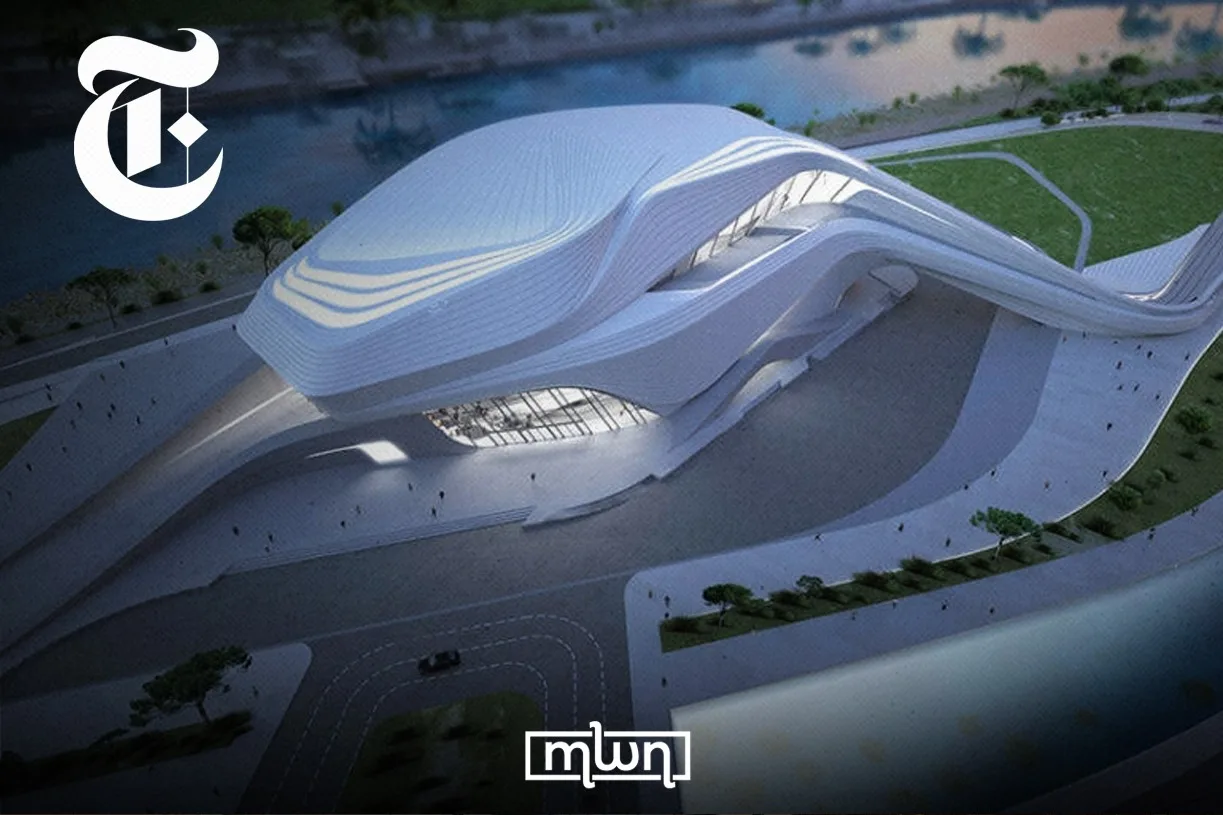
Rabat – The Royal Theater of Rabat has joined an elite group of cultural landmarks after being featured by The New York Times, which celebrated the venue’s architecture and compared its impact to some of the world’s most recognizable performance spaces.
In a feature by architecture critic Joseph Giovannini, the American newspaper describes the landmark, designed by the late Iraqi-British architect Zaha Hadid, as a sculptural masterpiece whose sweeping form resembles “a wave that swells and crashes” over its performance halls before flowing into canyon-like interiors.
Beyond its striking design, the publication argues that the Royal Theater is helping position Rabat among the world’s leading cultural destinations.
It compares the venue to internationally renowned landmarks including the Sydney Opera House, the Oslo Opera House, and the Guggenheim Museum Bilbao, buildings whose architectural significance has become inseparable from the identity of their cities.
The article also highlights Morocco’s broader cultural ambitions, citing Royal Theater Artistic Director and Deputy General Manager Brahim El Mazned, who says the institution reflects the country’s commitment to culture and the creative industries as drivers of development while strengthening cultural exchanges with Africa and the wider world.
According to the feature, the venue is intended to serve as an international stage for Moroccan, Arab, and African music, dance, and theater alongside major global productions, reinforcing Rabat’s growing role as a cultural hub.
The newspaper further notes that while Morocco has long been celebrated for its rich architectural heritage, projects such as the Royal Theater demonstrate the country’s embrace of contemporary design.
It credits advanced digital modeling and engineering techniques with making the building’s sweeping curves possible, describing it as evidence that Morocco is firmly rooted in 21st-century architecture.
The feature concludes by describing the Royal Theater as one of Zaha Hadid’s defining works.
Conceived at the height of her career, the project combines cutting-edge technology with the architect’s signature fluid forms, creating what The New York Times portrays as one of the world’s most remarkable contemporary cultural landmarks.