Rabat – Over the past several decades, Moroccan agriculture has undergone one of the country’s most significant transformations. Once largely dependent on traditional farming methods and seasonal rainfall, the sector has become a key pillar of the national economy while strengthening Morocco’s position as a leading exporter of fresh fruits, vegetables, and citrus.
Today, agriculture contributes around 11% of Morocco’s GDP and employs roughly one-quarter of the country’s workforce, rising to more than 60% in rural areas. Beyond its economic importance, the sector is central to food security, rural livelihoods, and regional development.
But the challenges facing Moroccan agriculture today are very different from those of decades ago.
A sector under pressure
Climate change, rising temperatures, and increasing pressure on water resources are reshaping agriculture across the country. Although the 2025-2026 agricultural season benefited from stronger rainfall after years of drought, farmers continue to face growing uncertainty as weather patterns become less predictable.
At the same time, producers are expected to use fewer natural resources while maintaining high yields and meeting increasingly demanding quality, sustainability, and traceability standards in both domestic and international markets.
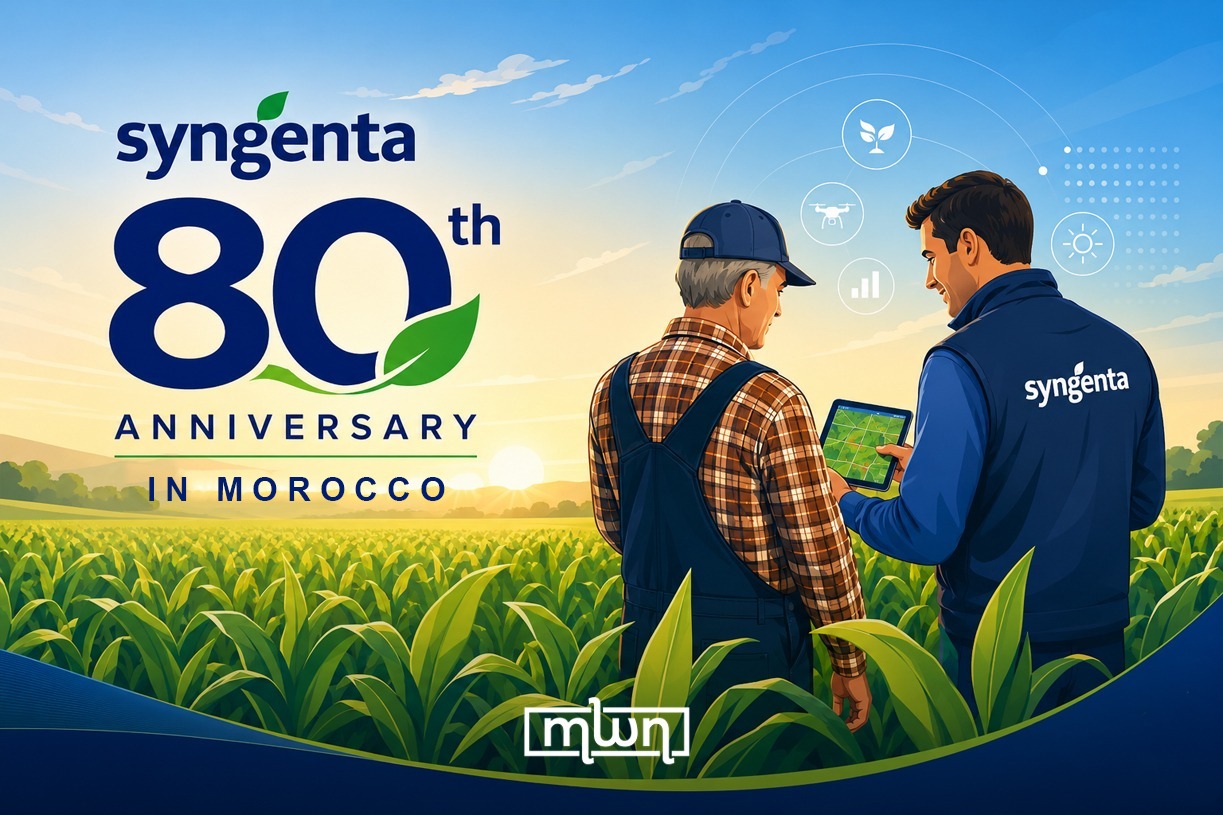
These challenges are also changing the role of companies that work alongside farmers. Among them is Syngenta, which this year marks 80 years in Morocco. For the agricultural technology company, supporting agriculture today goes beyond providing products. It also means listening to farmers, understanding their changing needs, adapting innovation to local conditions, and sharing knowledge over the long term.
Why local innovation matters
Innovation has become an essential part of modern agriculture, but technology alone cannot solve every challenge.
A seed variety, crop protection product, or farming practice that performs well in one country may not produce the same results elsewhere. Morocco’s agricultural landscapes vary considerably, from irrigated fruit and vegetable farms in Souss-Massa to rain-fed cereal fields in other regions. Differences in soil, climate, irrigation systems, and pest pressure mean that solutions must be adapted to local conditions.
But adapting to local realities goes beyond testing whether a product works in a particular environment. It also means listening to farmers, understanding how their challenges evolve, and working with agricultural professionals and other partners to identify practical responses.
Over time, this exchange of knowledge helps ensure that innovation reflects not only scientific research, but also the experience and needs of those working in the field.
That is why field trials remain a key step before new agricultural solutions are recommended.
Researchers test products under real farming conditions across different Moroccan regions to understand how they perform in local environments. Rather than relying on results from other markets, these trials help ensure recommendations reflect the realities farmers face every season.
Just as important is making sure that research reaches the people who can benefit from it. Demonstration plots, technical advice, and regular exchanges between agronomists and producers help turn scientific findings into practical decisions in the field.
These interactions also create a two-way exchange. Farmers can share the challenges they encounter in their day-to-day work, while agricultural experts can bring research and technical knowledge closer to those realities. This ongoing dialogue is an important part of building a partnership that can evolve as farmers’ needs change.
Research that starts in the field
This approach, combining research with local knowledge, farmer engagement, and knowledge transfer, has become central to Syngenta’s work in Morocco.
As part of a global agricultural innovation network, Syngenta brings international research and expertise to its work in Morocco. At the same time, local field experience helps adapt that knowledge to the conditions farmers face on the ground.
But supporting the evolution of Moroccan agriculture goes beyond testing new solutions. It also means listening to farmers, understanding how their challenges change over time, sharing knowledge, and working with agricultural professionals and other partners across the sector. This ongoing exchange helps connect scientific research with the practical realities of farming.
“For 80 years, our commitment has gone beyond delivering agricultural solutions. It has been about building lasting partnerships with farmers, listening to their challenges, and helping agriculture adapt to an ever-changing world,” said Axel d’Hautuille, BA Head North West Africa at Syngenta.
“The future of Moroccan agriculture will be shaped through collaboration, innovation, and the shared ambition to grow more sustainably,” he added.
That long-term approach also means bringing knowledge closer to farmers and ensuring that innovation is practical and accessible.
“Every field tells a different story, and every farmer faces unique challenges,” said Hassan El Amri, Country Head Morocco & Mauritania at Syngenta.
He said the company’s role is not only to bring innovation, but to ensure that solutions are practical, locally validated, and accessible to farmers. Through initiatives such as AKKABAR, Syngenta seeks to bring knowledge closer to the field, reflecting the importance of informed decision-making alongside farmers.
AKABAR is a new proximity initiative designed to bring Syngenta’s teams, technical expertise, and knowledge directly to farmers in Morocco’s main agricultural production areas.
“Sustainable agriculture begins with informed decisions made alongside farmers,” El Amri said.
As Morocco’s agricultural sector adapts to a changing climate and growing pressure on natural resources, research that is tested locally and shared effectively with farmers is becoming increasingly important.
For Syngenta, reaching 80 years in Morocco reflects an ongoing commitment to that process, combining global research with local expertise to help producers make informed decisions under Moroccan conditions.