
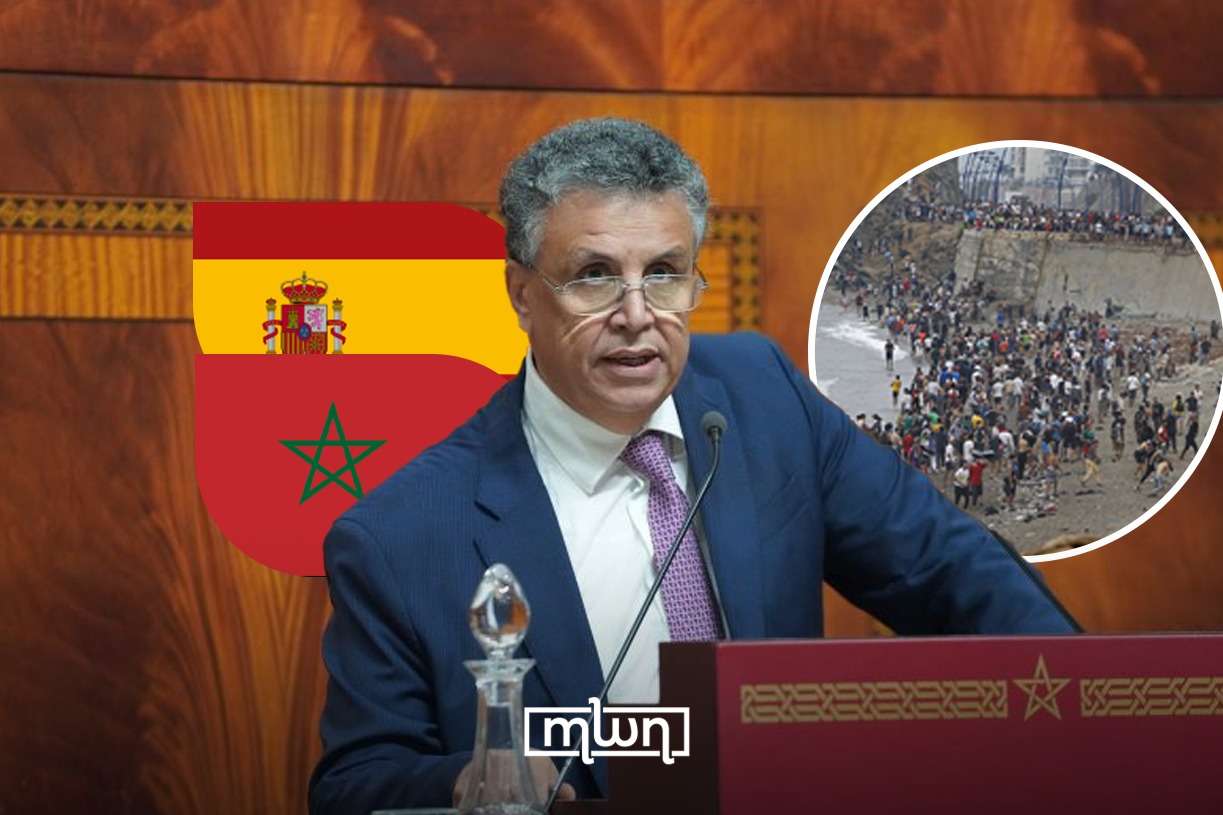
Casablanca – Morocco is ready to take back Moroccan minors from Ceuta and receive the bodies of Moroccan migrants who died during the recent crisis, Justice Minister Abdellatif Ouahbi said Saturday.
Speaking to Al Arabiya and Al Hadath, Ouahbi said Morocco had not arbitrarily refused to receive the bodies of migrants who died during the mass movement toward the Spanish enclave. He said Spanish authorities had not provided enough medical files and other information to establish the identities of those who died.
“Morocco cannot receive bodies without knowing who they belong to,” he said, adding that Rabat had asked Spain for files concerning the deaths. The information available so far does not establish whether all of the deceased were Moroccan or whether some came from other countries.
Ouahbi said Morocco “does not separate the dead from the living”. He said Rabat is prepared to receive Moroccan minors and could send buses to Ceuta to bring them back to Morocco. He questioned why the two issues were being handled separately.
The minister said Morocco and Spain had not yet reached an understanding on the matter. He called for clear rules covering the transfer of minors and the return of bodies, including verified identities and complete case files.
Morocco also wants a broader agreement with Spain and the European Union on migration. Ouahbi said a purely security-based approach to stopping migration was not a sustainable solution. He argued that Morocco cannot be expected to stop migration attempts alone while Spain continues to accept migrants, calling for a joint and clearly defined migration policy.
He also criticized delays in implementing a European decision concerning the return of minors, while stressing that Morocco does not oppose receiving them. The issue, he said, is agreeing on the procedures and documentation because not all minors in Spain are from Morocco.
Ouahbi said social media campaigns had encouraged young people and minors to attempt the journey to Europe, including through calls to travel toward Ceuta.
He said Moroccan authorities had managed the mass movement with “calmness and restraint,” noting that he was in northern Morocco during the events and saw large numbers of young people and teenagers heading toward the city.
He said some young people told authorities they believed they were moving within their own country, with some considering Ceuta Moroccan. A confrontation, he said, could have resulted in many young Moroccan victims.