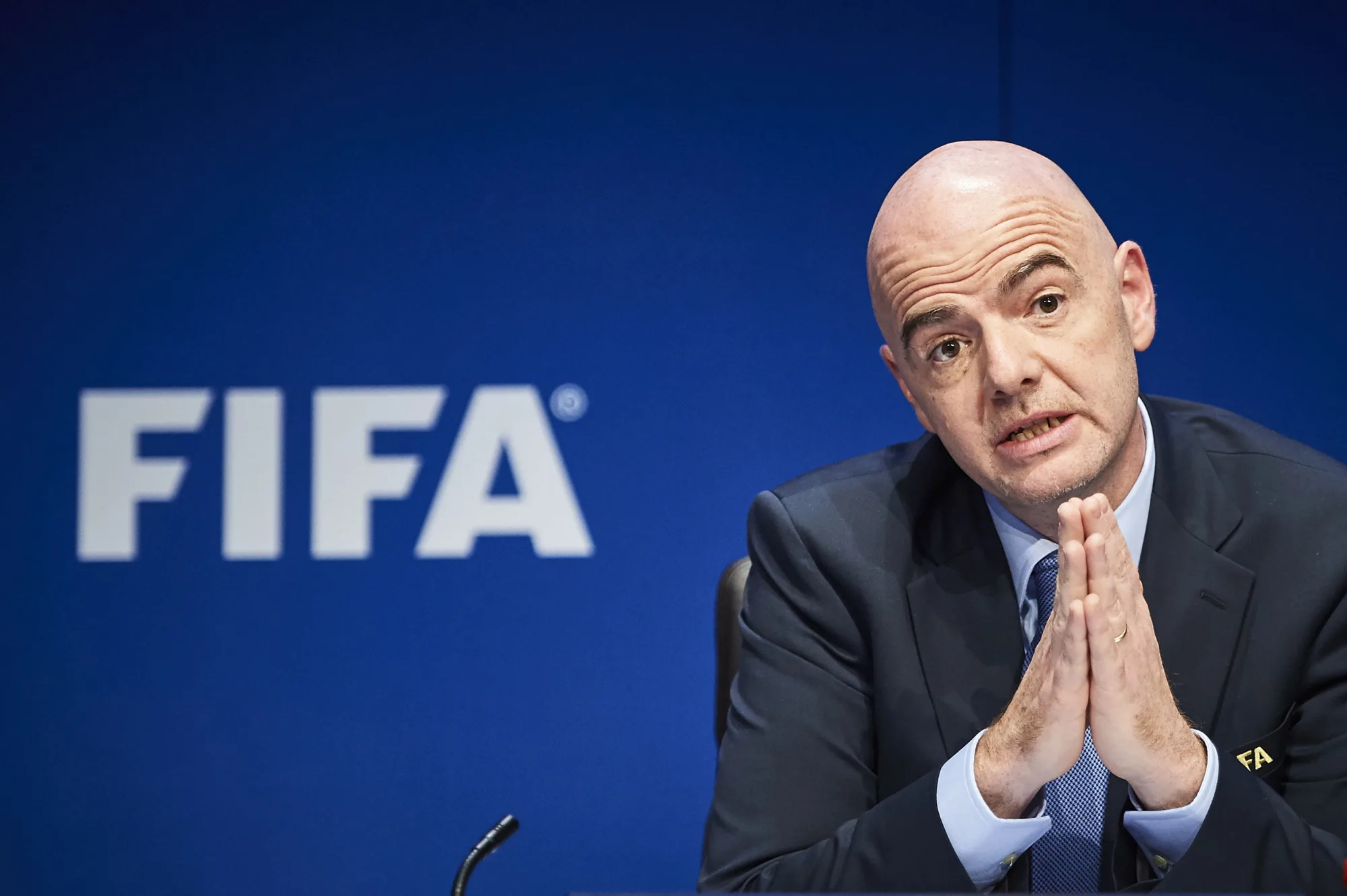
Casablanca – A group of current and former footballers has called for significant changes to the way global football is governed, adding to the growing scrutiny surrounding FIFA President Gianni Infantino.
Former Manchester United and France defender Mikaël Silvestre, who is also a member of FIFA’s Players’ Voice Panel, shared the statement on X.
This comes at a time of heightened pressure on Infantino, following disagreements between FIFA and several major football bodies over the FIFA Forward Enterprise (FFE) initiative.
UEFA has been among the project’s most vocal critics, with European football’s governing body threatening a boycott of FIFA competitions.
UEFA President Aleksander Čeferin has also said he expects Infantino to either resign or face a challenge in next year’s FIFA presidential election.
Several national associations, including those of England, Wales and Scotland, have also withdrawn their support for Infantino.
Silvestre’s involvement adds an unusual dimension to the criticism, given his position within FIFA. The former France international is a member of the 16-person Players’ Voice Panel, established by FIFA to advise on efforts to combat racism and discrimination in football.
The players said their concerns stem from what they described as a growing distance between football’s governing structures and the people at the heart of the sport.
‘Enough is enough’
They noted that major decisions have increasingly been made without sufficient consultation with players or consideration for supporters, whose involvement and passion they described as fundamental to football.
“Change is necessary,” the statement said.
The group also pointed to recent developments within football as a reason for breaking their silence, declaring: “Enough is enough.”
The statement called on stakeholders across the game, from grassroots football to the highest levels, to take part in reshaping the sport’s future.
The players acknowledged that there are individuals within FIFA who want to restore trust, but argued that meaningful reform would require structural changes rather than simply a change in tone.
In particular, they called for players and fans to have a direct role in football governance, saying those who compete on the pitch and those who support from the stands should have a genuine say in decisions affecting the sport.
The statement concluded with a call for the wider football community to become more vocal, saying players and supporters had remained silent for too long and that they would no longer do so.