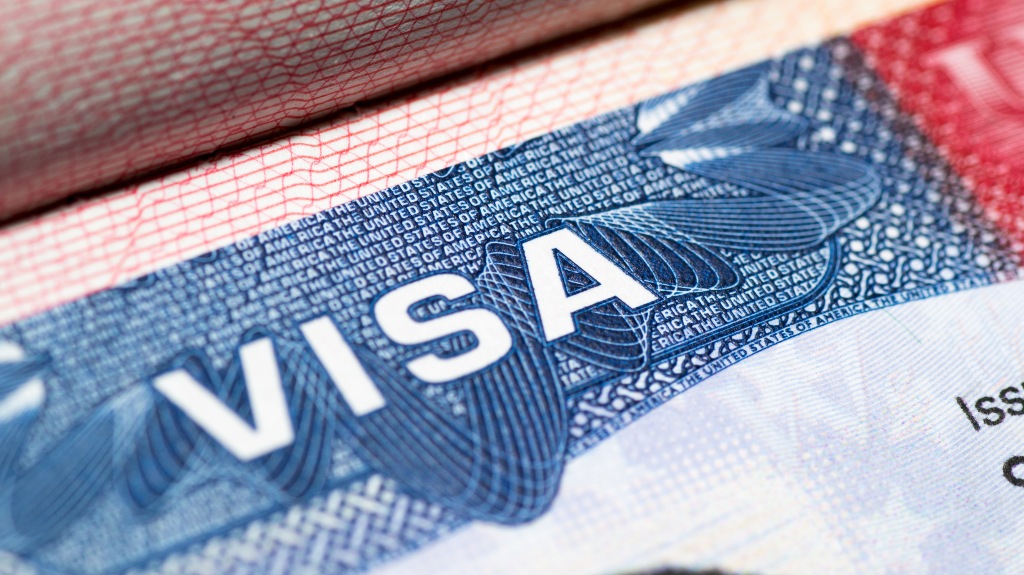
Marrakech – The Trump administration is preparing to revoke the business and tourism visas of up to 200,000 foreigners who have applied for or are currently seeking asylum in the United States. Unless challenged or revised, the move would mark the largest single mass revocation of visas in US history, and it would likely face legal challenges.
The State Department is expected to announce the action in the coming weeks, working in coordination with the Department of Homeland Security.
The plan targets so-called B1 and B2 visas issued between 2016 and 2026 whose holders have sought or are now seeking asylum, according to State Department documents obtained by The Associated Press (AP) and two US officials who spoke on condition of anonymity because the revocations are not yet final.
State Department spokesman Tommy Pigott framed the effort as an enforcement matter. “We are coordinating with DHS to identify and revoke the nonimmigrant visas of foreigners who have come to the United States claiming to be short-term visitors, but then file for asylum to stay here permanently,” he stated.
He declined to specify a figure, explaining that “the number of revocations remains dynamic and will be done on a rolling basis.”
Pigott cast the practice as fraudulent. “Obtaining a visa in order to seek asylum is fraud – which is grounds for visa revocation,” he stated.
In a separate statement, he added that “under President Trump and Secretary Rubio’s leadership, we are making clear that a visa is a privilege – not a right,” and that the visas “are issued with the clear understanding that they are for those who intend to return home.”
The revocations would not necessarily lead to immediate deportation, the officials clarified. Most people with pending asylum cases would instead be recategorized and lose their status as business or tourism travelers while their cases proceed. B1 visas are generally issued for business trips, while B2 visas cover tourism, family visits, and medical care.
Current applicants for both are asked to affirm that they will not seek asylum and to prove that they intend to return home. The screening of current holders appears to have begun after the State Department received information about asylum requests from US Citizenship and Immigration Services.
Senior officials have defended the plan publicly. In a post on X, Deputy Secretary of State Christopher Landau alleged that the immigration system “has long been swamped by frivolous asylum claims.”
He wrote that “people in the US and all over the world are fed up with bogus asylum claims,” adding that “asylum isn’t supposed to be a loophole to circumvent immigration law.” Landau pointed to a Colombian citizen who entered the US in 2015 on a tourist visa and later applied for asylum.
The plan is the latest step in a broader crackdown. Since Trump returned to office for his second term last year, his administration has demanded more information about applicants’ social media histories, required expensive bonds for visa processing, and banned visas for citizens of certain countries.
Over the past 18 months, the State Department has revoked about 175,000 visas for people convicted or accused of crimes ranging from drunk driving to rape and robbery, as well as for those who have spoken out against US policies, particularly in the Middle East.
The administration has also targeted birth tourism, a practice it claims foreign pregnant women use so their children gain birthright citizenship. Trump’s repeated attempts to end birthright citizenship have been rejected by courts, including the Supreme Court.
The effort is unfolding amid mounting legal setbacks. On Friday, US District Judge Jeannette Vargas, a Biden appointee, struck down a policy that had suspended immigrant visa issuance for applicants from 75 countries, many of them in Africa, Asia, and Latin America.
She found the rationale – that many applicants would rely on public assistance – had no legal basis, calling the policy “contrary to law and in excess of statutory authority.”
The DHS has meanwhile halted the processing of asylum applications, though a federal judge has ruled that the administration must review them. Separately, the department has instructed embassies and consulates to reschedule visa interviews until consular officers complete training on a stricter “public charge” rule, with sessions expected this week.
Rights groups argue the crackdown has violated free speech and due process protections and created an unsafe environment, particularly for ethnic minorities who have raised concerns about racial profiling. Trump, who campaigned in 2024 on halting illegal immigration, says the measures aim to improve domestic security.