Marrakech – The Authenticity and Modernity Party (PAM) has pushed back against accusations from its governing coalition partner, the National Rally of Independents (RNI), rejecting claims that it lured away elected officials and denying any use of pressure or coercion, less than a month before Morocco’s September 23 legislative elections.
The dispute broke into the open on Tuesday, when the RNI’s political bureau, meeting in a semi-in-person session, recorded what it called “attempts at seduction and pressures” targeting several of its parliamentarians, elected officials, and party figures.
The RNI charged the PAM with “undermining the ethics of political work and the rules of sound democratic competition” ahead of the vote.
The “party of the dove” pointed to a gap between shared commitments to integrity and practices on the ground that, in its telling, contradict the spirit of those convictions.
It named several figures whose candidacies it contested, among them Abdelhay Hartoun, Mohamed El Jamani, Zineb Simou, Othmane Badel, Manal Badel, Bouchra El Ouardi, Abdelhafid El Makouti, and Abdelkader El Hadouri, noting that some had already been announced as RNI candidates while others still held mandates in its name.
The RNI also referenced “hybrid transitions” in the Dakhla region and warned that the overtures had reached a member of its own political bureau, a move it viewed as crossing the norms that govern relations between parties.
The bureau, chaired by Mohamed Chaouki, reserved “the right to take appropriate positions and pursue all legal procedures” to protect its organization and its members.
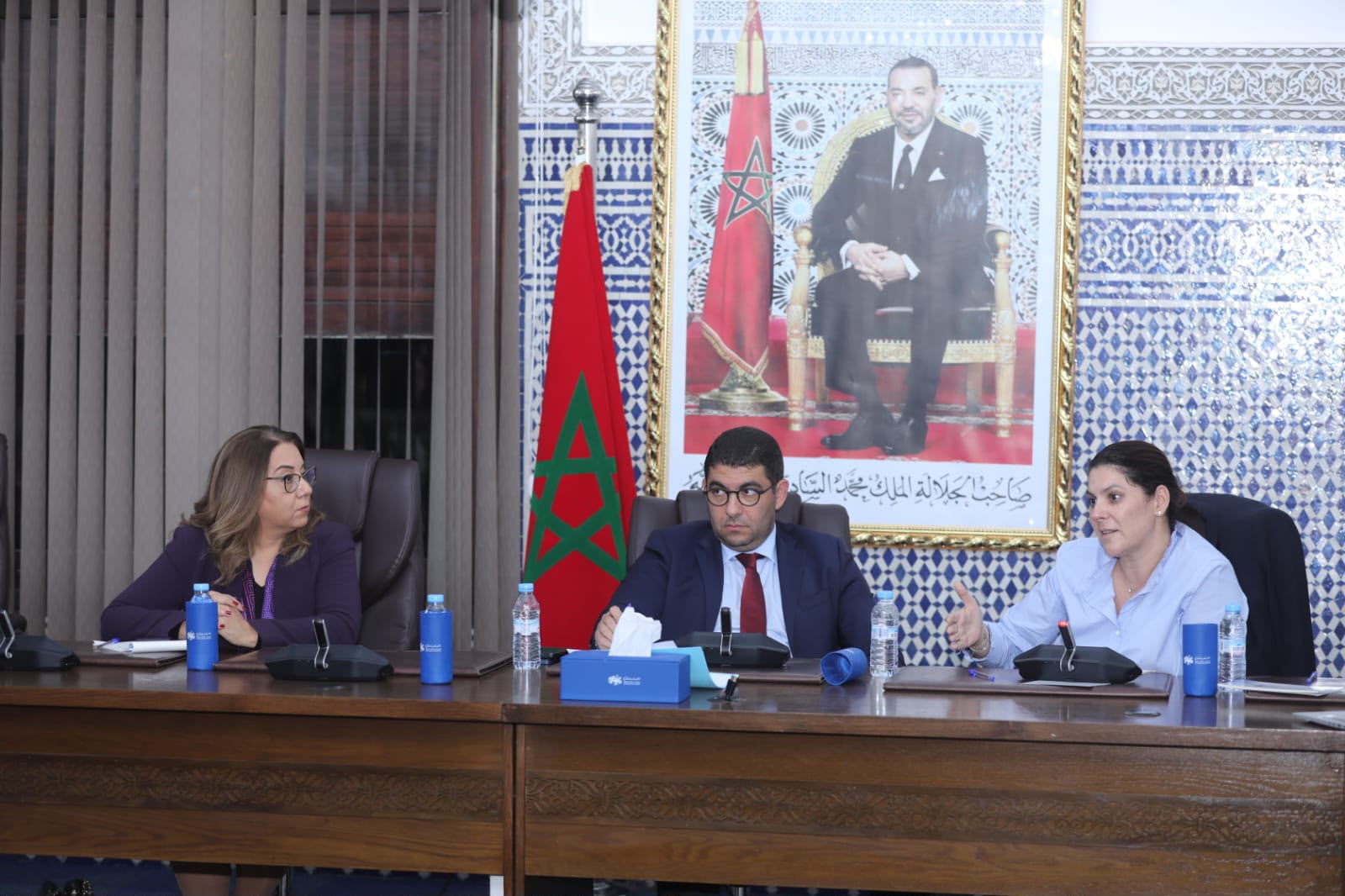
The PAM convened its own political bureau on Wednesday and answered with a short, direct statement. The “party of the tractor” said it “took note” of the RNI text and framed its reply as an effort to “enlighten public opinion, remove all ambiguity, and correct” what it called falsehoods.
The party condemned the inclusion of its name in the RNI communiqué and the accusations of “undermining the ethics of political work,” along with the claim that it had drawn RNI-affiliated officials into its ranks under pressure. It rejected the allegations as baseless.
The PAM maintained that it “has never coerced, does not coerce, and will never coerce” any citizen into joining it, describing such practices as criminalized by law and morally rejected. It grounded its position in “freedom of choice and affiliation, enshrined in international references and in the Kingdom’s Constitution,” adding that it respects citizens and trusts “their capacity for discernment and choice.”
The party described its method as one of dialogue and persuasion, aimed at attracting profiles that embrace its political project, “away from any form of pressure or coercion, whatever its nature or source.”
Much of the PAM’s reply turned on the 2021 legislative elections. The party recalled that the RNI had then fielded more than 17 parliamentarians previously belonging to five other parties, six of them former PAM members, along with dozens of elected officials from communal and regional councils and the House of Councillors.
The PAM contended that it had treated those moves as an expression of “political freedom of choice,” a principle it continues to defend today, regardless of which party benefited from the transfers.
The party also stated that its candidacies had respected the relevant constitutional and legal controls, and it renewed its attachment to the rule of law and to the state of institutions. In a sharper passage, it declared that it “will not accept lessons from any party” on respecting the law or the rules of political and institutional work. Its doors, it added, remain open to those who choose “freely and independently” to join.
‘Lekjaa will never obtain the Finance portfolio’
The clash follows a series of defections. Fouzi Lekjaa, previously without party affiliation, joined the PAM alongside Yanja El Khattat, followed by Marouane Chbaatou, the outgoing deputy for Midelt and a member of the RNI’s political bureau, who announced on Tuesday that he was leaving for the PAM.
Tensions rose further that day with the circulation on social media of an audio recording attributed to Rachid Talbi Alami, president of the Chamber of Representatives and one of the RNI’s most combative voices.
The recording surfaced immediately after the party’s communiqué, first published by Taoufiq Bouachrine and The Voice Maroc before spreading online. Whether the leak was deliberate remains unclear; party sources denied that it was, even as the timing and content pointed the other way.
In the audio, taken from his intervention at the political bureau meeting, Talbi Alami went after Lekjaa without naming him, relying on football imagery that left little doubt about his target. He complained that “everyone wants the RNI’s skin” and cast the maneuvering as “narrow calculations to secure posts.”
Stretching the metaphor, he mocked the idea of importing talent the way clubs sign stars, asking why one would look for politicians at home when figures like Hakimi could be brought from PSG.
He warned that applying “FIFA rules to political action” would only distort it, and he questioned whether Morocco could invent some new democratic model on that basis.
Turning to the contest for first place, he suggested the RNI might do better to finish second and set its own conditions. He then delivered the line at the center of the leak, insisting that Lekjaa “approach the Finance ministry” only to find the door closed: “he won’t get it… he won’t get it.”
The portfolio, he stated, would remain with Nadia Fettah, the current Minister of Economy and Finance, whom he referred to as its rightful “tenant.”
Talbi Alami reached back to 2019 to make his point about political resolve, recalling that Saadeddine El Othmani had once framed a choice as “either me or Talbi,” after which Talbi left the government. He closed by dismissing the promises used, in his words, to frighten or bait others, arguing that politics rewards those willing to take positions rather than chase posts.
The confrontation marks a clear rupture between two parties that both emerged from the 2021 governing majority and are now preparing to face each other at the ballot box.