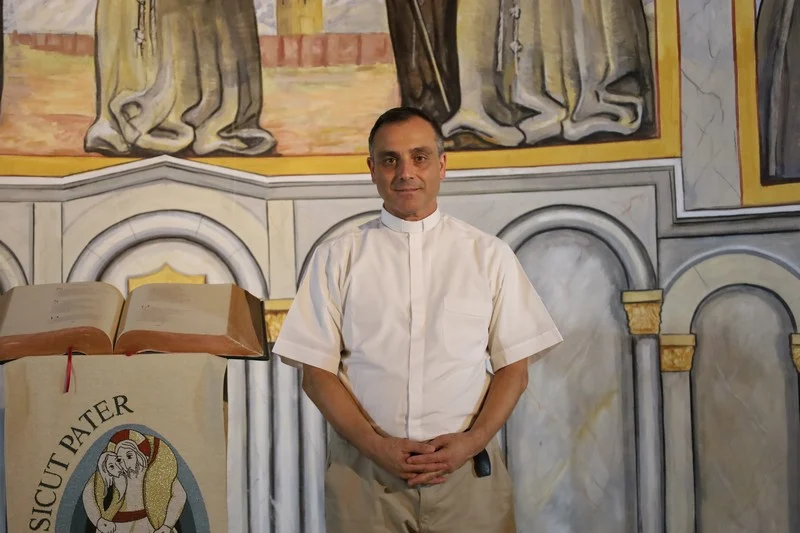
Marrakech – Pope Leo XIV has appointed Spanish priest Mario León Dorado as coadjutor archbishop of Rabat. The Holy See announced the move on Saturday, months after the Moroccan archdiocese’s sitting head, Spanish Cardinal Cristóbal López Romero, stepped aside amid a Vatican investigation into alleged sexual abuse of adult women. The Holy See’s statement reviewed León Dorado’s career but made no reference to López Romero.
Under the Code of Canon Law, the appointment carries an automatic right of succession. León Dorado will take charge of the archdiocese once the see becomes officially vacant.
Canon law distinguishes between an auxiliary bishop, named to assist the diocesan bishop with pastoral needs, and a coadjutor, who holds the right of succession alongside any faculties granted to him. The Code also provides that, “if it seems more opportune to the Holy See,” Rome may appoint “on its own initiative” a coadjutor “endowed also with special faculties.”
The transition is not a removal. López Romero, who has just turned 74, is due to be relieved at 75, the age at which bishops must submit their resignation. The coadjutor formula secures the future of the Rabat diocese at a delicate moment for the Church’s presence in Morocco. López Romero had been counted among the papabile in the conclave that elected Leo XIV.
León Dorado was born in Madrid on March 16, 1974, and belongs to the Missionary Oblates of Mary Immaculate. He studied information technology in Madrid before earning a bachelor’s degree in theology from the San Dámaso Faculty of Theology. He professed his first religious vows on September 15, 1996, and was ordained a priest on June 2, 2001.
After serving as a parish assistant in Jaén, Spain, from 2000 to 2004, he was sent on mission to the apostolic prefecture of Western Sahara. He served there as apostolic administrator from 2009 to 2013 and as apostolic prefect since 2013. Since August, he had also acted as apostolic administrator of the Rabat archdiocese.
López Romero has led Rabat since 2017 and was created a cardinal in 2019. The 74-year-old is a native of Vélez-Rubio in Almería, holds Spanish and Paraguayan nationality, and spent part of his ministry in Paraguay and Bolivia.
At least five women have accused him of sexual assault. An AFP investigation traced the alleged incidents to the period between 2009 and 2024, in Morocco and in earlier postings.
The accusations range from sexual assault and non-consensual touching to abuse of spiritual authority. In a complaint sent to the Nunciature in Rabat, one woman described “inappropriate” physical contact, including “particularly intense and prolonged” embraces and an attempt to kiss her.
The cardinal announced on July 7 that he was stepping back from public ministry while the Church conducted a preliminary inquiry. He described the matter as “in the hands of the Roman Catholic Church” and pledged full cooperation, while refraining from public celebrations and pastoral activities. He asked the faithful to pray for those who are suffering, for the Church in Morocco, and for himself.
In a separate statement to AFP, he rejected the allegations, insisting he had committed “no assault, no violence, and no sexual harassment.” He has denied the accusations to elDiario.es as well.
The Vatican’s response followed a procedure led by the Dicastery for the Evangelization of Peoples, which in August named León Dorado administrator of Rabat.
Between August 5 and 7, an apostolic visit directed by Bishop Hyacinthe Dione and Father Augustin Chako-Yodi examined the accusations and reviewed the diocese’s economic, pastoral, and liturgical management. The visitors met with the Pastoral Coordination Council, the Presbyteral Council, the complainants, and others before returning to Rome on August 8.
López Romero is expected to travel to Rome in the coming days to present his account and reaffirm his innocence. He had been summoned in September, but his testimony was postponed. Among the reasons was the death of the father of Cardinal Tagle, prefect of the dicastery overseeing the investigation, who had to travel to the Philippines.
Read also: Moroccan Christians Urge Parties to Include Freedom of Belief in Electoral Programs