Rabat – When Morocco won its first Futsal Africa Cup of Nations title in 2016, it ended Egypt’s long grip on the continental game. Ten years later, the Atlas Lions are preparing to win the trophy for a fourth consecutive edition, while only five national teams in the world rank above them.
Morocco currently sit sixth in FIFA’s global ranking, behind Brazil, Portugal, Spain, Argentina, and Iran. Egypt, their closest African rival in the ranking, are 41st.
That gap is witness to a decade in which Morocco have moved past continental success and established themselves among the teams capable of competing deep into major international tournaments.
Their next test begins on October 12, when Rabat hosts the 2026 Futsal Afcon. Morocco will face Algeria , Zambia, and Libya in Group A, before potentially moving into the knockout rounds. Victory in the tournament would give them a fourth continental crown and take them past Egypt as the outright record holders.
The turning point
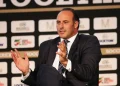
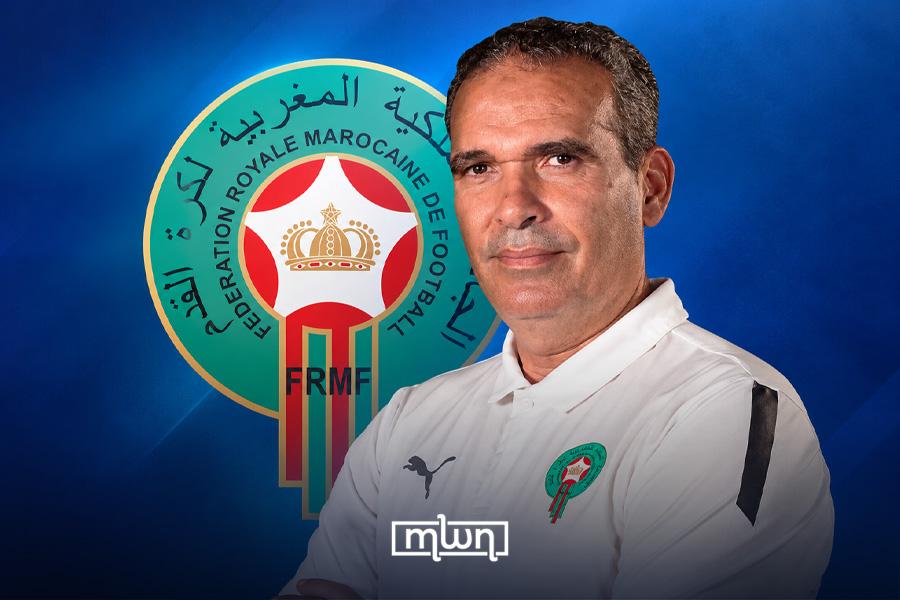
Hicham Dguig has been present through almost the entire transformation.
The former Morocco futsal international took charge of the national team in 2010. At the time, the setup was far less structured.
Dguig later told FIFA that during his first five years at the helm of the Moroccan team, before futsal was fully incorporated into the Royal Moroccan Football Federation’s structure, national-team activity consisted largely of occasional camps ahead of friendlies and competitions.
The breakthrough came in 2016, when Morocco defeated Egypt 3-2 in Johannesburg to win their first Futsal AFCON title. Dguig later described that triumph as a turning point, saying the national setup became more professional afterward and began playing international matches more regularly.
The national team had already reached its first FIFA Futsal World Cup in 2012, but the experience exposed the distance separating Morocco from the established powers. They lost all three group matches in Thailand. Four years later, Morocco again exited the World Cup without a point despite arriving as African champions.
Instead of treating those tournaments simply as failures, the national setup increasingly used international competition as a benchmark.
By 2021, Morocco’s third consecutive World Cup appearance looked very different. The Atlas Lions defeated the Solomon Islands 6-0, drew with Thailand and reigning European champions Portugal, then beat Venezuela to reach the quarterfinals for the first time. Brazil eventually ended their run.
Morocco repeated the quarterfinal achievement at the 2024 World Cup in Uzbekistan. They eliminated Iran before losing 3-1 to eventual champions Brazil, despite entering the game with several injury problems. FIFA noted that Morocco had gone 50 matches unbeaten before that quarterfinal.
Soufiane El Mesrar, who experienced the 2012 World Cup and later became captain, told FIFA in 2023 that the team had once approached countries such as Brazil, Argentina, and Iran with too much respect for their reputations. Regular exposure to elite opposition gradually removed that hesitation. Morocco even defeated former world champions Argentina 7-0 in a friendly in 2023.
A System beyond the senior team
Morocco’s national futsal championship operates across two senior divisions under the National Diversified Football League, while regional competitions can also include futsal.
The development is increasingly visible at youth international level. Morocco’s U17 futsal team faced Portugal, France and other leading nations at a six-team tournament in Spain this summer and will represent the country at the Dakar 2026 Youth Olympic Games later this autumn.
That pathway is also beginning to connect more clearly with the senior game. Players such as Soufiane El Mesrar and Bilal Bakkali first built their careers in Moroccan futsal before moving to France, where both went on to play for Montpellier, ACCS AV 92 and Étoile Lavalloise.
Their partnership also reflects another feature of Morocco’s rise: continuity.
Dguig has worked with several members of the core group across multiple World Cup and AFCON cycles, which has allowed Morocco to develop a recognizable playing identity.
He has described his system as one based on rotation and positional flexibility rather than rigid roles. Players are expected to contribute both defensively and offensively, while different members of the squad can occupy the pivot position when required.
The results at the 2024 AFCON illustrated the depth of that approach. Morocco not only won the tournament after beating Angola 5-1 in the final, but Moroccan players also collected the awards for best player, top scorer and best goalkeeper.
A different kind of pressure
Morocco no longer enters an African tournament merely hoping to challenge for the title. They arrive as the team everyone else is trying to catch.
The 2026 edition will therefore measure something different. Winning a fourth consecutive AFCON would confirm Morocco’s status as the most successful side in the competition’s history, but their ambitions have already moved beyond the continent.
Two consecutive World Cup quarterfinal appearances have left the semifinal as the next obvious barrier.
The scale of Morocco’s rise becomes clearest when compared with where the project began. The team that went to its first World Cup in 2012 was still learning what elite futsal looked like. The team entering AFCON this month is ranked sixth in the world and has spent years playing the sport’s strongest nations on much more equal terms.