
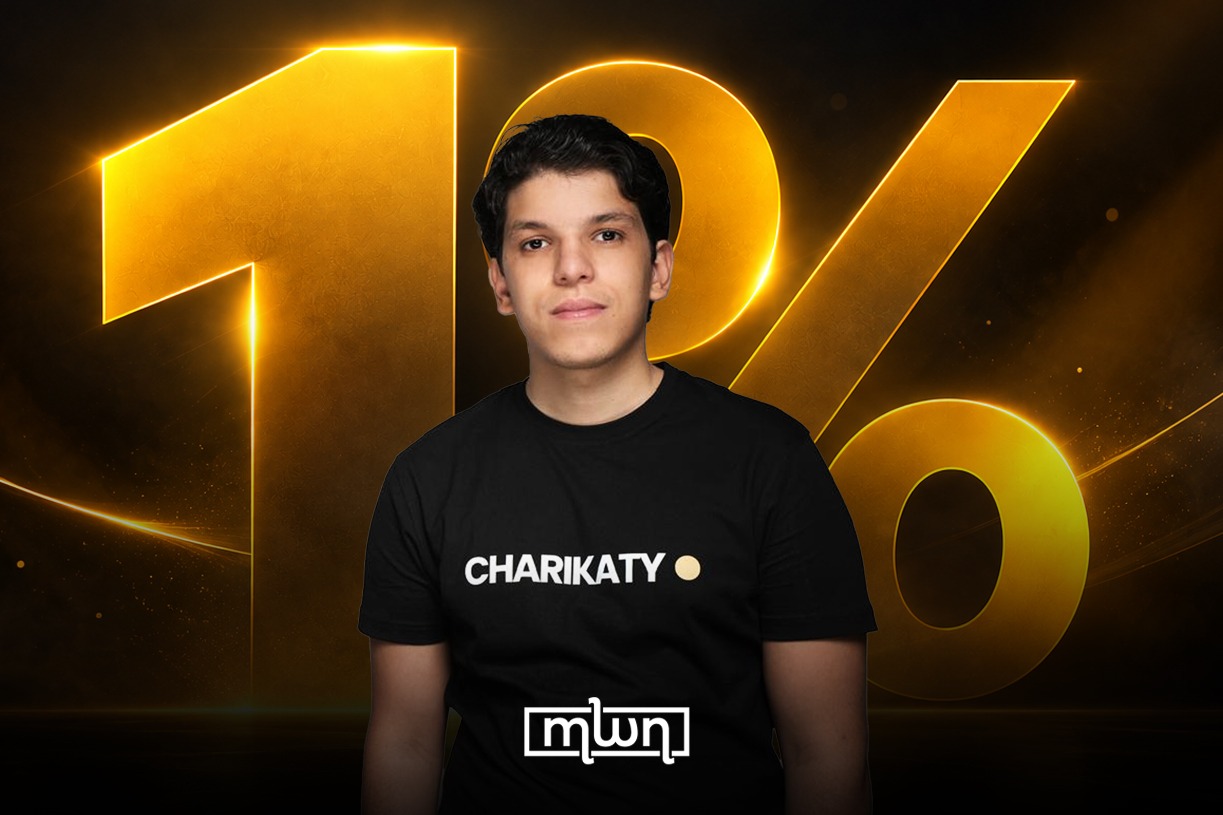
Casablanca – Moroccan legaltech Charikaty now accounts for 1% of all company creations in Morocco, with one in every 100 companies created in the country in September incorporated through its platform, according to the company’s figures. Among companies created online, its share stands at nearly 2%.
The milestone gives Charikaty a measurable position in a national market that produced 60,908 new companies in the first seven months of 2026, an average of close to 8,700 a month, according to the Moroccan Office of Industrial and Commercial Property (OMPIC).
It also comes weeks after the company closed a pre-seed round at a €3 million valuation with investors from the Gulf, capital earmarked for services covering the wider lifecycle of a business.
For co-founder and CEO Amr Mouaqit, the figure is a threshold the company has been working toward since the round. “Reaching 1% of national company creation is the first metric that allows us to situate Charikaty within the market as a whole, rather than within the online segment alone,” he said. “The figure itself is a milestone. What the path to it tells us about Moroccan entrepreneurs is more significant.”
Based at Technopark Casablanca, Charikaty allows entrepreneurs to incorporate companies and foreign subsidiaries fully online, with a legalized electronic signature and a fixed price disclosed upfront. It operates in a market traditionally served by lawyers, accountants and fiduciaries, and its growth reflects a broader shift in how Moroccan businesses are being created.
Co-founder and COO Driss Sijelmassi says the figure is as much a measure of execution as of demand. “Handling one in every 100 company creations in the country is a question of process discipline,” he said. “Every file carries a founder’s expectations and a legal deadline. The volume is only meaningful if each dossier is treated with the same rigour as the first one we ever filed.”
Convenience and certainty
Beyond the headline figure, the company’s data points to several patterns in how Moroccan entrepreneurs approach incorporation. The first concerns what founders prioritise when choosing a provider.
Price, Mouaqit says, is seldom the deciding factor. “The questions we receive are about timing and accountability: how long the procedure takes, and who is responsible if a difficulty arises. Entrepreneurs are not purchasing a set of formalities. They are purchasing the assurance that the formalities will be completed correctly and on time.”
The observation points to a market in which the administrative process is treated as a risk to be eliminated rather than a cost to be minimised, a dynamic that favours providers able to deliver consistent service and follow-through.
Digital speed, human accountability
The second pattern concerns the relationship between digitalisation and trust. Morocco has moved a substantial part of company creation online: 44% of all company creations in 2026 have been filed electronically through the DirectEntreprise platform, with more than 50,300 companies created by electronic means since its launch, according to OMPIC. In several cities, the electronic share exceeds 70%.
Mouaqit describes the shift as a structural achievement for the country, but one that has not changed what founders expect from the process. “Digitalisation has removed the physical constraints of incorporation. It has not removed the need for a responsible interlocutor. Almost every founder we work with wishes to speak to a person before committing, and that expectation is entirely legitimate. The technology delivers the speed; the professional delivers the confidence.”
Charikaty’s model reflects that position: filings are handled on the platform, while a named jurist is attached to each file and remains the client’s point of contact throughout.
The geography of demand
The third pattern is the most revealing about the company’s client base. A large number of Charikaty’s clients are Moroccans living abroad, and two in three companies created through the platform are established outside Casablanca.
The pattern stands out against national data. OMPIC figures show that Casablanca-Settat alone accounts for 39.3% of legal entities created in Morocco in 2026, with the next three regions together contributing a further 37.6%.
“Distance remains the principal barrier to entrepreneurship in Morocco,” Mouaqit said. “A founder in Brussels or in Laâyoune should not have to take a day’s leave or board a flight to create a company. Remote incorporation does more than save time. It extends access to a procedure that was, in practice, built around physical presence in the major urban centres.”
Charikaty’s dedicated channel for the Moroccan diaspora allows founders abroad to incorporate without a proxy or consular appointment, which helps explain the weight of clients outside Morocco in its activity.
Creation as a point of entry
The final pattern explains why Charikaty tracks its share of company creation at all, given that its strategy extends well beyond incorporation.
“A company created today will require an accountant tomorrow, electronic invoicing compliance next year, and statutory amendments throughout its existence,” Mouaqit said. “Incorporation is the beginning of a relationship. The value lies in everything that follows.”
The pre-seed capital is being deployed accordingly, including an accounting and compliance venture built around Morocco’s accounting and tax framework and the country’s incoming electronic invoicing mandate.
“Incorporation gives us a relationship with a business at the moment it comes into existence,” Sijelmassi said. “Accounting, compliance and legal maintenance are what that business will need every month thereafter. Our role is to make certain that the standard of service does not change when the nature of the service does.”
Seen that way, the 1% share is a starting point: each company incorporated through the platform is an opportunity to support that client throughout its business lifecycle, and Charikaty is now building the services to do so.