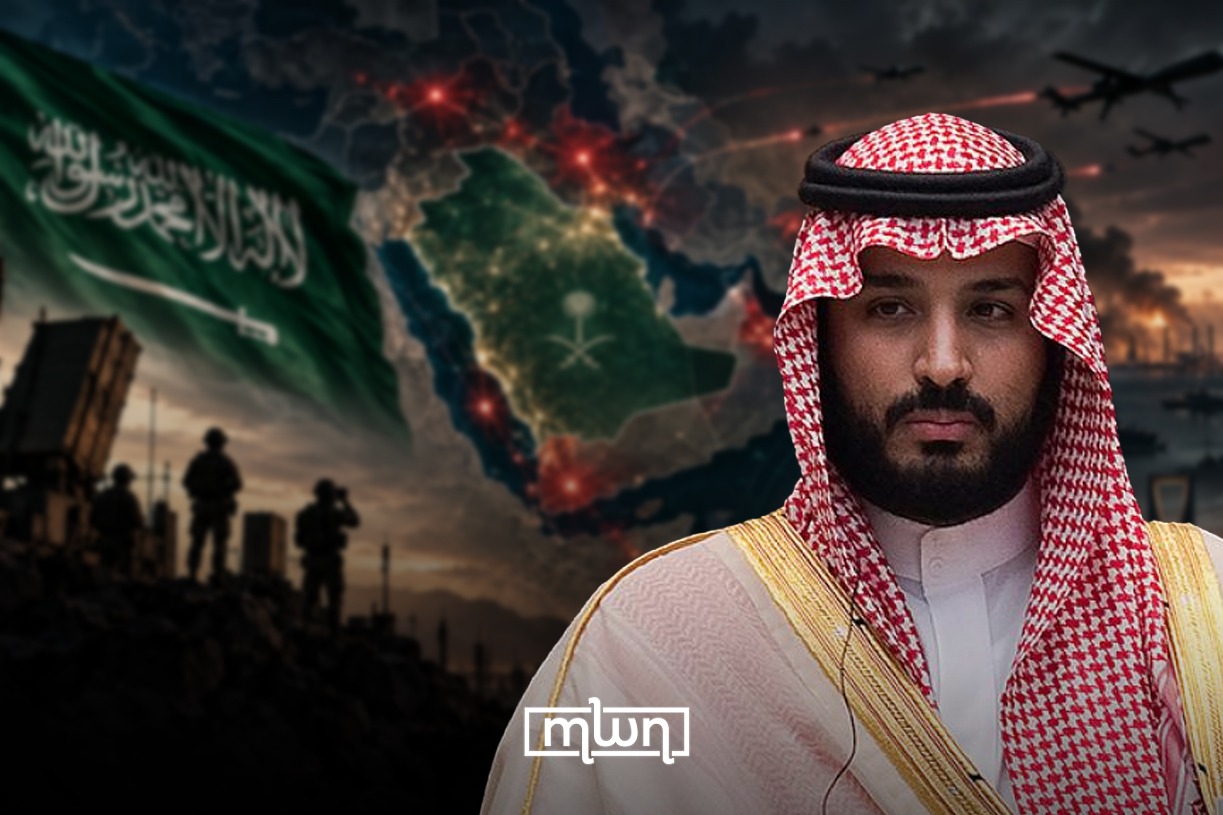
Rabat – A violent attack by the Houthis hit Saudi Arabia’s King Khalid International Airport on October 10, killing at least 12-13 people and severely injuring 300 more. The following day was marked by another Houthi attack that killed one Pakistani national and injured nearly a dozen people at the same airport.
The Houthis claimed direct responsibility for both attacks, marking disruptions to Saudi air defense, sparking public fear, and a severe escalation of the tentative stalemate between Houthis and Saudi-backed Yemeni government forces. The attacks are among the deadliest offensives Saudi Arabia has seen in the past decade, flagging a prominent security threat as the kingdom maintains its operations against the Iranian-backed Yemeni group.
Factors contributing to the recent escalation include geopolitical security risks in the US-Israel and Iran war, control over critical chokepoints, and increased territorial expansion.
Yemeni government-aligned forces have launched Operation Dawn of Yemen, with direct Saudi military support as part of their counteroffensive. The retaliatory military campaign seeks to recover from the Houthis control over portions of Yemen’s Red Sea maritime trade routes and Bab al-Mandab, both of which are critical to Saudi Arabia traditional oil exports.
Yet Saudi Arabia faces external trade limitations due to direct Iranian occupation of the Strait of Hormuz, a direct consequence of the US-propagated war with Iran. These strategic chokepoints constitute an immediate threat to the Saudi Arabian economy, which is critically supported by its oil exports, exacerbating Saudi domestic frustration.
The original, UN-brokered 2022 ceasefire aimed to halt any offensive attacks and has resulted in mitigated violence. While this agreement left the country in a reluctant stalemate, the fast-paced events of the last week have laid bare the rapid deterioration of the hesitant peace that had prevailed until now.
Indeed, the Houthis have justified the events of the past weekend with references to previous attacks on the Sana’a airport when returning from the late Supreme Leader Ayatollah Ali Khamenei’s funeral. Saudi Arabia’s “willingness to attack Sanaa Airport to prevent flights from arriving or departing gives Yemen the right to strike their airports and to impose on them a siege just as they have done to us,” said Mohammed al-Bukhaiti, a member of the Houthi political bureau.
Inside the expanding escalation
Saudi Arabia’s distinct support for the internationally recognized Yemeni government, the Presidential Leadership Council, is an integral part of its interest in ousting the Iranian-backed Houthis from its immediate border.
The Houthis are closely allied with Iran, and regional observers have long argued that this lays the groundwork for proxy warfare. The Houthis benefit from Iranian weapons and covert support from Tehran, with the broader Iranian goal of regional dominance. Although closely backed by Iranian regional interests, the Houthis and Iran have distinct objectives.
The Houthis recently seized the Red Sea coastline, impacting tense relationships with global powers like the United States. Strategic islands in proximity to the Bab al-Mandab Strait, specifically Mokha, Mayyun, and the Hanish Islands, have recently been under Houthi control, flagging a security threat to Saudi Arabia, which relies directly on Bab al-Mandab’s role in oil exports.
The additional context of the broader geopolitical crisis with the Iranian-controlled Strait of Hormuz has complicated Saudi economic interests on a large scale. Houthi control of critical commerce points has meanwhile deepened Saudi fears regarding the security of Saudi petroleum facilities and oil tankers in the Red Sea.
The emerging picture thus draws the contours of a broader proxy warfare between Saudi Arabia and Iran, with both countries pursuing regional dominance by utilizing proxy conflicts amidst their geopolitical rivalry.
Some critics argue that the Houthi offensive is a strategic choice to expand Iranian influence in the broader sphere of the war that the Iranian theocracy faces. In contrast, a second camp believes that the two conflicts are largely distinct, with the circumstances in Yemen acting as the basis of Houthi fundamentals and not a direct Iranian interest.
An ambiguous international response
International condemnation of Houthi actions and the escalation of violent attacks is exemplified by the far from clear positions of Saudi allies like Pakistan and Turkey, the noncommittal attitude of countries like France and other European nations, America’s half-hearted commitment to supporting Saudi Arabia’s anti-Houthi operations, and the UAE’s complicated stance on the Yemeni front.
The United States has been critical of the Houthis and even attempted involvement in this conflict. However, direct military involvement has been limited due to the May 2025 Agreement between the Houthis and the United States, which stopped Houthi attacks on U.S. maritime trade in the Red Sea.
The tense diplomacy between the two parties acts as an incentive for the United States to not instigate direct military campaigns, despite support for Saudi Arabia and the PLC. Yet Trump recently informed reporters outside the White House of the potential for US involvement in the conflict following the latest Houthi attack on Saudi Arabia. “We may. We’re going to look at it,” he said. We just found out about the recent attack. So, we’ll make a decision. We move very quickly.”
Smaller external powers play a critical role in the defense strategy of Saudi Arabia, specifically Pakistan and Turkey. Both have pledged military assistance as part of the Mecca Joint Defence Agreement, which states that an armed attack against one member is an attack on all three members.
Pakistan’s interests fall in line of global trade, maintaining Saudi security cooperation and supporting its regional partner. Although Pakistan has pledged direct support, it’s critical to comprehend that Pakistani foreign policy has been cautious about direct involvement while clearly condemning the recurring Houthi attacks.
Turkey has provided a substantial form of support through military equipment, air defense capabilities, and drone expertise while emphasizing that Turkey is not committing ground troops to Yemeni offensive operations.
Both of these allies are critical for the analysis of the Saudi defense strategy of avoiding complete dependence on Washington’s protection by diversifying its defense relationships. Pakistan and Turkey are part of the broader R4 regional group, made up of Turkey, Egypt, and Saudi Arabia, whose member nations have released joint statements condemning the recent attack, flagging it as a “flagrant violation of international law.”
The United Arab Emirates has a nuanced relationship with Saudi Arabia, fighting for hegemony of the region while sharing the common objective of defeating what they see as Iranian expansionism through the Houthis.
And so, the events of October 10 have escalated the conflict in Yemen, giving the once dormant Yemeni crisis a new impetus. After years stuck in a reluctant stalemate, the conflict appears to have entered a vicious cycle of violent disputes over territorial control and socio-ideological prevalence over Yemen’s fractured political scene.