

Governments are not merely collections of names assigned to portfolios, nor are the names of the portfolios themselves simply neutral administrative labels. At moments of political transformation, the very architecture of a government becomes a language in its own right. What is merged and what is separated, what remains and what changes, and what is added to or removed from the name of a ministry can sometimes reveal more about the priorities of a political era than lengthy speeches ever could.
From this perspective, Morocco’s new government, whose members were appointed in a ceremony presided over by King Mohammed VI on Friday, October 16, 2026, and which is headed by Ms. Fatima Zahra Mansouri, invites analysis on several interconnected levels: political, economic, social, and even psychological.
The significance lies not only in the fact that Morocco is entering a historic experience in which a woman heads the government for the first time, but also in a broader rearrangement of priorities within the executive branch—one that appears to seek a balance between continuity in the state and renewal in the tools through which it operates.
A Woman at the Head of Government: Beyond the Symbol
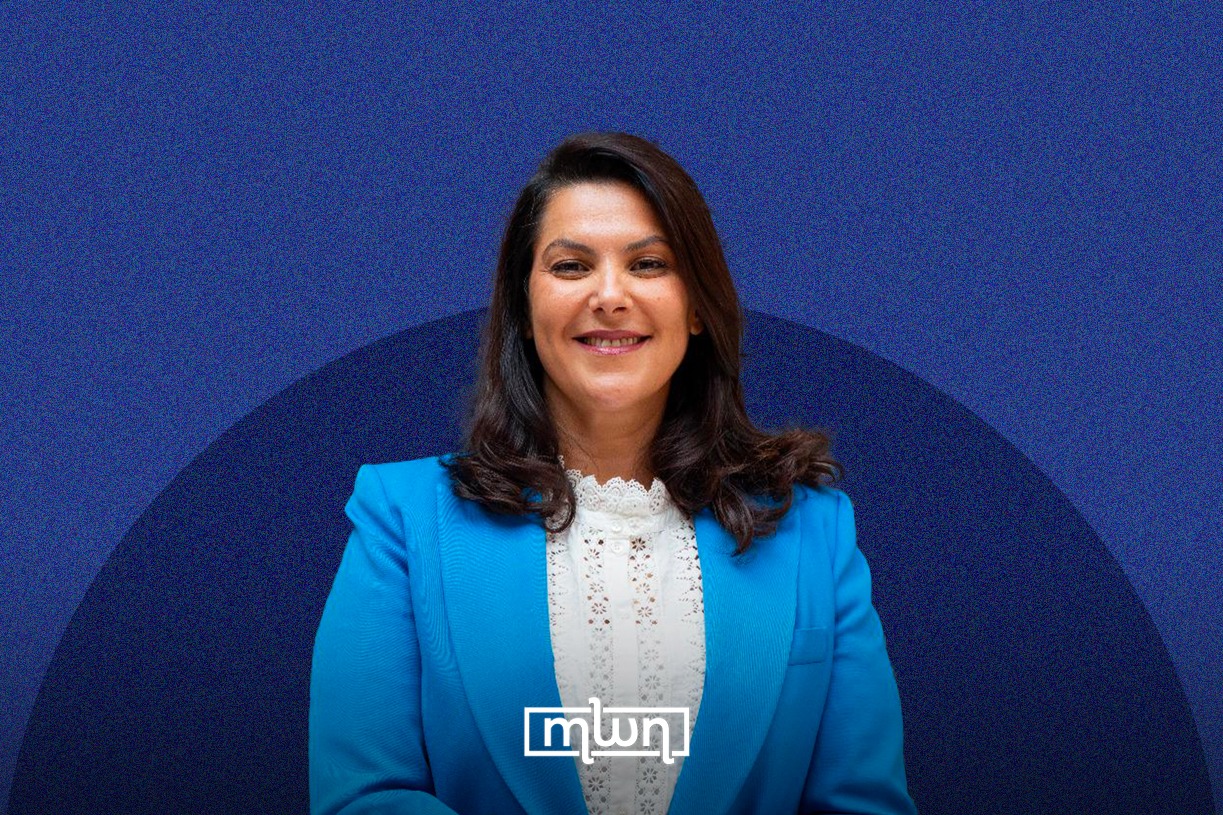
The first thing that will undoubtedly remain engraved in the political memory of this period is the appointment of a woman as Head of Government.
This precedent carries political and legal significance, but its social and psychological implications may be considerably deeper.
Societies do not change through laws alone. They also change through what sociologists might describe as “models of possibility.” When, for the first time, a Moroccan girl sees a woman occupying the highest executive position in government, the boundaries of what she can imagine as possible for herself naturally expand.
In this sense, Fatima Zahra Mansouri’s position at the head of government becomes more than a personal or partisan victory. It breaks a long-standing mental image associating the highest levels of political leadership primarily with men.
Nor does the issue stop with the Head of Government. The new cabinet includes seven women in different governmental positions, overseeing areas such as energy and sustainable development, family affairs and equality, relations with Parliament, vocational training, housing, and administrative reform.
The significance here is not merely numerical. Women are no longer confined to what were traditionally described as “soft social sectors”; they are now present in institutional, economic, and strategic portfolios as well. There had, of course, already been precedents, such as Nadia Fettah Alaoui serving as Minister of Economy and Finance. Today, however, she is succeeded by Fouzi Lekjaa, a newcomer to the Authenticity and Modernity Party, who had previously served as Minister Delegate in charge of the Budget and has now risen to head the ministry itself.
At the same time, it would be a mistake to reduce equality to the number of women seated around the Cabinet table. The real test will lie in the policies that are produced for Moroccan women in employment, education, social protection, and access to decision-making positions.
From “Solidarity, Social Integration, and Family” to “Family, Social Development and Equality”
Perhaps one of the most revealing details is the change in the language itself. Today, we have a Ministry of Family, Social Development and Equality. Adding the word “equality” may appear to be a merely formal detail, but from the perspective of symbolic politics, it is not. The ministry is no longer speaking only about the family as an institution that must be protected. Alongside it, it places a clearly normative concept: equality.
This suggests that the social debate of the coming years may not revolve solely around providing support to vulnerable groups. It may also concern the anticipated changes to the Family Code reform process in response to the previous royal address and the lengthy debates it generated among left-wing, right-wing, and centrist currents—between authenticity and modernity, tradition and modernity, what some describe as “backward-looking” tendencies and progressive ones. Deeper debates are therefore likely to emerge around women’s empowerment, employment, social protection, persons with disabilities, social inequality, and perhaps the relationship between the transformations affecting Moroccan family structures and values and the need to preserve the cohesion of the Moroccan family.It is precisely here that the government will face a particularly delicate challenge: how can society be modernized without creating, among part of the population, the feeling that its identity or fundamental reference points are under threat?
The First Ministry to Carry “Artificial Intelligence” in Its Name
Yet perhaps the most striking title in the new government is undoubtedly: The Ministry of Artificial Intelligence, Digital Transformation and Administrative Reform. Officially incorporating the term “artificial intelligence” into the name of a ministry carries significance far beyond a passing technological trend. Artificial intelligence is no longer treated as a secondary file housed within another ministry. It has become a clearly defined governmental field, with its own minister, policies, and political accountability. This development can almost be seen as a direct institutional translation of one of the central themes of the King’s speech at the opening of Parliament on Friday, October 9, 2026, in which the King called for the launch of a new generation of major strategies, including the digital economy and artificial intelligence, alongside water, energy and food security, as well as industrial development. Only one week separates the royal address of October 9 from the establishment, on October 16, of a ministry bearing the name “artificial intelligence.” The political message here appears clear: technology is no longer viewed by Morocco simply as a complementary sector of the economy. It has become part of the country’s conception of sovereignty and development. The real test, however, begins now. Will this merely become a ministry concerned with “digitizing documents”? Or will Morocco move toward the development of genuine Moroccan artificial intelligence: properly governed public data, computing infrastructure, scientific research, start-ups, digital sovereignty, cybersecurity, engineer training, and the use of AI in healthcare, education, agriculture, and public administration? Most importantly, will citizens actually be able to access faster and simpler administrative services? Ultimately, citizens are less concerned with the title of a ministry than with one straightforward question: will public administration become less complicated?
Continuity at the Core of the State
Alongside this renewal, however, there is remarkable continuity in several key sectors. Abdelouafi Laftit remains at the head of the Ministry of the Interior, Nasser Bourita continues in Foreign Affairs, Abdellatif Ouahbi in Justice, Ahmed Toufiq in Islamic Affairs, and Abdellatif Loudiyi in the National Defence Administration. The philosophy behind the new cabinet therefore, appears relatively clear: change does not necessarily mean breaking with institutional continuity. Within states, certain areas depend on the long-term accumulation of knowledge, relationships, and institutional experience: internal security, diplomacy, defence, management of the religious sphere, and justice. The continuation of these figures can therefore be read as a message of reassurance both domestically and internationally: the governing majority and the Head of Government may change, but the state does not start from scratch every five years. This philosophy might be summarized in two phrases: Continuity in the fundamentals, and experimentation in the tools of development.
The Return of Politics… and the RNI Moves into Opposition
Politically, however, the change goes deeper than simply replacing the Head of Government.
The new majority includes the Authenticity and Modernity Party, the Istiqlal Party, the Socialist Union of Popular Forces, and the Party of Progress and Socialism, while the National Rally of Independents—the party that led the previous government—has moved into opposition. This reshapes Morocco’s political map. The inclusion of the Socialist Union of Popular Forces and the Party of Progress and Socialism alongside Istiqlal and the Authenticity and Modernity Party gives the government—at least in terms of its political composition—a stronger dose of social discourse. This does not necessarily mean that Morocco now has a “left-wing government,” since the coalition is far more complex than that. But it does mean that this majority will find it politically difficult to ignore issues such as social justice, employment, public education, healthcare, and territorial inequalities.
From a democratic perspective, having a major party such as the National Rally of Independents outside government could also benefit parliamentary life if it leads to the emergence of a strong and institutional opposition, alongside, of course, the Justice and Development Party and the Popular Movement. Yet the opposition bloc can hardly be described as politically coherent. It may even contain forms of “opposition within the opposition,” making it difficult to predict whether it will be able to exercise sufficiently strong oversight to reach the level of a motion of censure or the creation of parliamentary fact-finding commissions capable of producing tangible effects on the ground.
The Names of the Portfolios Themselves Reveal the Philosophy of the Period
It is particularly interesting to read the government through the new terms that have entered the names of its ministries.
We now find: “Public efficiency” alongside economy and finance. “Food sovereignty” alongside agriculture and fisheries. “Investment” and “economic inclusion” alongside industry and trade. “Qualification” within the education system. The fight against school dropout as a distinct delegated ministerial responsibility. Social inclusion. Equality. Artificial intelligence. These are not arbitrary words. Together, they provide something close to a map of the government’s architecture and the country’s major needs over the coming years. “Food sovereignty” reflects a world in which food security has become part of national security. “Public efficiency” means that the question will no longer simply be how much the state spends, but rather: what does it achieve in return for what it spends? “Economic inclusion,” meanwhile, suggests that economic growth alone is no longer sufficient if young people, the middle classes, and vulnerable groups do not feel its effects. The decision to create a delegated portfolio dedicated to combating school dropout—which has reached alarming levels—also sends a particularly clear message: when a child leaves school, this is not merely an educational issue; it may be the beginning of a chain of economic and social vulnerability.
From an Economy of Growth to an Economy of Sovereignty
Economically, the government can be interpreted as an attempt to move away from a logic of separate sectors toward what might be called an economy of sovereignty. Food sovereignty. Energy sovereignty. The digital economy. Artificial intelligence. Industry. Foreign trade. Strategic reserves. These are almost exactly the same areas that the most recent royal address identified as priorities for a “new generation of major strategies.” The speech also called for strengthening the role of the private sector in investment, innovation, exports, and job creation.
We therefore appear to be witnessing a gradual shift away from the traditional question: How much will the Moroccan economy grow? toward a more complex question: To what extent does Morocco control the conditions that make its growth possible? A country that depends excessively on foreign sources for energy, food, technology, or data remains vulnerable to external shocks regardless of the rate at which its economy grows.
Youth: A Problem Present Across More Than One Ministry
One of the most interesting aspects of the new structure is that the question of youth is not confined to the Ministry of Youth. It is present in education and vocational training, employment, economic inclusion, the fight against school dropout, investment, artificial intelligence, and the digital economy. This makes sense, because the “youth problem” is not a single sector. A young person who sees no future in their own country—and here the recent events in Ceuta must be strongly kept in mind—does not necessarily need merely another youth centre. They may need a better school, training that is connected to the labour market, a liveable city, financing for a project, institutions in which their voice is heard, and the feeling that their own effort can actually change their social position. It was therefore significant that the latest royal address placed young people at the centre of public policy and linked their situation to equal opportunities, education, qualification, economic inclusion, and confidence in the possibility of social mobility. The decisive word here is confidence.
The Government from a Psychological Perspective: The Battle of Expectations
This brings us to a dimension that is often absent from political analysis: the psychology of society. The formation of a new government usually produces a temporary rise in expectations: a woman serving as Head of Government for the first time; a ministry of artificial intelligence for the first time; new faces; new titles; and a new discourse centred on equality, sovereignty, efficiency, and inclusion. All of this creates what might be called a psychological window of hope. But that window has another side. The higher expectations rise, the greater the cost of disappointment if citizens do not actually feel that change has taken place. The greatest danger facing a government that raises the symbolic stakes so high is therefore not necessarily political opposition. It is the gap between the language of renewal and citizens’ everyday experience. If hospital appointments remain distant, schools continue to struggle, job opportunities remain scarce, public administration remains slow, and prices remain burdensome, citizens will not be particularly persuaded simply because words such as “efficiency” or “artificial intelligence” have been added to the names of ministries. The most important political and psychological capital of this government will therefore be its ability to produce small, tangible, and rapid victories.
A Double Test for a Woman at the Head of Government
There is also a social paradox that should not be ignored. Fatima Zahra Mansouri will not be judged only as a Head of Government. Part of public opinion, consciously or unconsciously, will also judge through her the ability of women in general to lead a government. From a logical perspective, this is unfair. When a man fails as Head of Government, his failure is not normally regarded as a failure of all men. Yet this is often the nature of historic breakthroughs: the first person to break through a ceiling carries a heavier symbolic burden than those who follow. The success of her experience could therefore leave an impact extending far beyond her party and her term in office, reaching into Moroccan political culture itself.
In conclusion, we can only hope that the new government will be a government of results—one capable of meeting popular expectations and overcoming past disappointments—rather than a government of speeches, slogans, and political window dressing.


