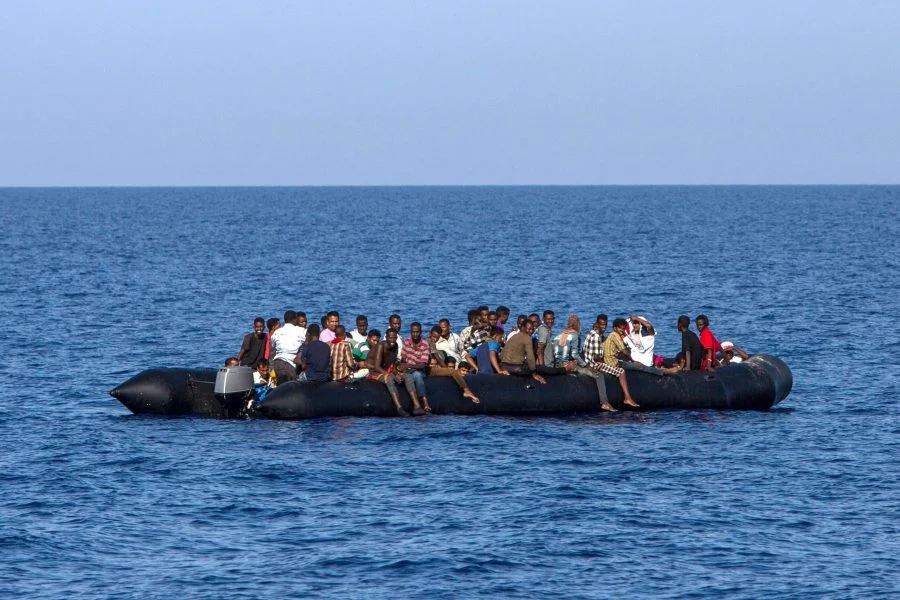
Rabat – A Spanish judge in Lanzarote decided to refer proceedings concerning an alleged rape aboard a migrant boat traveling from Agadir, Morocco, to the Canary Islands to the Spanish Ministry of Justice, asking it to transfer the case to Moroccan authorities and those of three other countries.
The Court of First Instance in Arrecife, Lanzarote, said today that Spanish courts lack jurisdiction to hear a complaint concerning alleged acts of sexual violence committed during an irregular migration journey aboard an inflatable boat traveling from Agadir to the Canary Islands.
The judge ordered the case to be closed in Spain, ruling that the decision contains no judgment on the truthfulness of the complaint, the existence of the crime, or the involvement of the suspects.
“The case was closed solely because no legal basis allows Spanish judges to investigate what happened,” a statement from Spain’s judicial authorities said.
The case dates back to when a woman from Guinea filed a complaint upon arriving in the Canary Islands, reporting that she had endured sexual violence at the hands of suspects aboard the migrant boat.
During the initial investigation, authorities conducted medical examinations, including expert assessments, and identified three suspects. They included two Malian nationals and one national of Burkina Faso. The court ordered their provisional detention on September 19, and the decision was upheld on September 21.
However, a public prosecutor called for the immediate release of the suspects on September 24, citing the lack of jurisdiction of Spanish courts.
“The ruling notes that the distance between Agadir and the Canary Islands’ coast is approximately 222 nautical miles,” the statement said, adding that Spain’s territorial sea extends 12 nautical miles from its coast.
“There is also no evidence that the boat was flying the Spanish flag. Therefore, in the judge’s words, ‘the basis for jurisdiction under Article 23.1 of the Organic Law on the Judiciary does not apply,’” the Spanish judicial authorities said.
The ruling raises questions about how allegations of serious sexual violence are handled when they occur outside a country’s territorial waters, particularly when victims subsequently arrive on its territory seeking protection.
While the court cited legal restrictions on Spain’s jurisdiction, its decision to refer the proceedings to authorities in four countries highlights the challenges of ensuring that serious allegations are investigated when questions of territorial jurisdiction and the nationality of those involved complicate the process.