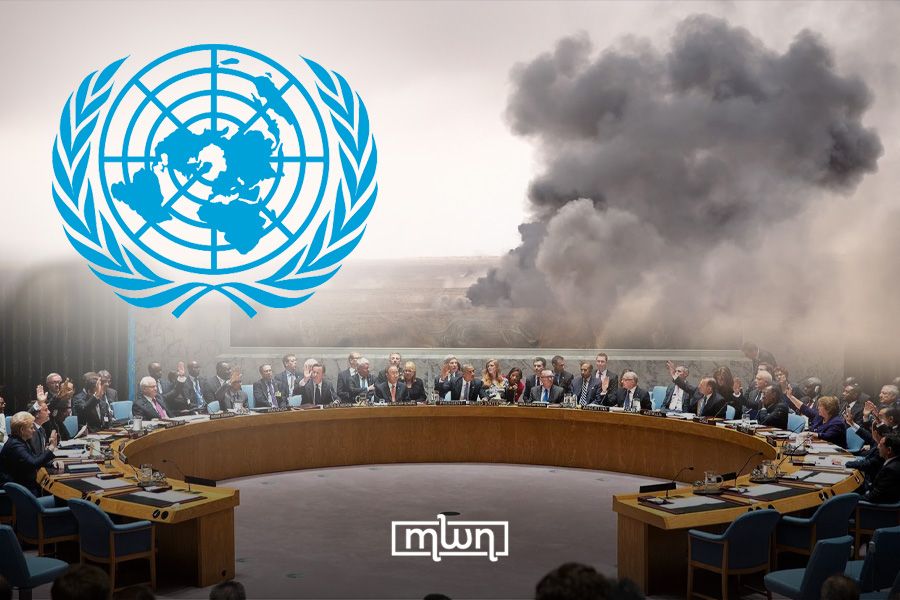
Rabat – The upcoming UN Security Council (UNSC) resolution on Western Sahara is set to condemn Polisario’s attack against Es-Semara, targeting civilians in southern Morocco.
The draft resolution, with the US as penholder, is set to condemn the May 5 attack in Es-Semara, deploring the failure of “one party to engage substantively in negotiations facilitated pursuant to Resolution 2797 (2025).”
Polisario claimed responsibility in May for the attack involving three projectiles targeting the city.
Reports said a woman was injured and taken to the hospital, with authorities reportedly denying any significant material damage.
This is not an isolated incident, as the separatist group has carried out several attacks seeking to undermine Morocco’s territorial integrity and security.
The draft resolution confirms Polisario’s defiance and violations of the UN-led political process, which seeks an agreed-upon, mutually acceptable solution to end the dispute over Western Sahara.
It also comes as a knockout to Algeria’s regime, which continues to use Polisario as its puppet to serve its agenda, challenging Morocco’s territorial integrity and sovereignty over its southern provinces.
The draft resolution has not been officially authenticated. However, the text has been shared by several observers, including former Polisario member Mustafa Salma Ould Sidi Mouloud.
While Resolution 2797 of October 2025 used clear language, holding Algeria’s regime responsible in the dispute as a main party, the Algerian regime continues to advocate for a solution between Morocco and Polisario.
Scrutiny grows over Tindouf camps
The separatist group, however, through several reports documenting its illegitimacy to represent the Sahrawis, continues its violations of UN resolutions through attacks and also through oppressing Sahrawis held captive in an open prison in Tindouf, where they are restricted in their movement and also endure diseases and malnutrition.
Algeria’s regime hosts Polisario’s leadership, and in a joint agreement, they are disallowing a census in the Tindouf camps, where states say 90,000 Sahrawis live. However, former Polisario members, including its founding members, have long contested that the number of actual Sahrawis in the camps does not represent more than 20% of the total population, with the rest coming from Algeria itself and the Tuareg.
The situation in Tindouf has long also been a concern for UN Secretary-General António Guterres, who has expressed his frustration over how Sahrawis are malnourished and continue to experience dire conditions.
Despite the multimillion-dollar donations, Sahrawis in the camps find themselves facing several challenges due to the mismanagement and embezzlement of funds directed to Sahrawis by Polisario’s leadership under Algerian watch.
The draft resolution holding Polisario responsible for failing to engage in talks and for its responsibility in the process comes amid efforts by the US — the penholder of UNSC resolutions — to facilitate talks between the parties to the dispute.
The US facilitated three rounds of talks, including Madrid and Washington roundtables earlier this year, which brought all parties to the dispute together.
Washington continues to stress the need to resolve the longstanding dispute and has acknowledged the obstacles posed by Polisario and Algeria. Despite these challenges, UN and US officials see prospects for progress.
As the Security Council prepares to vote on the draft resolution later this month, congressional bills warning against Polisario’s threats have already been gaining ground among senators and congressmen and women.
Two congressional bills have been urging the US administration to designate the Polisario Front as a terrorist group.
The first congressional bill calling for Polisario to be designated a terrorist group was introduced in June of last year by Congressman Joe Wilson, who recalled Polisario’s collusion with Iranian proxy Hezbollah, warning the US of their cooperation, including Iranian arms supplies to the separatist group.