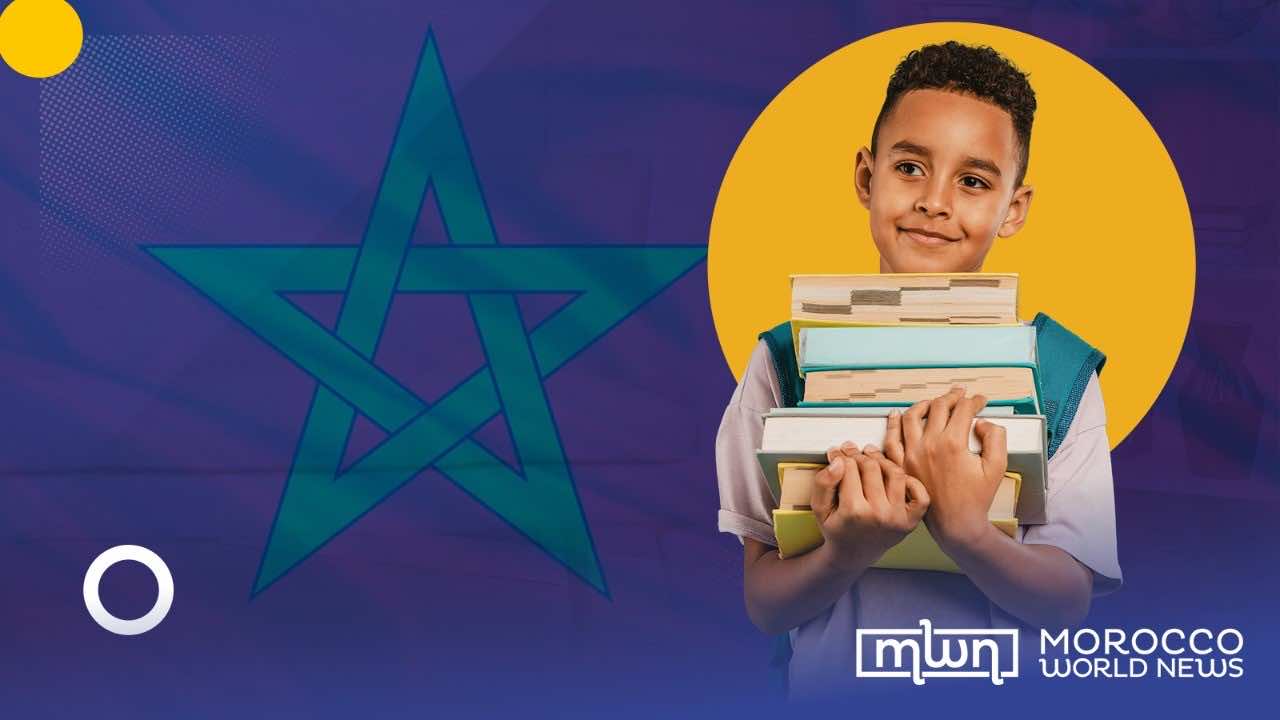
Rabat – Morocco will increase its budget for education, vocational training, and higher education to MAD 121.3 billion in 2027, up by MAD 5.3 billion from 2026.
Speaking during a session on the 2027 Finance Bill, Minister of Economy and Finance Fouzi Lekjaa said the increased allocation aims to address challenges facing the sector, including school dropout rates, while expanding vocational training opportunities and tackling persistent problems in the education system.
Earlier this month, King Mohammed VI chaired a ministerial council to examine and approve the general guidelines and orientations surrounding the upcoming Finance Bill.
Lekjaa, in a presentation before the monarch, said that through the Finance Bill, the government plans to prioritize integrating young people into education, vocational training, and decent employment.
A national program covering 2027-2031 will provide professional guidance, training, business support, and access to financing, guarantees, and markets.
The government also intends to replace fragmented sectoral initiatives with an integrated approach accompanying young people from education and training through employment and housing.
Several reports and assessments highlight major structural challenges alongside government reform efforts in Morocco’s education system.
Earlier this week, hundreds of preschool teachers gathered outside Morocco’s parliament, demanding integration into the public service, higher salaries, and better working conditions.
Beyond teachers’ demands, other challenges also include the alarming number of students who drop out of school.
Estimates show that nearly 280,000 students abandon school annually, with 160,000 dropping out at the middle school level.
In its 2026-2031 program, the new government led by Head of Government Fatima Ezzahra El Mansouri acknowledged the challenges hampering the sector.
She said approximately 2.9 million young people aged 15 to 29 are not in education, employment, or training.
“Unemployment among those aged 15 to 24 stands at 29.2%, while around 300,000 students leave school each year without obtaining qualifications,” the head of government said.
She called for an integrated policy that supports young people on their path toward economic and social stability.
In a speech presenting her government program, she said youth issues are given particular priority in the cabinet’s project, including attracting skilled professionals back to Morocco and reducing the emigration of highly educated graduates. She also vowed that her government seeks to integrate young people into contracts for major projects and preparations for the 2030 World Cup.