
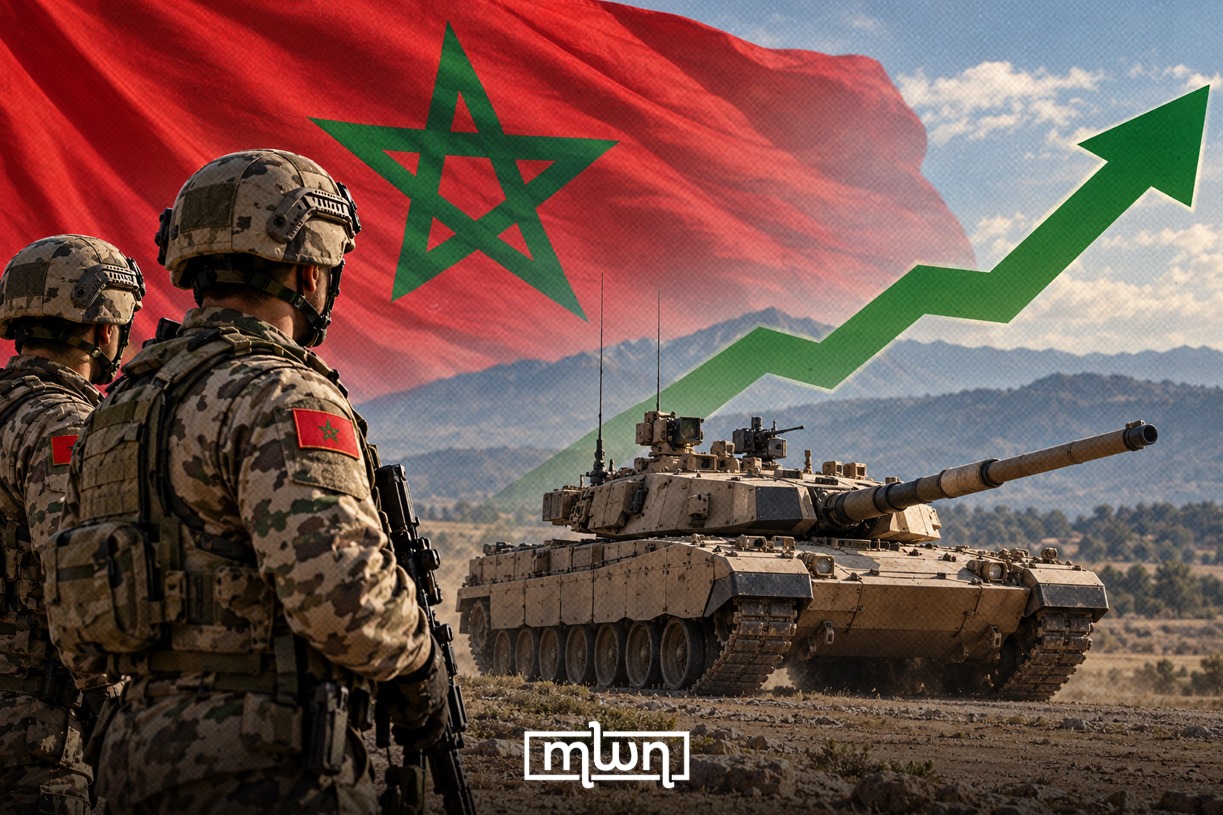
Marrakech – Morocco’s draft 2027 Finance Bill raises the ceiling for advance commitments to military equipment procurement, maintenance, and defense industry development to MAD 190.5 billion ($19.05 billion), an increase of approximately 21.2% over the previous year.
The provision appears in Article 36 of Finance Bill No. 60.26, which Economy and Finance Minister Fouzi Lekjaa presented to Parliament on Friday. It authorizes the minister delegate responsible for the National Defense Administration to enter into commitments during 2027 against appropriations to be opened in 2028.
The proposed ceiling represents an increase of MAD 33.329 billion ($3.33 billion) compared with the MAD 157.171 billion ($15.72 billion) authorized under the 2026 Finance Law.
The distinction is significant: the MAD 190.5 billion ($19.05 billion) figure constitutes an authorization for future financial commitments rather than an allocation to be spent entirely during 2027. It falls under a dedicated account covering the acquisition and repair of Royal Armed Forces (FAR) equipment and support for Morocco’s emerging defense industry.
Defense commitments continue to rise
The proposed increase extends a multiyear upward trajectory in Morocco’s military procurement authorizations. The comparable ceiling stood at MAD 124.766 billion ($12.48 billion) in 2024, before rising to MAD 133.453 billion ($13.35 billion) in 2025 and MAD 157.171 billion ($15.72 billion) in 2026.
If Parliament approves the new figure, the authorization will have increased by approximately 52.7% compared with 2024, reflecting the growing financial scope of Morocco’s defense modernization ambitions.
Beyond future procurement commitments, the draft budget provides a more detailed picture of military expenditure planned for 2027.
The National Defense Administration is allocated MAD 49.34 billion ($4.93 billion) for personnel expenses and MAD 8.38 billion ($838 million) for equipment and other operating expenditure under the general budget.
Its investment appropriations include MAD 7.2 billion ($720 million) in payment credits for 2027 and MAD 8 billion ($800 million) in commitments for 2028 and subsequent years. Separately, the dedicated military equipment and defense industry account lists MAD 11.49 billion ($1.15 billion) in expenditure for 2027.
The bill also provides for the creation of 5,500 budgetary positions within the National Defense Administration, placing it among the principal beneficiaries of the government’s planned public-sector staffing expansion.
From military procurement to defense sovereignty
The proposed financial commitments come as Morocco seeks to combine the modernization of its armed forces with the establishment of a domestic defense manufacturing base.
At the opening of the 2026 Marrakech Airshow on October 7, Minister Delegate for National Defense Administration Abdeltif Loudyi outlined Morocco’s ambition and determination to move from importing military equipment to manufacturing defense capabilities domestically.
Loudyi stressed foreign investment, technology transfers, industrial partnerships, and a regulatory framework intended to encourage defense manufacturing in Morocco. The approach aims to reduce dependence on imported equipment while integrating domestic manufacturers into international supply chains.
The framework includes Law 10.20, promulgated in 2020, and its 2021 implementing decree. A separate decree issued in June 2024 established two defense industrial acceleration zones, authorizing activities including the manufacture of defense equipment, weapons systems, and ammunition, alongside related services.
This orientation is already taking shape through projects such as Tata Advanced Systems’ armored vehicle factory in Berrechid, inaugurated in September 2025, and an agreement signed with French defense technology company Harmattan AI at the Marrakech Airshow to develop and manufacture the IRIFI autonomous long-range strike drone in Morocco, with a projected operational range of 2,000 kilometers.
The strategy follows the direction King Mohammed VI set in his July 29 Throne Day speech this year, when he identified national sovereignty and strategic self-sufficiency as priorities amid growing protectionism and international supply-chain disruptions.
The monarch specifically called for establishing an industrial and technological base in defense and cybersecurity, arguing that it would progressively strengthen Morocco’s defense sovereignty, generate economic opportunities, and consolidate the kingdom’s position as a regional power in these industries.
The 2027 Finance Bill therefore places defense investment within a broader strategy that extends beyond purchasing weapons. Its provisions seek to sustain military modernization while supporting the longer-term development of Morocco’s own defense production capabilities.