
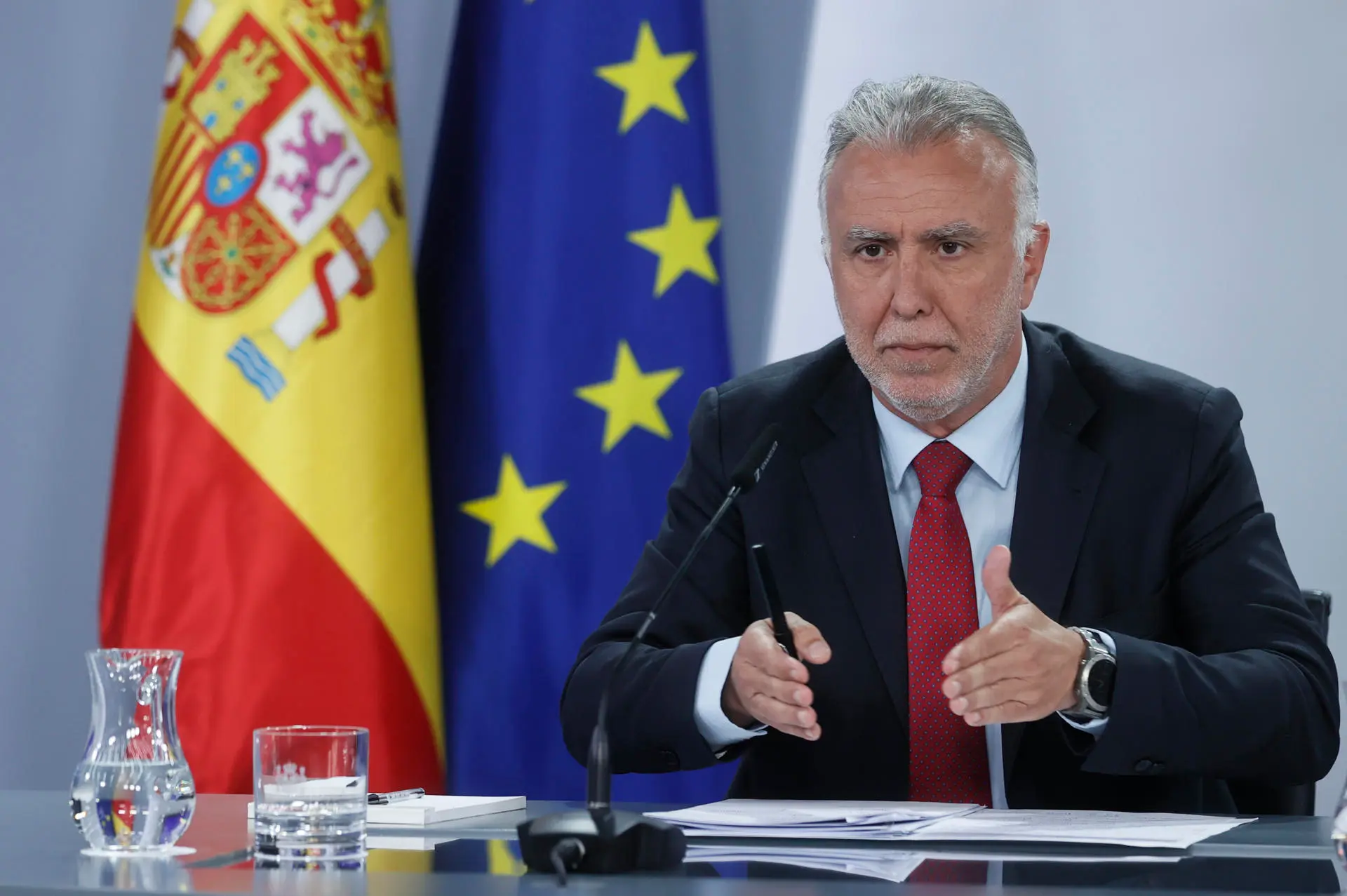
Rabat – Spain’s Minister for Territorial Policy and Democratic Memory, Ángel Víctor Torres, has urged Spanish politicians to avoid making accusations against Morocco without evidence, warning that a breakdown in relations between the two countries would have serious consequences for border regions.
Speaking at a breakfast event organized by Nueva Economía Fórum in Madrid on Friday, Torres defended cooperation with Morocco amid tensions over the recent migration crisis in Ceuta.
“It is very easy to go against the Kingdom of Morocco without evidence,” Torres said, according to Spanish newspaper El Debate.
He called for “responsibility and rigor,” arguing that Spain must protect its territorial sovereignty while maintaining good relations with its neighbor.
Torres also addressed reports alleging that Moroccan naval vessels had entered Spanish waters near Ceuta during the migration crisis. He said the presence of vessels from either country in waters near their shared maritime boundaries could occur.
The minister warned that border territories would be among those most affected if relations between Madrid and Rabat deteriorated.
His comments come after a large number of migrants entered Ceuta on July 30 and 31, prompting Spanish authorities to launch operations to manage the situation and arrange returns to Morocco.
According to Torres, 13,101 people had returned to Morocco since August 10. He also said authorities had established nearly 8,000 places in reception facilities in Ceuta, with around 6,100 occupied at the time of his remarks.
During the same event, Torres said Spanish authorities were carrying out an operation to remove around 200 migrants from private properties, including homes, garages, and rooftops, in Ceuta’s El Príncipe neighborhood.
Read also: Spain Needs Morocco’s Cooperation to Manage Migration, Sánchez Says
The operation was part of wider efforts to manage the migration situation in the Spanish autonomous city, which shares a land border with Morocco.
Torres also discussed the situation of unaccompanied minors in Ceuta. He said 3,434 minors had been identified and were receiving care through the city’s protection system. Of these, 114 had joined relatives in mainland Spain, while 181 had been transferred to other Spanish regions under the country’s immigration law.
Meanwhile, Morocco has firmly rejected accusations that its authorities facilitated or orchestrated the mass migration to Ceuta, arguing that the claims lack evidence and risk turning the country into a scapegoat in Spain’s domestic political disputes.
In a September 9 statement, Morocco’s Foreign Ministry said the country would not be used as a “pre-election political pawn” and reaffirmed its commitment to cooperation with Spain on migration and security. King Mohammed VI also said in October that the existing model of migration cooperation had reached its limits, calling for a new approach based on shared development and regional stability.