


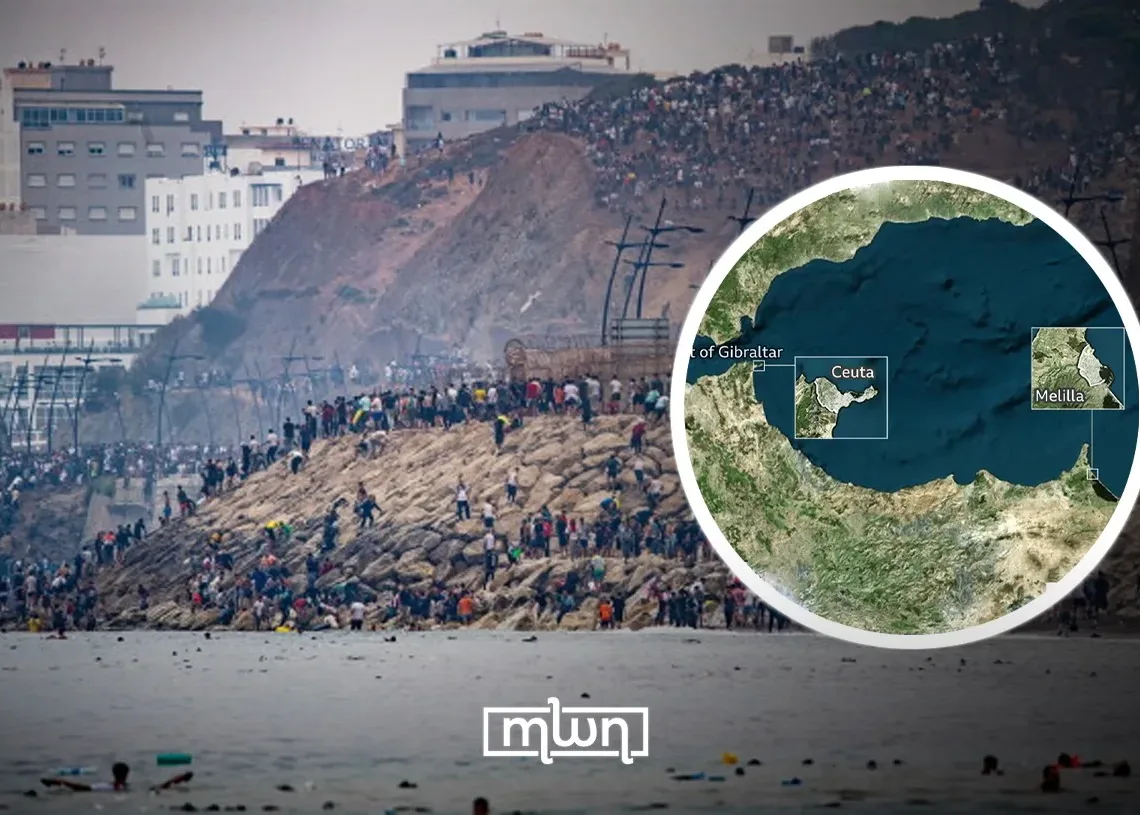
Rabat – A Spanish judge investigating the mass arrival of migrants in Ceuta in July has ordered the government to declassify intelligence reports concerning the incident and allegations concerning Moroccan authorities.
Judge María Tardón of Spain’s National Court gave the government 15 days to release reports the National Intelligence Center (CNI) prepared, Spanish public broadcaster RTVE and news agency Europa Press reported on Tuesday.
The request covers intelligence reports distributed to Spanish officials from July 30 onward concerning the events of July 30 and 31. Tardón also requested a list of officials who received intelligence notes previously declassified on July 27 and 30, including the dates and times they received them.
The judge said the documents were necessary to establish which Spanish authorities knew about calls encouraging people to cross into Ceuta, when they received that information, and what decisions they made in response.
The investigation is examining both Spain’s handling of the incident and allegations concerning the conduct of Moroccan authorities.
Investigation examines alleged Moroccan involvement
The order comes as Spanish media, including El País, continues to publish reports alleging Moroccan involvement in the mass crossings, based on police investigations and alleged videos, photographs, and witness accounts.
In its latest reporting, El País said Spanish police had identified 24 Moroccan agents through videos and photographs collected from social media and other sources. The newspaper reported allegations that some security personnel failed to intervene as migrants approached the border, while others appeared to direct people toward Ceuta.
In a separate report, El País, citing the investigation, said three witnesses who crossed into the Spanish enclave in July identified several Moroccan officials in photographs shown to them by police. EFE also reported on the witness identifications.
The reports present allegations under investigation, not judicial findings establishing that the officials identified organized or facilitated the crossings.
The latest declassification order, meanwhile, focuses on what Spanish authorities knew before the crossings, when they received intelligence, and how they responded.
Separate inquiry examines alleged naval movements
A separate part of the inquiry concerns reports of Moroccan naval activity near Ceuta during the same period. On October 21, Judge María Tardón asked Spain’s Defense Ministry to establish whether Moroccan naval vessels entered or operated in waters adjacent to the enclave between July 29 and August 10.
She also requested details of any interactions with Spanish military units and any available recordings of the vessels’ movements.
However, the judge explicitly stated that investigators had found no objective evidence linking the possible presence of Moroccan naval vessels to the mass arrival of migrants.
The court had not established that Moroccan naval units participated in, facilitated, or organized the crossings.
In addition, the waters around Ceuta remain subject to overlapping maritime claims, with no mutually agreed delimitation of the maritime boundary between Morocco and Spain in the area.
Read also: Spain’s Own Official Records on Ceuta Crisis Undercut Its Case Against Morocco




