

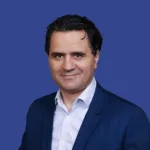

Fez – As 2013 is coming to an end, it is time to choose the personality that has left an indelible mark in the Moroccan political scene. Saying indelible mark does not necessarily mean a person that has had a positive impact on the country’s political affairs.
Any person that has been following politics in 2013 will agree that Hamid Chabat, the current head of the Istiqlal party, is one of the people that drew people’s attention, but also stirred controversy.
The current mayor of Fez managed to unseat the family of El Fassi and put an end to its prominence within the Istiqlal party, thus, giving people hope that the oldest and senior Moroccan party may be geared for a better era. For this achievement, some people have chosen Chabat as the man of year. In this regard, the Moroccan French language Magazine TelQuel chose Chabat as Moroccan man of the year.
While we agree that the head of the Istiqlal has become one of the most influential people in country’s political scene, we have, however, to disagree about choosing Chabat as the man of the year.
At MWN, we think that Mr. Chabat is rather the most controversial person of the year, and here follows why.
In total disregard of the country’s stability and strategic interests, Chabat made the unprecedented decision last May to leave the coalition government. What made the decision more problematic is that it was made while King Mohammed VI was on a private visit in Paris. The practice in the country for the past 5 decades implies that no major decision as such can be made while the head of state is away from the country.
The decision was followed by the collective resignation of the ministers who belong to the party with the exception of Mohamed El Ouafa, the ex-minister of education, who contradicted the move taken by his own party.
The King had to intervene and ask the members of the government to keep running the daily affairs of the country until he comes back from France and a new coalition government would be appointed.
We can only grasp the gravity of this selfish decision when we take into account the international and regional context in which it was made. Morocco is the only Arab country that has managed to weather the uprisings of the Arab Spring and put in place political reforms that saved the country from any slide towards chaos. In spite of these reforms, one has to acknowledge that the situation is still relatively fragile, since the country still suffers from a number of woes, such as high rate of unemployment, an increase of subsidized food prices, inadequate health and education systems, to name but a few.
Whether one agrees with his policies or not, the PJD-led government was doing its best to put Morocco on the right track and give the country’s poor a new hope for a better future. Any maneuver form any political party could endanger the stability of the government, thus, jeopardizing the future of the country.
Yet, for Mr. Chabat all these factors were of less importance, since the most important for him was to topple the government and prompt the celebration of early elections, with all the costs that this could mean for the country. Chabat was more interested in becoming a Prime Minister, a dream he must have had for a long a time, than in working for the country’s common good and preserving its enviable stability.
A person that one can choose as man of the year should have the characteristics of a statesman. A statesman is a person who always put his career at the service of his country, rather than the opposite. Yet, what Hamid Chabat did since he was assigned the presidency of the Istiqlal party is to put his country at the service of his personal ambitions, for he wanted to become head of government no matter what would be the cost for the country.
In addition to his controversial decision to withdraw from the government, Chabat made no secret of his will to simply topple a government that was democratically elected. In his rush to buy time and bring down his rivals, Chabat was ready to use all possible means within his reach, including employing donkeys in a march last September, an unprecedented move in Morocco. This move has shown to the world the dubious talent of some Moroccan politicians and their resort to unethical means to reach their goals.
I remember how embarrassed I was when my colleagues at the United Nations in New York came to me in state of shock and asked me how in the world a political party could stage a protest using donkeys. Their surprise was bigger and my embarrassment even greater when I told them that the person who masterminded the protest is the head of Morocco’s major opposition party and the oldest party in the country.
To top it all, Chabat started accusing the Party of Justice and Development of being a branch of the Muslim Brotherhood, suggesting that Benkirane, the head of government, receives his instructions from the spiritual guide of the Muslim Brotherhood.
Any sensible person knows that what Chabat was saying, in this regard, were brazen lies that were a far cry from the reality, and that his ultimate goal to ride the current wave of anti-islamism in the region and to embroil Benkirane and his party.
Those who named Chabat man of the year should pay a short visit to Fez, the so-called spiritual and cultural capital of the Kingdom, to notice the state of disarray in which this city is entangled and the sheer lack of insecurity its inhabitants face on a daily basis. If you ask any sensible person in Morocco’s most ancient city, they will tell you who is to blame for all the social woes the city has been engulfed in over the past decade.
For the foregoing reasons, we, at MWN, believe Chabat does not have the trappings of a statesman, thus, we dub him as Morocco’s most controversial figure of the year.
© Morocco World News. All Rights Reserved. This material may not be published, rewritten or redistributed




