


 Join on WhatsApp
 Join on Telegram
Doha – Canary Islands President Fernando Clavijo has reportedly defended repatriating unaccompanied minors who have illegally migrated from Morocco and Senegal to the islands by boat.
Speaking to reporters on Thursday, Clavijo argued that by returning these children to their countries of origin, where their families are, they could be “guaranteed a future.”
“The Canary Islands government is working so that these children can be cared for in their countries and guarantee that future in their country, where their family environment is,” stated Clavijo, as reported by Spanish media.
However, he said the regional government is totally against migrants being transferred to third countries, which he argued would “delay the arrival of these people to the continent, among other things.”
In Clavijo’s view, repatriating minors to their countries of origin is not the same as “taking them and removing them to a third country that is unknown.”
The president took the opportunity to criticize what he called the “hypocrisy” of Spain’s ruling PSOE party, which supported an EU migration and asylum pact that European Commission President Ursula von der Leyen now wants to apply.
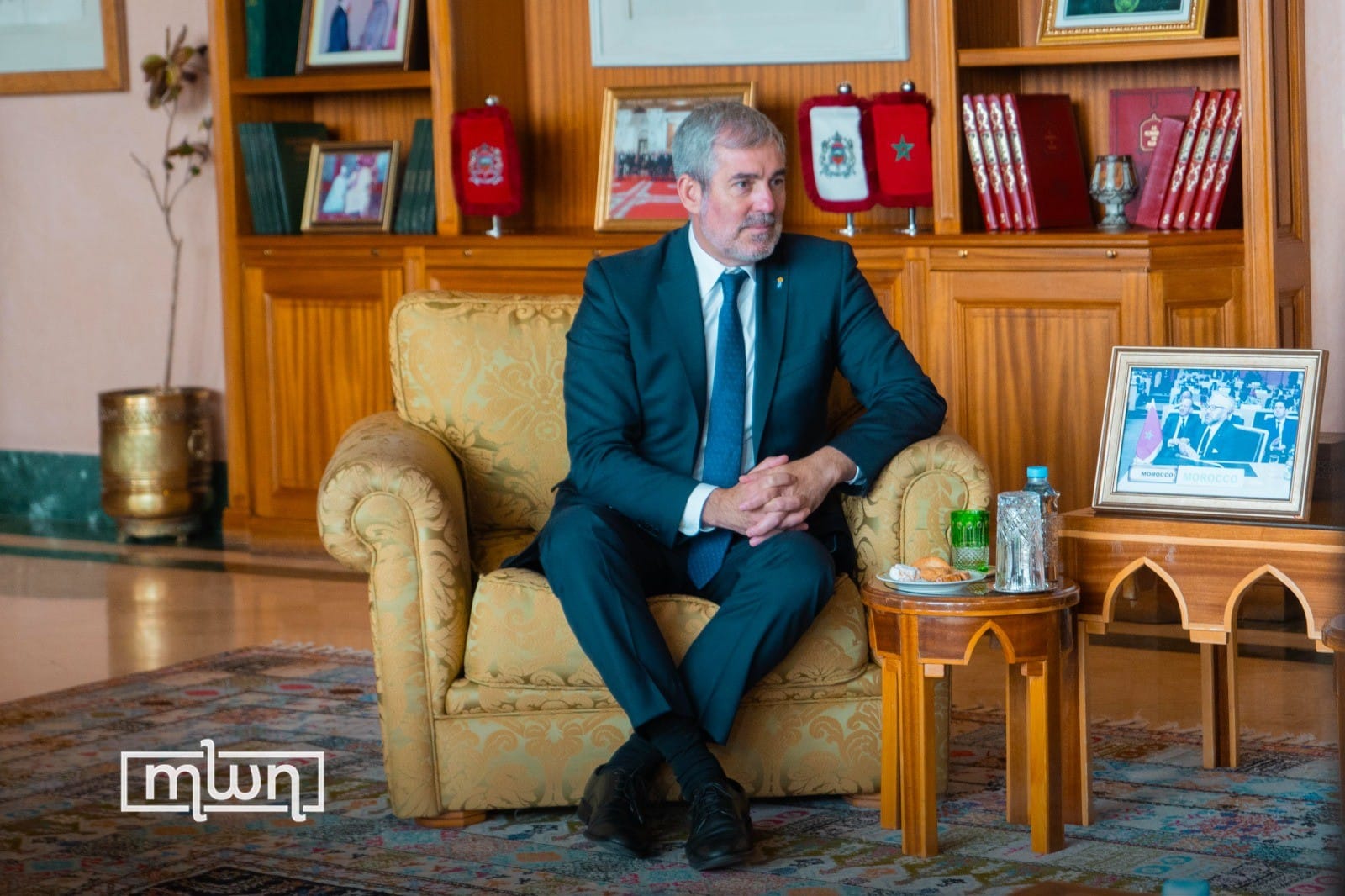
Clavijo’s proposal comes after a meeting in Rabat on October 8 with Moroccan Foreign Minister Nasser Bourita, where he opened the possibility of entrusting Morocco with the care of migrant minors.
According to the Spanish news outlet El Diario, any repatriation of minors must follow a complex administrative process with individualized case files to ensure proper safeguards.
Before any repatriation decision, the Spanish government must listen to the minors, have individualized case files, and receive reports on the family situation of each youth, as per El Diario’s analysis.
Children over 16 must have a hearing if they have sufficient judgment. The government delegation would make the final decision after allegations and evidence are presented.
During Clavijo’s visit, Bourita criticized Europe’s rhetoric and approach to African migration, noting it represents just 0.23% of global migration.
“Eight out of 10 African migrants stay in African countries, only 2% go abroad,” he said, calling to avoid claims that “Africa is going to invade Europe.”
Bourita asserted that Morocco is ready to take back all irregular migrants who prove Moroccan nationality, but legal and administrative gaps in European countries are being exploited by human trafficking networks.
He emphasized migration is a “shared responsibility” and focusing pressure on transit countries like Morocco is a “dangerous approach.”
The Canary Islands have received a surge in migrant arrivals in recent years, putting strain on the region’s social services and minor protection system.
Around 800 of the 5,600 children under the regional government’s care are Moroccan nationals.
Spain and Morocco previously signed an agreement in 2007 on preventing illegal migration of unaccompanied minors and their return, which stipulates strict observance of Spanish law and international norms like the Convention on the Rights of the Child.
Read also: African Countries Need to Address Youth Fascination with Migration


