 Join on WhatsApp
 Join on Telegram
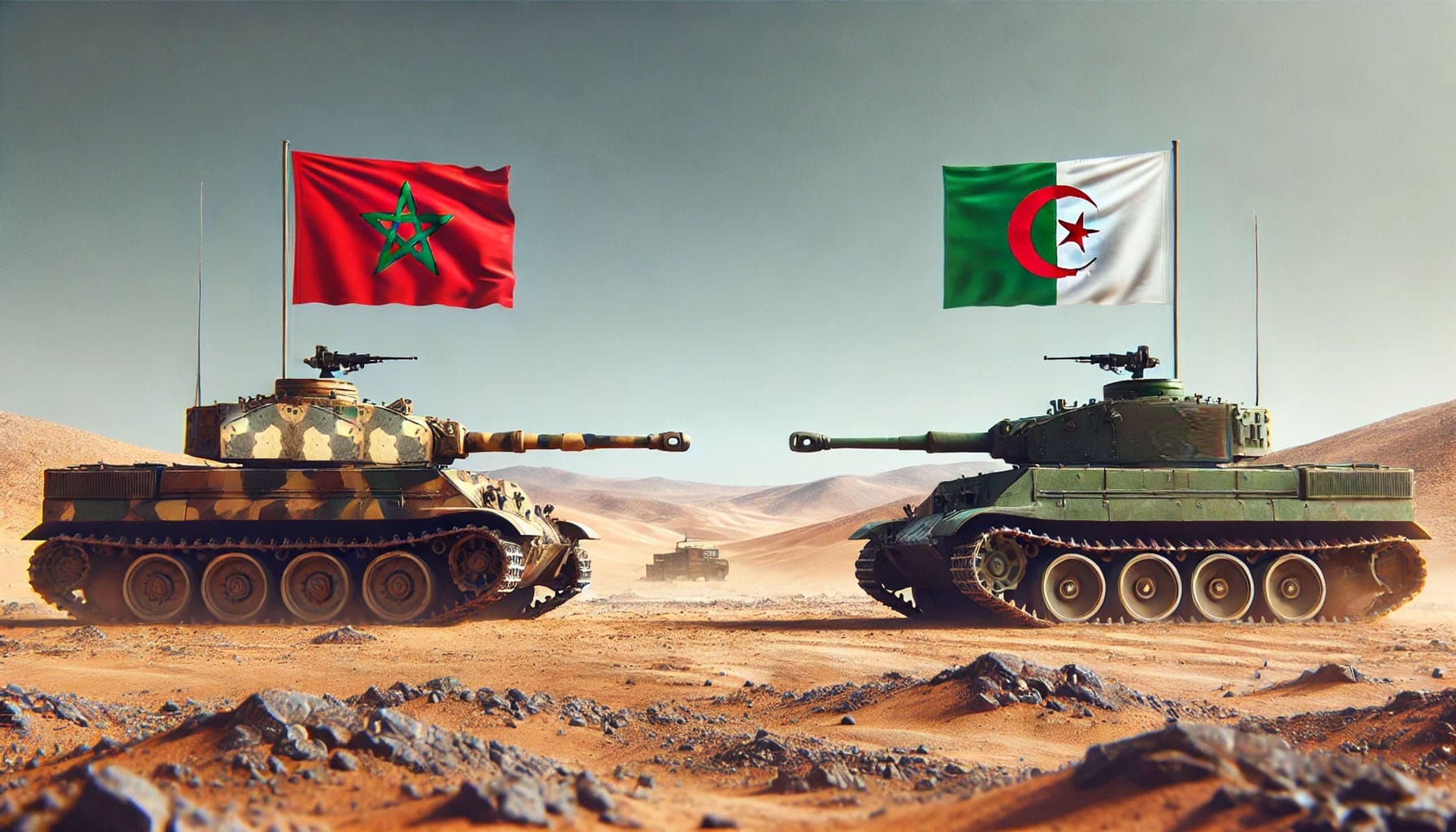
Rabat – The longstanding rivalry between Morocco and Algeria is one of the most significant sources of geopolitical tension in North Africa. While government statements and propaganda often dominate the narrative, understanding this rivalry requires a more objective approach.
Through the lens of political realism, a prominent theory of international relations that focuses on the pursuit of power and national interest, we can better understand the actions of both Morocco and Algeria.
This theory, which has dominated geopolitics since antiquity, allows us to explore the rivalry between these two nations without the distortion of official narratives, focusing instead on their strategic behaviors and underlying incentives and motives.
An age-old theory
Political realism is a school of thought in international relations that emphasizes the competitive and conflictual side of international politics.
As a theory of international relations, political realism has its roots in the writings of ancient thinkers like Thucydides, who chronicled the Peloponnesian War, and later, Niccolò Machiavelli, who emphasized the pragmatic, power-centered nature of political leadership in his famous book “The Prince.”
Over the centuries, political realism evolved to encompass the ideas of state sovereignty and the anarchic nature of the international system, as articulated by Thomas Hobbes. Realism became more formalized in the 20th century. It adapted post-World War II to the realities of nuclear deterrence and the Cold War, giving rise to neorealism or structural realism, as introduced by Kenneth Waltz, which focused on the structure of the international system rather than human nature or state behavior.
More recently, variations like offensive realism, proposed by John Mearsheimer, have emerged, arguing that states are not just security seekers but power maximizers in an uncertain and competitive world. Throughout its evolution, realism has maintained its core focus on power, national interest, and the perpetual potential for conflict in international relations.
Because countries do not have an abritor policing their actions, nation states exist within a world in which their primary goal is to survive. This uncertain structure ensures that states are primarily motivated by the desire for power and security in an anarchic international system where no central authority can enforce rules or protect states.
Professor John Mearsheimer’s theory of offensive realism goes a step further, positing that states are not satisfied with maintaining the status quo. Instead, they seek to maximize their power relative to other states to ensure their survival.
According to offensive realism, states are inherently aggressive, as they cannot rely on others for their security and must therefore seek to dominate their rivals.
Offensive realism in Morocco and Algeria
Applying the lens of offensive realism to the Morocco-Algeria rivalry, we can see that each country sees the other as a threat to its security and regional influence. This perception leads both countries to adopt aggressive strategies aimed at maximizing their respective power.
Morocco’s top priority in this rivalry is securing its territorial integrity, especially regarding the Western Sahara region. Conversely, Algeria, vying for the position of regional leader, seeks to counterbalance Morocco’s influence and maintain its strategic position in North Africa.
Examples of this realist behavior are evident in both countries’ military strategies, diplomatic initiatives, and alliances.
Morocco’s recent normalization of relations with Israel can be seen as an attempt to bolster its geopolitical position and gain support for its stance on the Western Sahara dossier. On the other hand, Algeria’s support for the separatist Polisario Front is a strategic move to attempt to weaken Morocco’s local power and extend its own influence in the region.
Beyond the well-known issue of the Western Sahara dossier, both Morocco and Algeria have been actively engaging in military buildup and alliance formation as part of their broader strategic interests and security concerns.
Both countries have invested heavily in modernizing their armed forces, reflecting a commitment to maintaining and projecting military power. With one of the largest defense budgets in Africa, Algeria has acquired advanced Russian weaponry, including fighter jets, tanks, and naval assets. This military buildup is aimed at not only deterring potential threats but also asserting Algerian influence within the region.
Morocco, meanwhile, has pursued a similar strategy, focusing on enhancing its military capabilities through acquisitions from Western countries, particularly the United States and France.
This includes advanced aircraft, tanks, and sophisticated surveillance systems, positioning Morocco as a formidable military power in North Africa. Moreover, Morocco has actively sought to expand its influence through strategic partnerships and alliances.
By strengthening ties with Gulf states like Saudi Arabia and the United Arab Emirates, Morocco aims to secure economic support and military cooperation. Additionally, the kingdom’s recent normalization of relations with Israel is seen as opening avenues for intelligence sharing and technological collaboration, enhancing its security posture.
Regional Influence and geopolitical ambitions
Beyond their immediate security concerns, Morocco and Algeria are both vying for regional influence. Morocco has positioned itself as a bridge between Africa and Europe, leveraging its geographical location to expand its economic and diplomatic ties. The country has also been active in regional organizations such as the African Union, where it seeks to play a leading role.
Boasting vast energy resources, Algeria has long seen itself as a regional powerhouse. It has used its oil and gas wealth to exert influence over its neighbors and has attempted to play a key role in mediating conflicts in the Sahel region. Algeria’s geopolitical ambitions are also reflected in its active participation in the African Union and other regional forums, where it often seeks to counterbalance Morocco’s influence.
Both Morocco and Algeria have been actively building alliances and pursuing large-scale economic projects across Africa to expand their regional influence and geopolitical reach.
Leveraging its substantial oil and gas reserves, Algeria has positioned itself as a key energy supplier and has promoted projects like the Trans-Saharan Gas Pipeline, which aims to transport natural gas from Nigeria through Niger to Europe via Algeria. Morocco later responded with its own Panafrican pipeline project, proposing a coastal pipeline from Nigeria to Morocco.
Morocco has focused on economic diplomacy to bolster its influence across Africa. Through large-scale investments in banking, agriculture, and infrastructure, Morocco has cultivated strong economic ties with numerous African countries.
This strategy has been complemented by diplomatic efforts to gain support for its stance on the Western Sahara dispute. Over the past few years, a growing number of African states have opened consulates in the Western Sahara region, signaling their support for Morocco’s sovereignty over the region.
This diplomatic success is a testament to Morocco’s effective use of economic incentives and development aid to garner political backing. By aligning its economic interests with diplomatic goals, Morocco has successfully expanded its influence, positioning itself as a key player in Africa’s economic and political landscape.
Caught up in Great Power Politics
Both countries are caught up in “Great power competition,” a key component of realism, that refers to the competition among the world’s most powerful states to influence global events and assert their dominance. In the realist framework, these powers constantly seek to maximize their own security and strategic advantages, often at the expense of smaller states.
The rivalry between Morocco and Algeria is complicated by this involvement of major global powers. The United States, Russia, and China all have strategic interests in North Africa, and their actions have influenced the dynamics of the Morocco-Algeria relationship.
The US has historically supported Morocco, viewing it as a stable ally in the region. This relationship was further solidified with Morocco’s 2020 normalization of relations with Israel, a move that the US supported.
Russia, on the other hand, has cultivated ties with Algeria, attracted by its resources and its strategic position in North Africa. Algeria’s purchase of Russian arms and its growing economic ties with China are clear indicators of its desire to counterbalance Western influence in the region.
Another major factor is the ongoing competition between the US and China to expand their influence on the African continent. The two countries’ behavior fits within the realist theory, as they are both striving to expand their influence in Africa to enhance their respective strategic power and secure vital resources.
The US views Africa as a crucial region for countering terrorism, securing trade routes, and containing the influence of rival powers like China and Russia. Through initiatives like AFRICOM and economic aid programs, the US aims to strengthen its military presence and political alliances, ensuring its influence over the continent’s geopolitics.
China, on the other hand, focuses on economic diplomacy, investing heavily in infrastructure projects, natural resource extraction, and trade under initiatives like the Belt and Road Initiative (BRI).
By building roads, ports, and railways, and offering loans, China seeks to create deep economic ties and secure access to Africa’s vast natural resources. Both powers are driven by the realist aim of maximizing their global influence, further complicating the fraught relationship between Algeria and Morocco.
Realism and the Sahara dossier
Morocco’s primary goal is to secure international recognition of its sovereignty over the Western Sahara region. The Moroccan government views this issue as critical to its national identity and territorial integrity. The Sahara dossier is a key element of Morocco’s decolonization process and the kingdom sees the matter as a way to reclaim their territory after its partition by colonial powers during the scramble for Africa.
Algeria, however, views the Western Sahara dispute as an opportunity to challenge Morocco’s regional ambitions. By supporting the Polisario Front and advocating for the self-determination of the Sahrawi people, Algeria aims to position itself as a champion of anti-colonial struggles while attempting to undermine Morocco’s regional power.
From the perspective of offensive political realism, Morocco and Algeria would be rivals even without the Western Sahara issue because both states inherently seek to maximize their power and security in an anarchic international system.
Offensive realism posits that states are driven by the need to ensure their survival by achieving regional dominance and preventing any other state from becoming powerful enough to threaten them.
As two of the most powerful states in the Maghreb region, Morocco and Algeria naturally view each other as potential threats to their security and influence.
Both countries are compelled by the logic of power maximization to expand their military capabilities, build alliances, and assert their influence in regional politics. This drive to outmaneuver each other and secure a dominant position would likely fuel their rivalry, regardless of the Western Sahara dispute.
Doomed to compete?
Looking to the future, the principles of offensive realism suggest that the rivalry between Morocco and Algeria is unlikely to diminish. As both nations strive to maximize their power and secure their regional dominance, the competitive dynamics that define their relationship will most likely persist.
The increasing polarization between global powers, particularly the US and China, will likely exacerbate this rivalry. Morocco’s alignment with Western interests, highlighted by its close ties with Washinton and the 2020 normalization with Israel, contrasts with Algeria’s long-standing relationships with Russia and its growing ties with China.
This alignment with competing global powers not only deepens the strategic divide between the two countries but also entangles them in the broader competition for influence in Africa and beyond.
Caught in the realities of offensive realism, Morocco and Algeria are compelled to view each other with suspicion, continuously preparing for worst-case scenarios. This perpetual drive for power maximization, fueled by both internal and external dynamics, effectively dooms them to remain rivals.
Ironically, this rivalry overlooks the potential for cooperation that could bring substantial economic benefits to both nations. Joint initiatives in trade, energy, and infrastructure could unlock new growth opportunities, enhance regional stability, and provide a counterbalance to external influences.
However, as long as offensive realism guides their actions, both countries will continue to prioritize their security and power over cooperation, perpetuating a cycle of rivalry that could otherwise be replaced by mutually beneficial partnerships.