 Join on WhatsApp
 Join on Telegram
Rabat – A surprising thrilling run to the 2022 World Cup semifinals by Morocco may have had a much bigger impact than just on the football field, according to a new study by researchers at New York University.
The findings suggest the team’s success sparked a significant increase in global interest in the North African nation, extending beyond sports and into tourism and culture.
The research, published in IEEE Xplore, echoes the “Flutie Effect” – a phenomenon named after a game-winning touchdown pass that boosted applications to Boston College.
This study, however, goes beyond the college gridiron, analyzing online searches and social media sentiment to track global interest in Morocco.
“Morocco’s World Cup journey wasn’t just about athletic achievement; it was a compelling story that captured the world’s attention,” said Anasse Bari, senior author of the study and a clinical associate professor at NYU’s Courant Institute of Mathematical Sciences. “Our research suggests it spurred a remarkable interest in the country, in ways we hadn’t fully anticipated.”
Beyond the game: tracking the “Morocco Effect”
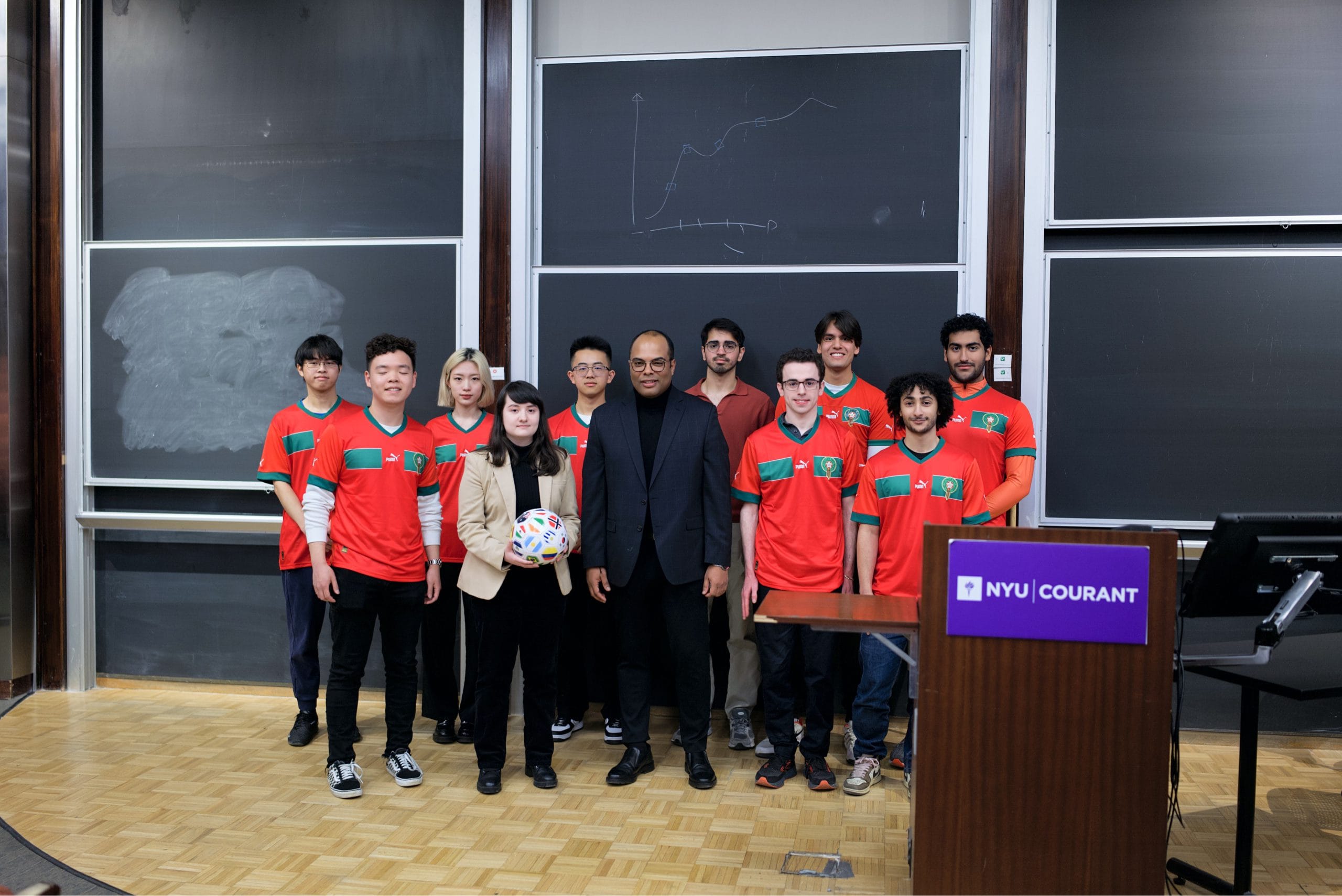
The study’s authors, who include members of the Bari AI Research Group at New York University’s Department of Computer Science, namely Edward Hou, Charles Wang, Caitlyn Cui, Emos Ker, Alex Manko, Nawaf Alabdullah, Ali Alshehhi, Kelly Lawlor, Sebastian Straesser and Advait Abrol, used natural language processing (NLP) models to analyze online sentiment towards Morocco before, during and after the World Cup.
They found a nearly 150% increase in positive sentiment towards the country during the tournament compared to the preceding month. This positive attention wasn’t limited to news articles.
To delve deeper, the research team created a series of “Morocco Indices” to track specific areas of interest, including the World Cup team itself, travel searches, and online discussions about Moroccan cuisine.
Notably, searches for terms like “Morocco visa” and “flights to Rabat” surged during the competition, indicating a potential rise in tourism interest.
The study also revealed a lasting impact on interest in Moroccan culture, particularly food. Searches for “couscous” and “tajine” – two staples of Moroccan cuisine – remained significantly elevated even after the World Cup ended.
“We can’t definitively say if the World Cup translated to increased tourism numbers,” Bari cautioned, “but it certainly generated significant interest beyond just the sporting competition.”
He added that Morocco’s 2022 World Cup success may have even influenced FIFA’s decision to award the country co-hosting rights for the 2030 tournament.
While the study doesn’t provide concrete evidence of a tourism boom, it sheds light on the potential for a successful sporting event to ignite a global spotlight on a nation.