


 Join on WhatsApp
  Join on Telegram
 Rabat – With climate change squeezing Morocco’s water resources, the North African nation is emerging as a leader in large-scale desalination projects to secure its water future and ensure food security for its population.
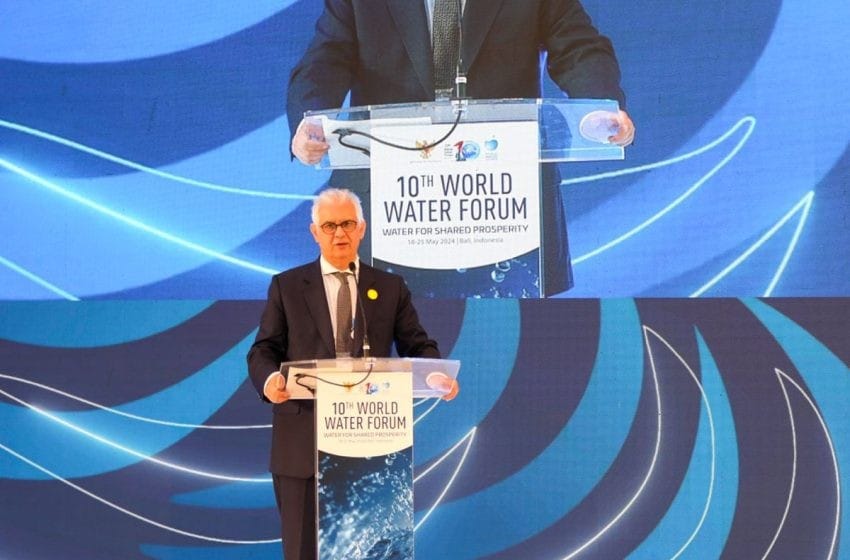
Today, Minister of Equipment and Water, Nizar Baraka, addressed a high-level panel on desalination, emphasizing Morocco’s innovative approach and ambitious plans at the 10th World Water Forum in Indonesia.
The panel, titled “Towards the development of resilient seawater desalination and brackish water demineralization projects for water and food security,” convened government officials, donors, and industry experts to discuss best practices and forge partnerships in desalination – a critical technology for water-scarce regions.
Minister Baraka underscored the urgency of the situation. Morocco, like many countries, is feeling the pinch of climate change on its water supplies.
The government has enacted a comprehensive water strategy with three key thrusts: maximizing traditional water sources, aggressively developing desalination as an unconventional resource, and prioritizing water conservation and efficiency.
Morocco’s commitment to desalination is undeniable. The country boasts 15 operational desalination plants, currently producing 192 million cubic meters of desalinated water annually.
This additional supply has significantly bolstered drinking water provision for cities and towns, while also supporting industrial and agricultural water needs.
However, Morocco isn’t resting on its laurels. This year will see the commencement of construction on the continent’s largest desalination plant, situated near Casablanca, Morocco’s economic powerhouse.
This game-changing project will not only solidify Casablanca’s potable water security but also irrigate 5,000 hectares of farmland upon completion of its first phase in 2026.
With a projected ultimate capacity of 300 million cubic meters per year, this plant is a cornerstone of Morocco’s ambitious desalination program.
Minister Baraka outlined a bold vision – exceeding 1.7 billion cubic meters of desalinated seawater production annually by 2030, with a further increase to nearly 2 billion cubic meters by 2045.
Recognizing the potential impact on production costs, Morocco is actively seeking solutions. The country is looking towards renewable energy sources to power its desalination plants, ensuring sustainability and potentially lowering production costs.
By embracing cutting-edge technologies, forging strategic partnerships, and prioritizing sustainability, Morocco is taking concrete steps to ensure water security for its population and promote long-term food security.


