


 Join on WhatsApp
  Join on Telegram
 Rabat – The World Bank pledged a financing program of $350 million to Morocco. The funding comes under the Results-for-Results Program Finance Instrument, and it aims to support the Moroccan Government in the implementation of its National Potable Water Supply and Irrigation Program (2020-2027).
Launched in 2020, the National Potable Water Supply and Irrigation Program is an ambitious endeavor aimed at enhancing water security in Morocco. The program is focused on accelerating investments in the water sector to bolster the resilience of drinking water supply and irrigation. In doing so, it seeks to address the challenges posed by water scarcity and the increasing threats of climate change on the country’s water resources.
The World Bank’s financing program will play a crucial role in supporting specific activities within the National Potable Water Supply and Irrigation Program. The assistance will be channeled through key strategic pillars: strengthening governance in the water sector, improving financial sustainability and water use efficiency, and supporting the integration of non-conventional water resources, Morocco’s state media reported.
Read also: World Bank Loans Morocco $275 Million for Disaster Management Program
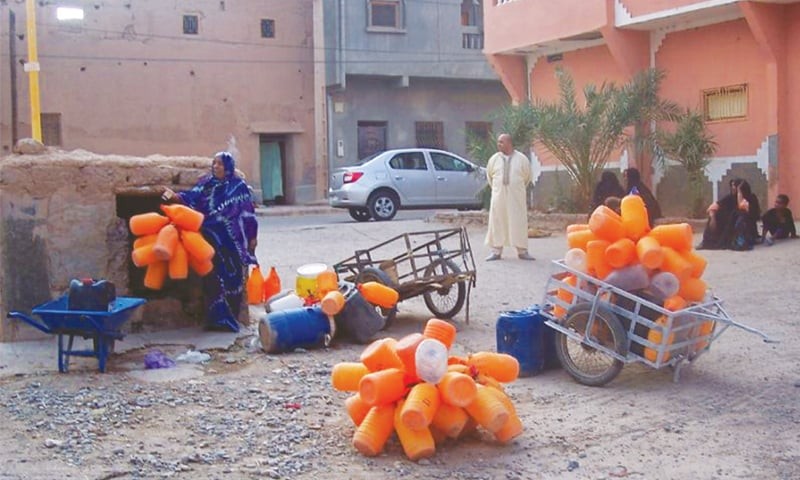
Morocco faces significant water scarcity and is recognized as a climate hotspot. With the nation approaching the critical threshold of absolute water scarcity, which stands at 500 cubic meters per person per year by 2030, the need for urgent action has never been more pressing. Climate change is projected to exacerbate the situation further, posing sustained challenges to Morocco’s water security.
Jesko Hentschel, the World Bank Regional Director for the Maghreb and Malta, emphasized the importance of conserving natural resources, especially water, to ensure a sustainable future for Morocco.
The newly announced financing program seeks to achieve this goal by promoting water security for all in the country and by supporting the modernization and implementation of the National Water Plan, which lays out a comprehensive vision for the water sector over the next three decades.
The program’s objectives extend beyond the immediate support for the National Water Plan.
They also include enhancing governance in the water sector to safeguard groundwater resources, improving water-related information and availability, strengthening river basin authorities’ performance, and developing robust water information and data systems. Additionally, the program will facilitate the preparation of mandatory reports by multi-service operators, further bolstering the governance structure.
Carolina Dominguez Torres, Senior Water Supply and Sanitation Specialist and Program Head at the World Bank, highlighted some specific targets of the program. It aims to provide 25 million cubic meters of potable water in water distribution networks, which is equivalent to the annual consumption in the provinces of El Jadida and Sidi Bennour, she said.
Additionally, the program seeks to make 52 million cubic meters of treated wastewater available for reuse, representing 52% of the target set by the National Potable Water Supply and Irrigation Program for providing 100 million cubic meters of treated wastewater for reuse by 2030.


