 Join on WhatsApp
 Join on Telegram
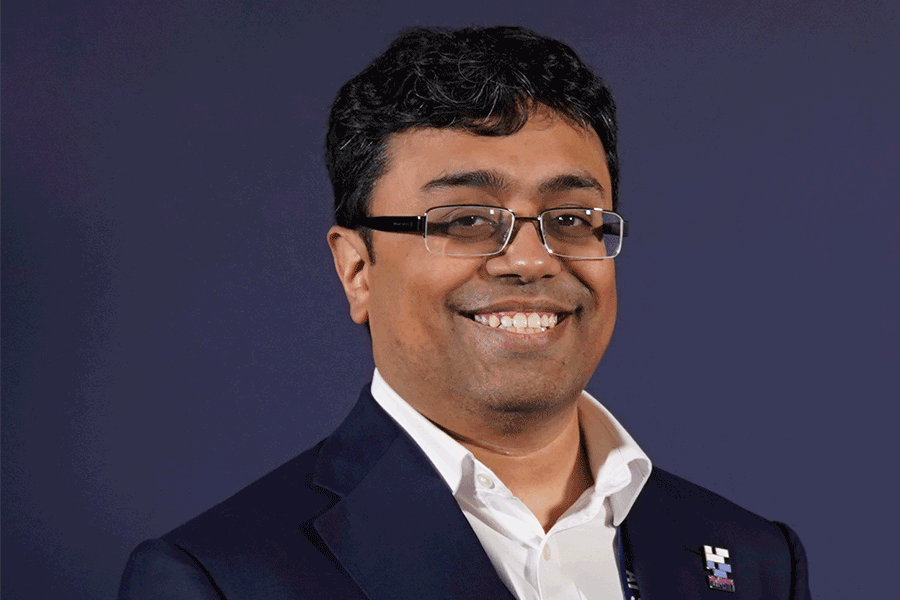
Rabat – One week ago today, Emad Mostaque resigned as CEO of Stability AI, an Artificial Intelligence (AI) startup that was financially unsustainable and drained its investors funding, in order to create true open-source AI for anyone to use. The British-Bangladeshi tech executive has since been roundly mocked and vilified by AI watchers for his poor business management and for misleading investors, yet his tale might be that of a modern-day Robin Hood in the AI world.
Leading business outlets like Forbes have shown how Mostaque used over $100 million in funding from investors to create free open-source models which, while being fundamentally unprofitable for the company, democratized the generative AI space like no other.
While AI experts pointed out Mostaque’s failure as a business executive, it was hard to ignore that the idealistic AI enthusiast’s efforts have been a vital source for innovation and knowledge-sharing in the AI ecosystem. It has also revealed that there is little space for idealism in the profit-driven AI race.
The Idealist Vision
Emad Mostaque has long been a vocal proponent of AI as a technology that should be free, open and available to all. Operating in a space of multi-billion dollar companies like Amazon, Microsoft and Google, Mostaque founded a company that aimed to give its products away for free, with no realistic profit-making strategy behind it.
In October of 2022, his startup, Stability AI, attracted $101 million in funding from investors, in the midst of a scramble among investors to fund the “next big thing” in AI. Within two years, Stability AI managed to drain that giant pile of cash, making no profit, with millions in bills at Amazon outstanding.
But in the tech world, running a company at a loss for years is not uncommon. Amazon ran at a loss for 7 years, before recording its first profits in 2003. Facebook didn’t generate revenue for 5 years, and Tesla took 17 years to make its first profits. These companies are joined by Spotify, which didn’ make a dime for 12 years, Snapchat (6 years), and Uber, which lost $31.5 billion before making its first operating profit.
However, the difference between these companies and Stability was that the former made a loss to grow their user base and destroy any potential smaller competitors that did need to make a profit to survive. Instead, Mostaque’s startup painted itself as “the world’s first community-driven, open-source artificial intelligence (AI) company,” and spoke more about democratizing AI than optimizing shareholder profits and growing revenue.
The Robin Hood of AI?
It appears that Mostaque knowingly welcomed millions in funding from venture capitalists and investors while knowing it was unlikely they would ever see a penny in return. This of course makes him an outright villain in the eyes of the highly corporatized AI ecosystem. Again and again Mostaque tried to garner new funding, but the secret was out: Stability AI’s tools were made to benefit the general public, not the company’s investors
Facing a dearth in funding, Mostaque pushed ahead, draining all but $4 million in order to rush forward and create what would likely be Stability’s last open-source AI model: Stability Diffusion 3. While other originally idealistic AI startups like OpenAI embraced an increasingly profit-driven approach, Mostaque would continue to push his idealistic vision, profits be damned.
Like the fictional character of Robin Hood, it appears Mostaque “stole” from the rich to give to the poor, an effort that he is being roundly mocked for in the AI space. In Forbes’ article vilifying Mostaque, a Stability AI employee painted him as a poor businessman by saying that Mostaque “legitimately wanted to transform the world. He actually wanted to train AI models for kids in Malawi. Was it practical? Absolutely not.”
And Mostaque played this gambit not only with other people’s money. As the majority shareholder in the company there were several attempts to buy him out, or offer him generous compensation if he would step down. Every time he refused.
The Industry’s Double Standards
Meanwhile, Stability AI was being singled out as uniquely guilty of copyright infringement by companies that profit primarily on the gatekeeping of copyright property, like Getty Images. Even though giant multinationals such as Google and Microsoft-backed OpenAI used similar broad methods of “scraping” the internet, Stability became the target of vast lawsuits.
Of course, the copyright of individual artists and creators is undoubtedly worth protecting.But the irony here is that Stability clearly did not profit off this practice, while others clearly did.
Just as Stability is being mocked for running at a loss since its creation (like most tech giants did in their first years), the startup is clearly treated with a double-standard, likely because Mostaque was so open about his vision that spoke of free innovation and AI for all, with little thought for how Stability could reap billions in profits, or crush its competition.
In the same vein, Mostaque is now roundly mocked for overpromising or exaggerating about the potential impact of his AI tools. Other CEOs in the AI bubble have not faced such broad criticism, despite presenting AI as the means to cure cancer and every other horrible disease, solve inequality, create a future of over-abundance, fix climate change, and fix pretty much any other problem currently facing humanity.
The only difference is that these executives promise to do these things while making billions in profits for their own companies.
The Future of AI: Open vs Closed
The case of Emad Mostaque and Stability AI raises various interesting questions about the future of AI, and its impact on our lives. The technology devours staggering amounts of energy and cash to develop its amazing models, which has resulted in a small group of tech giants dominating the scramble to develop AI models.
Meanwhile, Stability AI in March had accumulated 330 million downloads of its free open-sources models, beating Google. It promised to release a free video-generating tool that could compete with the amazing creations of OpenAI’s secretive Sora tool, and it still hadn’t made a penny.
While other previously-idealistic companies like OpenAI are increasingly looking like the typical money-making machines Wall Street loves, Stability became a pariah for its lack of vision when it came to making money for its shareholders.
And while companies like Google and OpenAI rush to create “Artificial General Intelligence,” AGI, a vastly more powerful, and potentially extremely dangerous, form of AI, Mostaque has repeatedly called for an ecosystem of smaller AI systems that perform specific tasks in a decentralized manner.
The ouster of Mostaque at Stability AI is likely to have significant implications for the future of AI, and serve as a warning to other tech CEOs that it’s risky to prioritize anything above profits. Whether this moment signals the end of idealism among large-scale AI developers remains to be seen. But it appears to be a worrying sign about the motivations between the rapid development of AI in general.