 Join on WhatsApp
 Join on Telegram
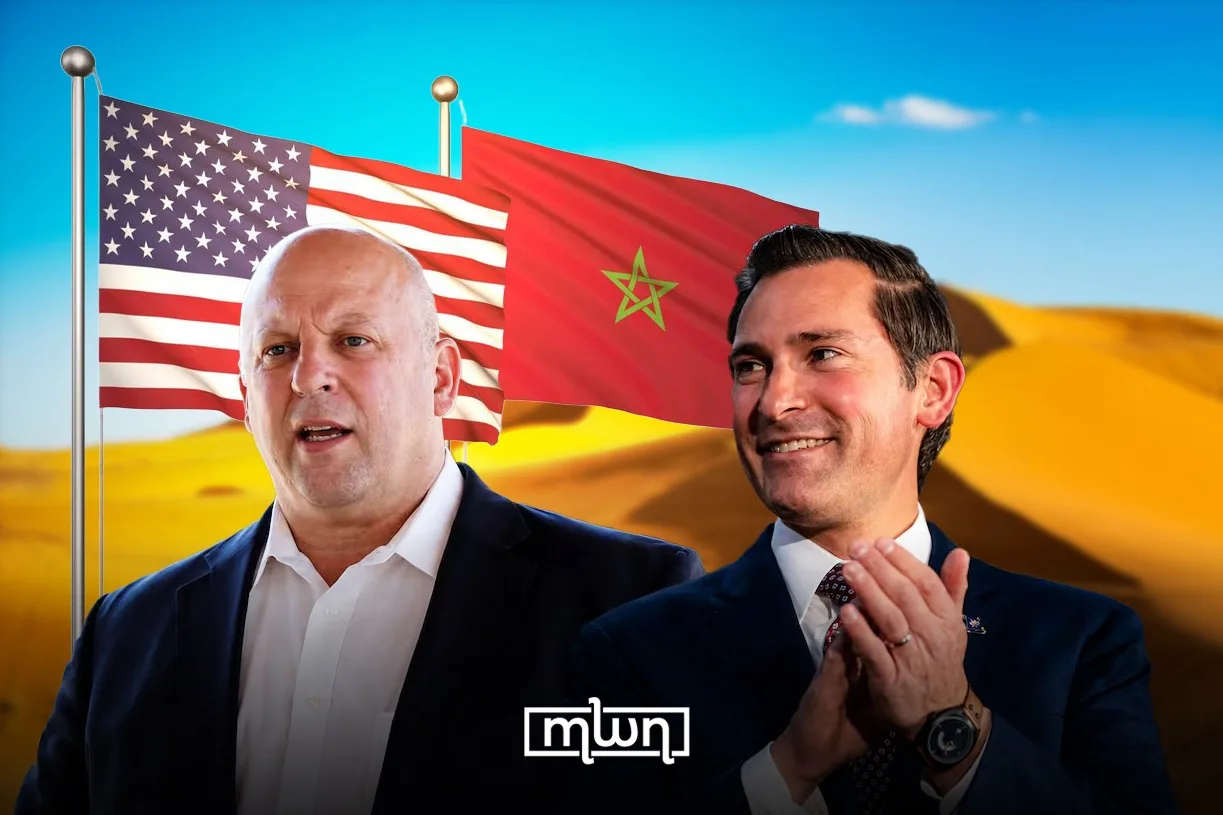
Marrakech – The legislative dragnet encircling the Polisario Front at the United States Capitol has acquired two formidable new architects. On July 9, Republican Representatives Scott DesJarlais and Matt Van Epps – both of Tennessee – affixed their names to the Polisario Front Terrorist Designation Act, the landmark counterterrorism bill introduced at the House of Representatives in June 2025 by Republican Representative Joe Wilson of South Carolina with bipartisan Democratic co-sponsorship from Jimmy Panetta.
By doing so, they catapulted the co-sponsorship roster to sixteen, injecting into an already muscular congressional coalition the twin currencies of conservative doctrinal gravitas and operational military intelligence that the initiative’s adversaries can ill afford to dismiss.
Their accession is neither ornamental nor coincidental. DesJarlais, a physician-legislator whose fiscal and security hawkishness has earned serial commendation from the Heritage Foundation and the American Conservative Union, brings with him the imprimatur of the Republican Party’s ideological vanguard – the constituency for whom counterterrorism discipline is not a negotiable externality but an existential imperative.
Van Epps, a West Point graduate forged in the crucible of the post-September 11 generation, a former elite aviator and mission commander within the 160th Special Operations Aviation Regiment who logged combat deployments across Iraq and Afghanistan before ascending to lieutenant-colonel in the National Guard, imports something rarer still: the granular, theater-tested cognizance of what Iranian proxy proliferation looks like when it metastasizes beyond containment.
Together, they transmute what skeptics might once have caricatured as a niche legislative gambit into an inexorably broadening institutional juggernaut that now straddles the ideological and experiential spectrum of Republican national-security thought with commanding authority.
The offensive, critically, is not confined to the House. A mirror initiative at the Senate – the Polisario Front Terrorist Designation Act of 2026, introduced in March by Senators Ted Cruz, Tom Cotton, and Rick Scott, and subsequently co-signed by Senator David McCormick – operates in lethal legislative tandem, imposing a mechanism of automatic designation the moment cooperation between the Polisario and Iranian-affiliated entities is substantiated.
The bicameral convergence signals not fleeting congressional curiosity but entrenched institutional momentum – a groundswell of bipartisan appetite for reclassification that the separatist militia’s enablers in Algiers can no longer wave away.
Washington’s sharpest minds demand action now
The gravitational pull of this momentum owes everything to the Polisario’s own catastrophic miscalculations. The militia’s brazen projectile assault on the Moroccan city of Es-Smara on May 5 – an act of indiscriminate belligerence that wounded a civilian woman near a prison and a cemetery – detonated a diplomatic conflagration of historic magnitude.
The United States, France, the United Kingdom, the European Union, Spain, Saudi Arabia, Qatar, the UAE, Bahrain, Jordan, and a constellation of additional states unleashed a cascade of condemnation constituting the broadest multilateral rebuke the separatist militia has ever absorbed.
Senator Cruz, the legislation’s senatorial standard-bearer, seized upon the Es-Smara atrocity with prosecutorial relish. In a pointed intervention to Medi1 TV in June, the Texas Republican eviscerated the Polisario’s residual pretensions to liberation politics, declaring the militia not “simply a regional separatist group” but an armed appendage of the Iranian regime – “funded by Iran” and embedded within “a global network of proxies that Iran is using to wage terror.”
Cruz delineated two convergent pathways toward formal terrorist designation: a congressional route encumbered by the Senate’s filibuster threshold demanding sixty votes, and an executive pathway through which the president, Treasury, and State Department can “move quite swiftly.”
His legislative offensive, he confessed with disarming candor, was engineered as a deliberate pressure instrument – a mechanism to “build momentum” until the political cost of inaction eclipses the bureaucratic inertia of delay.
The intellectual scaffolding buttressing this congressional mobilization extends well beyond the Capitol rotunda. Writing in Newsmax on May 27, George Landrith, president of the Frontiers of Freedom Institute, delivered an unsparing verdict. Sanctioning the Polisario is no longer a diplomatic luxury but an “absolute necessity,” he argued, warning that a militia-controlled Western Sahara aligned with Tehran would birth “a new jihadist safe-haven on the doorstep of Europe and along critical Atlantic shipping lanes.”
Julio Rivera drove the blade deeper still in a May 10 analysis in American Thinker, cautioning that the Polisario-Iran nexus represents “a danger that the Senate can no longer afford to neglect.”
With sixteen House co-sponsors, four Senate principals, a proliferating ecosystem of policy advocacy, and the smoldering wreckage of Es-Smara as an indelible evidentiary exhibit, the Polisario Front Terrorist Designation Act has transcended the threshold of aspirational legislation.
It now constitutes the most consequential congressional instrument aimed at dismantling Iran’s North African proxy architecture – and the diplomatic asphyxiation of the Polisario’s Algerian patrons accelerates with every signature inked.
Read also: Polisario’s Terrorist Reckoning: Why Morocco Should Escalate Its Washington Lobbying