


 Join on WhatsApp
 Join on Telegram
Rabat — In the week marking 2-years since the devastating Al Haouz earthquake that deeply rattled Moroccan homes and spirits, Head of Government Aziz Akhannouch reported that the government has reached a “milestone” in the recovery efforts.
During an interministerial meeting held today in Morocco’s capital city of Rabat, the head of the government shared “satisfaction” with the completion of the reconstruction work on over 51,000 homes.
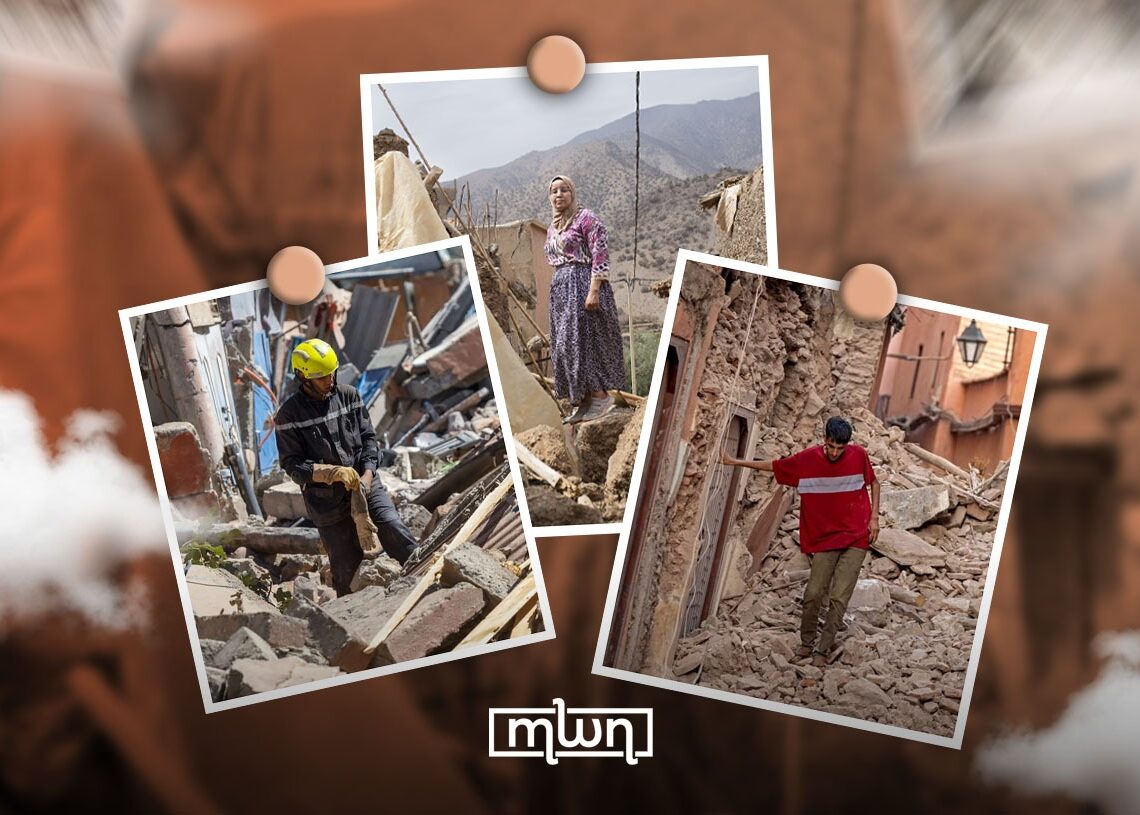
The numbers coming from the government contrast the stories told by affected residents in protests and sit-ins both in Rabat and across Morocco about dissatisfaction with the progress. Videos circulating social media show affected families still without adequate shelter, suffering from floods soaking their tents.
Yet, Akhannouch asserted that financial aid is flowing, indicating that the government has distributed MAD 6.9 billion ($765.305 million) to earthquake-affected families across five provinces.
The government’s data, presented by Akhannouch during the same meeting, reports that the distributed financial aid breaks down into MAD 4.5 billion ($ 499.112) for housing construction and rehabilitation support, as well as a MAD 2.4 billion ($ 266.193) in emergency aid payments of MAD 2,500 ($ 250) per month.
Government’s reported progress
The data provided by Akhannouch reflects an advancement in infrastructure projects across key sectors. In terms of transportation, the government said that works are underway to upgrade four sections of National Road N7, with progress ranging from 35% to 80% complete. The project costs MAD 665 million ($73.757 billion) and includes 118 kilometers of roads under construction.
Meanwhile, in terms of education rehabilitation, another vital sector for these communities, the government said they have reconstructed 306 schools so far, with work continuing towards improving another 34.
Akhannouch also indicated that officials have launched tenders to rehabilitate 186 schools across Al Haouz, Azilal, Chichaoua, Ouarzazate, and Taroudant provinces.
For healthcare, the government reported that progress has been made advancing 103 health centers, with 78 complete and 25 to be finalized soon.
Concerning the region’s agriculture sector, from which a huge portion of the population makes a living, the data indicate that officials fully implemented the preliminary action plan. This included free distribution of livestock and barley to farmers, in addition to repairing agricultural and economic infrastructure.
Rural water connection projects in the five affected provinces show a reported 52% completion rate, bringing clean drinking water to remote communities, according to the head of the government.
Also, the covenant asserts that 86% of tourism businesses in the region have received the first installment of the dedicated support, bringing 199 tourist facilities back online.
The government’s support operations have reportedly helped 1,610 merchants rebuild and rehabilitate their retail locations, helping restore local economic activity.
Numbers that don’t match reality
The timing of the release of the government’s data coincides with a protest that took place a couple of days ago in front of the Moroccan Parliament in Rabat on the anniversary of the earthquake.
Affected families protested delays of exclusion and delays in housing delivery.
Protesters raised banners that reflected the suffering of residents of the affected areas, with some reading: “Residents in four regions: Al Haouz, Ouarzazate, Taroudant, Chichaoua are asking why they were excluded from Al Haouz aid.”
Activists demanded accountability, asking covenant leaders to “speak truth” on the real realities.
One protester told Morocco World News (MWN): “We were hoping that after two years we would celebrate the end of the victim’s suffering, but the truth is that the struggle is still going on.”
He sadly described official numbers as “not accurate,” expressing the residents’ readiness to sit with the government to show that people are still struggling.
Recalling King Mohammed VI’s sentence during the latest speech of Throne Day: “There is no place today or tomorrow for a Morocco moving at two speeds,” the protester said that he will never be satisfied if Morocco’s economic development “does not contribute to improving citizen’s living conditions for all categories in all regions” without exclusion.
In a stark contradiction to official claims of housing progress in the affected areas, video circulated social media showing worrying scenes of post-rain flooding in tents, while also depicting paused construction work sites according to locals.
The government’s data on the Al Haouz Earthquake recovery don’t seem to reflect the reality on the ground, and officials should take serious actions to mend the situation.




