


 Join on WhatsApp
  Join on Telegram
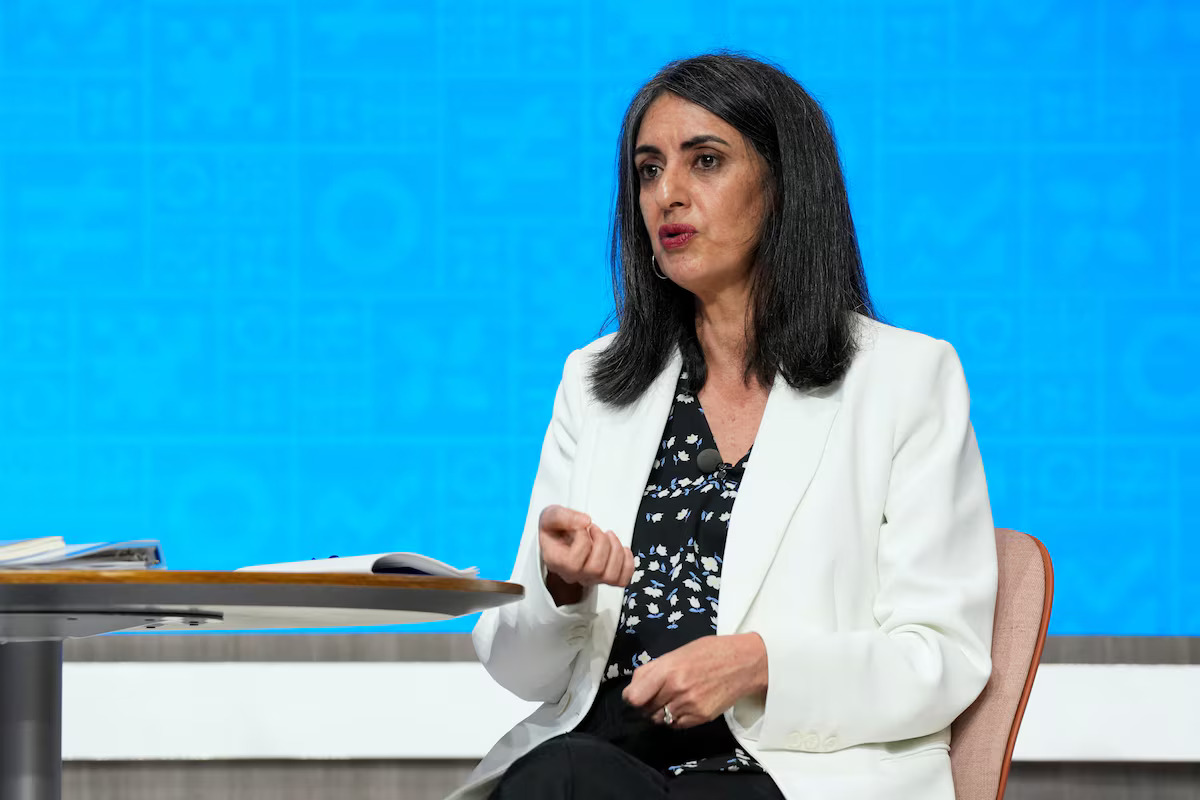
 Rabat – Morocco’s Minister of Economy and Finance, Nadia Fettah, said the government will revise its upcoming budget to prioritize spending on health and education while allocating additional funds to reduce social disparities.
The announcement follows weeks of GenZ protests across the country, which have shown deep frustrations over poverty, unemployment, and deteriorating public services.
Organized under the banner of GenZ 212, the protests began in late September as a spontaneous movement of young Moroccans demanding improved healthcare, education, and job opportunities, as well as greater transparency and accountability in governance.
While largely peaceful, the movement has spread to major cities including Rabat, Casablanca, Agadir, and Tangier, where protesters have voiced discontent with misplaced government priorities, particularly heavy investment in infrastructure and stadium projects ahead of the 2030 FIFA World Cup, co-hosted by Morocco, Spain, and Portugal.
“What we have heard from the youth protests is that they are calling for better education and health care,” Fettah Alaoui told Reuters on the sidelines of the IMF and World Bank Annual Meetings in Washington earlier this week.
She noted that current government spending on both sectors amounts to just under 9%of the country’s GDP.
The minister explained that there is room in the budget to reorder priorities for upcoming projects, such as developing and operating local hospitals so that citizens are not forced to travel long distances to receive treatment.
“We will reallocate funds to achieve short-term and rapid gains because people cannot wait for reforms to take effect,” she said, adding that detailed measures will only be revealed once the draft budget is presented to Parliament, typically after late October.
“This effort may require some additional funds,” Fettah added, “but it will strengthen efficiency coordination without harming macroeconomic stability.”
Asked about Morocco’s foreign exchange plans, Fettah Alaoui said the ministry first intends to set a medium-term inflation target, expected to be announced by late 2026 or early 2027, likely between two and three percent. Morocco currently publishes only annual inflation targets.
“Liberalizing the exchange rate is another step,” she added, noting that while large corporations are ready for such a move, small and medium-sized enterprises still need time to prepare. “They are not ready yet. Large companies are ready. The financial sector could be at risk, so we need to organize things domestically before taking that step.”
Regarding sovereign bond issuance, Fettah said Morocco has no immediate plans to return to the international market but expects the country to continue issuing bonds on a regular basis.


