


 Join on WhatsApp
  Join on Telegram
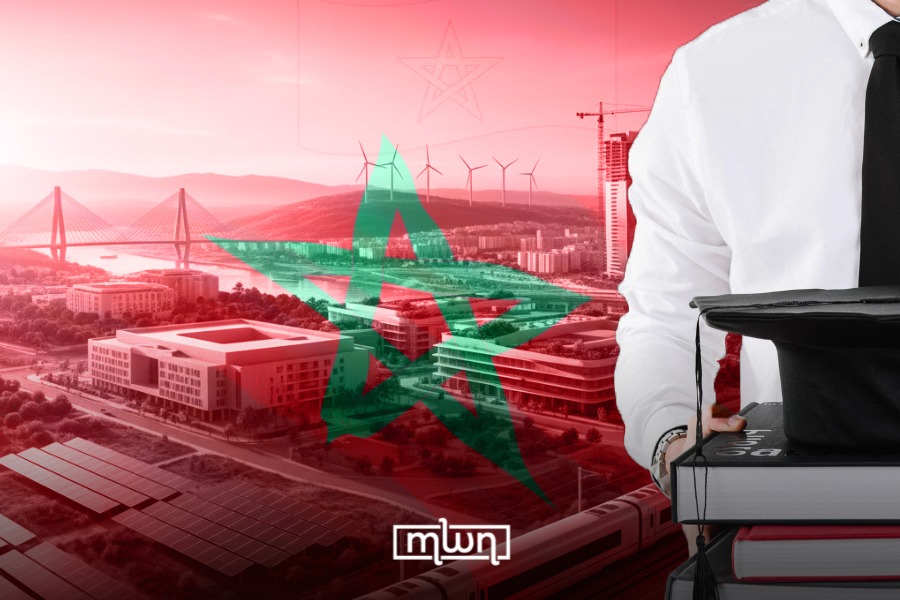
 Rabat – A new study conducted by the Council of the Moroccan Community Abroad (CCME) in partnership with the International University of Rabat (UIR) sheds light on the motivations, challenges, and daily experiences of highly skilled Moroccans who return from abroad to work or start businesses in Morocco.
The research was led by Farid El Asri and Shaima Jorio, who used an ethnographic approach to understand the real stories and emotions behind these return journeys.
The study says it comes at an important moment for Morocco; recent royal speeches have emphasized the need to strengthen ties with Moroccans abroad and better mobilize their skills to support national development.
In addition, the creation of new institutions, such as the planned Mohammedia Foundation for Moroccans Abroad, reflects a growing national interest in this area. This report helps clarify what returning actually looks like for individuals, especially in the university and entrepreneurship sectors.
Why do skilled Moroccans come back?
One of the key messages of the report is that return is never a simple or single-reason decision. For many, the desire to contribute to their country is important, but it is mixed with personal, emotional, and practical factors.
Some returnees grew up abroad and are discovering Morocco as adults, while others left Morocco young and now come back with families and children. Their paths are different, but many express a strong attachment to Morocco and a feeling that mixes nostalgia, identity, and the wish to “give back,” the study reveals.
However, it shows that return is no longer only about emotional ties, because for many, it is also a professional decision. They are attracted by new opportunities in Moroccan universities, start-up ecosystems, and growing sectors such as technology, renewable energy, or services. They no longer see Morocco only as a place of return, but also as a place of potential.
Universities as a key destination
The report discusses the role of universities, especially private and public-private institutions like UIR, UM6P, Al Akhawayn, and Euromed, which have become major destinations for skilled Moroccans abroad.
Many researchers interviewed as part of the study said that they chose Morocco because these institutions offer dynamic environments, strong research opportunities, and international exposure. Some also expressed that they found colleagues who “look like them,” with similar experiences abroad, which helped them integrate more easily.
But challenges remain, as some returnees say that public universities do not always have clear or flexible procedures for hiring people with long international careers. For example, one interviewee asked why a professor trained at a top global university would have to restart at the lowest academic rank when returning to Morocco.
These experiences show that more work is needed to make academic return smoother and more attractive.
The entrepreneurial journey
The report also studies the experiences of Moroccan entrepreneurs returning from Europe, North America, and the Arab world. Many come with strong expertise and a desire to innovate in Morocco and invest not only knowledge, but also money, time, and personal stability.
Their stories show both hope and difficulty, with some entrepreneurs succeeding in building projects in fields like agriculture, technology, services, or craft industries. But others describe moments of stress due to administrative procedures, unexpected delays, or unfamiliar business practices.
Unlike academics, entrepreneurs cannot easily “leave” if things go wrong, since they often have invested significant savings, the study reveals.
Despite these challenges, many still see Morocco as a promising environment, especially because of regional development programs and incentives. The report also notes that many entrepreneurs rely on networks of Moroccans abroad, which help them access ideas, markets, and partnerships.
Daily life: family, schooling, and social Pressures
A major contribution of this study is its focus on the daily realities of returning families. Returning to Morocco is not only motivated by profession, but also by spouses, children, and social life.
The cost of healthcare, private schooling, or housing can be high, especially for those coming back with families used to European systems. The report shows that these factors strongly influence how returnees evaluate their experience.
Some returnees maintain multi-country lifestyles, moving between Morocco and their host country throughout the year. This “circular mobility” is becoming increasingly common and is often easier than fully resettling.
The study also gives attention to gender; research reveals that women experience migration and return differently. Their stories include challenges related to work opportunities, social expectations, and cultural pressure, but also narratives of empowerment and ambition.
By including a strong gender dimension, the report encourages policymakers to design strategies that take women’s realities into account, instead of treating all returnees as one group.
Read also: Morocco’s Migrants Are Coming Home – Wallets Thick
In the wake of these challenges and opportunities, the study proposed several ideas to improve Morocco’s engagement with its global talents.
These include developing a scientific diplomacy that keeps Moroccan researchers abroad connected to universities at home, as well as strengthening entrepreneurial diplomacy to support business creation.
The study also proposed creating a stronger legal and institutional framework for return, improving communication between institutions and Moroccan talents abroad, and building an inter-institutional agency focused on Moroccans of the world.
The authors, Farid El Asri and Shaima Jorio, emphasize that Morocco has a vast pool of global skills, but mobilizing them requires understanding their motivations, listening to their challenges, and offering clear, stable, and modern policies.


