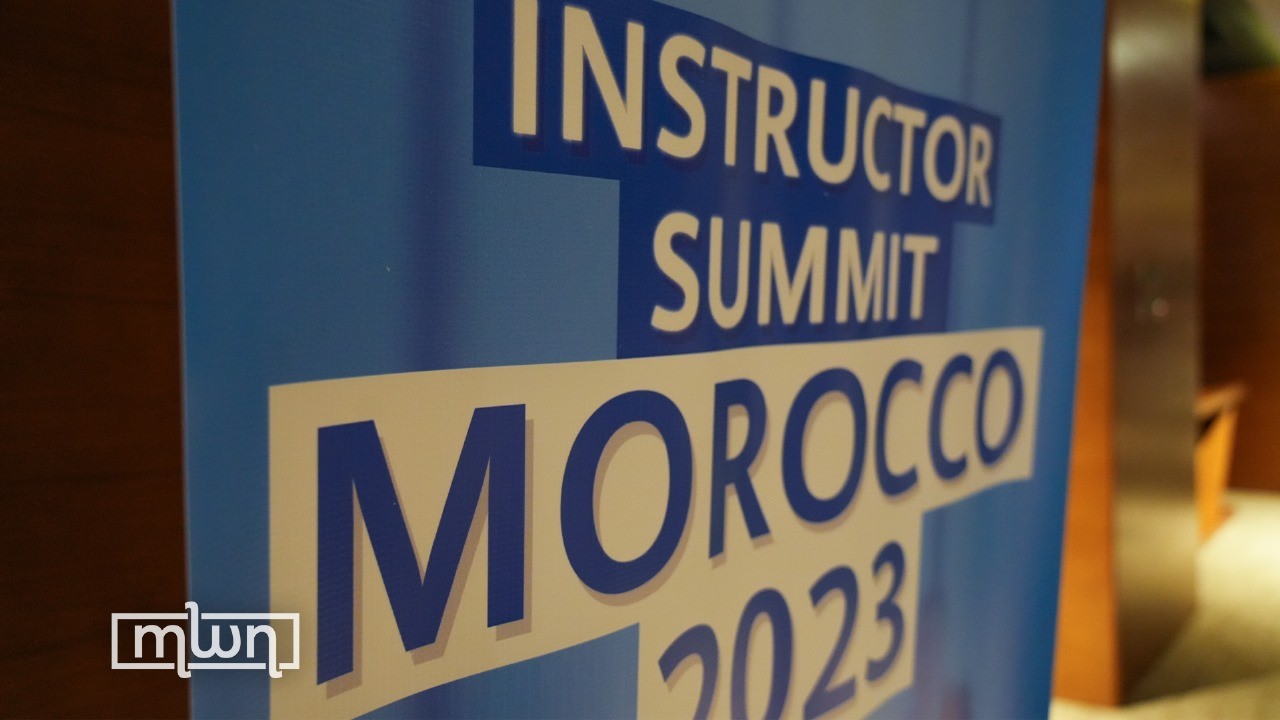
Casablanca – In partnership with the Moroccan Ministry of Higher Education, Scientific Research, and Innovation, Huawei held an instructor summit on Friday in Casablanca to implement an agreement on the training of instructors and students in the digital field.
The summit covered topics related to the issues of higher education and Information Communication Technology (ICT), with the presence of experts in the field of education and ICT.
Participating in the event, the Head of Information and Orientation at the Ministry of Higher Education, Scientific Research, and Innovation, Abderrazak Ben Saga, said that the summit was meant to implement an agreement the ministry and Huawei signed in 2021 to promote the training of educators in the digital field.
The agreement also aims to promote students’ education by the establishment of the ICT academy at Moroccan institutions, with Ben Saga stressing that this is “really something that appeals to us in several ways.”

Head of Information and Orientation at the Ministry of Higher Education, Abderrazak Ben Saga
In order to do this, Ben Saga insisted, the Ministry has already begun to implement the ESRI-2030 Pact, a plan aimed at revolutionizing the ecosystems of innovation, scientific research, and higher education.
“This starts with equipping these students with dual competency, which means mastering a certain number of digital skills that can be used both in their training and when they join the workforce or set up their own business,” he explained.
For his part, Head of Marketing and Business Strategy, Chakib Achour, said that this project is open to everyone, as “anyone from any discipline can be competent when it comes to the digital, not only engineers in the field.”
Read also: Huawei Launches 4th Edition of Huawei ICT Competition for Moroccan Students
Highlighting Moroccans’ potential in ICT, Achour stated that this field is also concerned by the ‘Moroccan digital sovereignty,’ which can be achieved by Moroccan talents, and that “ICT is at the heart of education.”
Once this is in place, Ben Saga explained, several modules will be taught at the level of several state degrees, including B.A., M.A., and Ph.D., with an emphasis on the “new generation of doctoral degrees.”
“This academic excellence,” which is aimed to be achieved, is also predicated on “Code 212,” a university-level center that will be established to allow all students to participate in coding projects without requiring any prior experience in the digital area. The methodology will primarily focus on peer instruction and hands-on project experience.

Huawei’s instructor summit in Casablanca
In light of this, the goal of the entire system of developing digital skills is to certify more than 1100 students by 2025–2026.
In addition to the aforementioned strategies, a critical factor that will support the development of digital literacy is the mobilization of technology partners such as Huawei.
On the sidelines of this event, a signing ceremony was held with higher education institutions, namely the National School of Applied Sciences (ENSA) Tetouan and ENSA Safi, to bring the latest technological trends to the ecosystem.
Acting Director at the ENSA Safi, El Hassane Boumaggard, said that this cooperation agreement will allow his school’s engineering students to benefit from the programs that Huawei offers to young people in Morocco..
“Our school introduces courses of study related to Artificial Intelligence (AI) as well as industrial and aeronautical engineering, and these require developing ICT skills,” Boumaggard explained.
He went on to say that with this opportunity, ENSA Safi graduates will be able to easily transition into the workforce thanks to Huawei’s comprehensive training programs and graduation internships.
Boumaggard concluded his statement by saying that a program will be set up to give young people from ENSA Safi a chance to get a job and expand their educational opportunities.