


 Join on WhatsApp
 Join on Telegram
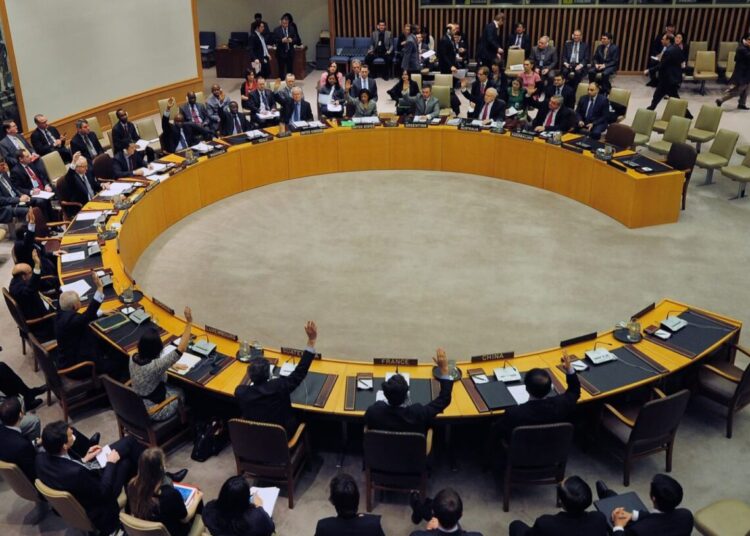
Rabat – The United Nations Security Council convened this week for a strategic review of the mandate of the United Nations Mission for the Referendum in Western Sahara, marking a critical moment in the future of the decades-old operation as diplomatic tensions surrounding the Sahara issue continue to mount.
The closed-door session, held six months ahead of the mandate’s renewal deadline in October, forms part of the implementation of Resolution 2797, adopted on October 31, 2025. The meeting allowed member states to assess preliminary findings from a recent UN field mission tasked with evaluating MINURSO’s effectiveness 35 years after its establishment in April 1991.
According to sources familiar with the discussions, the session served primarily as a stocktaking exercise, during which the Council’s 15 members reviewed conclusions from a UN delegation that conducted a regional tour between March 24 and April 2.
The delegation visited the Sahara, Mauritania, and the Tindouf camps in southwestern Algeria, gathering insights on the mission’s performance and regional dynamics.
Early indications suggest that some of the recommendations emerging from this review may align with Morocco’s long-standing position on the future of the mission. Notably, discussions around revising both the mandate and even the designation of MINURSO—once considered politically sensitive—are now increasingly part of mainstream deliberations within the Council.
Diplomatic sources describe this shift as a “significant development,” reflecting growing openness among key stakeholders to rethink the structure and scope of the UN presence in the region. Expectations are mounting that a revised framework governing MINURSO could be formalized during the October renewal cycle.
Read also: Boulos Reaffirms US Support for Morocco’s Autonomy Plan in Meeting with MINURSO Head
Despite cautious optimism following recent consultations on April 24 and 30, the trajectory of the review process remains closely tied to broader political negotiations. The future of MINURSO will largely depend on the willingness of the four main parties involved in the dispute—Morocco, Algeria, the Polisario Front, and Mauritania—to re-engage in substantive dialogue under UN auspices.
Meanwhile, international pressure is intensifying. The United States has reportedly stepped up efforts to push for a new round of talks, urging Algeria in particular to return to the negotiating table. This message has been conveyed through multiple diplomatic channels in recent weeks.
Algeria in the meantime appears to be strengthening its diplomatic coordination with global powers such as Russia and China, with unconfirmed reports suggesting that either country could use its veto power within the Security Council to block significant changes to MINURSO’s mandate or structure.
As geopolitical maneuvering intensifies, the coming months are expected to prove decisive. With nearly half a century since the onset of the Sahara dispute, the ongoing review of MINURSO’s role may signal a turning point in how the international community approaches one of North Africa’s longest-standing conflicts.


