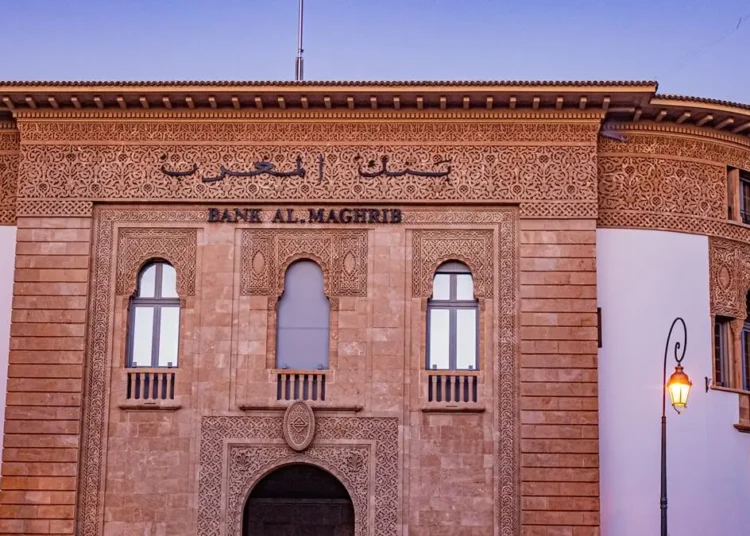
Casablanca – Bank Al-Maghrib’s (BAM) Council held its third quarterly meeting of 2026 today in Rabat, where it reviewed economic developments at home and abroad and updated its medium-term projections.
The Council decided to keep the key interest rate at 2.25% as inflation remains moderate and uncertainty around the economic outlook stays high. BAM cited continued conflicts, geopolitical and economic tensions, concerns over energy and food supplies, higher sovereign yields and climate change among the external risks. Domestic uncertainty also relates to weather conditions and the future direction of economic policy.
Morocco’s inflation averaged 0.3% during the first eight months of 2026. BAM expects inflation to reach 0.7% for the full year and 1.5% in 2027. It expects underlying inflation to move from -0.2% in 2026 to 2.2% next year as the impact of lower food prices, particularly olive oil, fades and imported inflation remains relatively high.
The central bank cut its 2026 growth forecast to 4.4%, from 4.9% in 2025, and expects growth to slow to 2.9% in 2027. Agricultural value added should rise 16% this year, supported by an estimated cereal harvest of 93 million quintals, before falling 7.6% in 2027 under an assumed average harvest of 50 million quintals. Non-agricultural activity should grow 3.1% this year and 4% in 2027.
Energy costs and external accounts
International energy prices continue to weigh on Morocco’s external accounts. BAM expects the country’s energy import bill to rise 28.4% to MAD 138.1 billion in 2026 before falling to MAD 116 billion in 2027.
The central bank expects equipment imports to reach MAD 250.7 billion after increases of 15.6% in 2026 and 8.8% in 2027. Automobile exports should reach MAD 202.2 billion in 2027, while phosphate and derivative exports should rise 9.7% this year and 12.1% next year to MAD 122.6 billion.
Travel receipts should reach MAD 160 billion and remittances from Moroccans living abroad MAD 136.3 billion in 2027. These trends should push the current account deficit from 2.4% of GDP in 2025 to 4.6% this year before it narrows to 3% in 2027.
BAM expects official reserve assets to reach MAD 502.8 billion by the end of 2026 and MAD 515.3 billion in 2027, covering around five and a half months of imports.
The central bank also expects bank credit to the non-financial sector to accelerate from 4.8% in 2025 to 8.1% this year before slowing to 6.1% in 2027. The budget deficit should reach 3.4% of GDP in 2026 and 3.5% in 2027.
On the labor market, the HCP’s second-quarter 2026 labor force survey showed that Morocco created 406,000 jobs year-on-year. The unemployment rate fell to 9.5% nationwide, while it reached 11.9% in urban areas and 5.4% in rural areas, according to Bank Al-Maghrib’s summary of the HCP data.