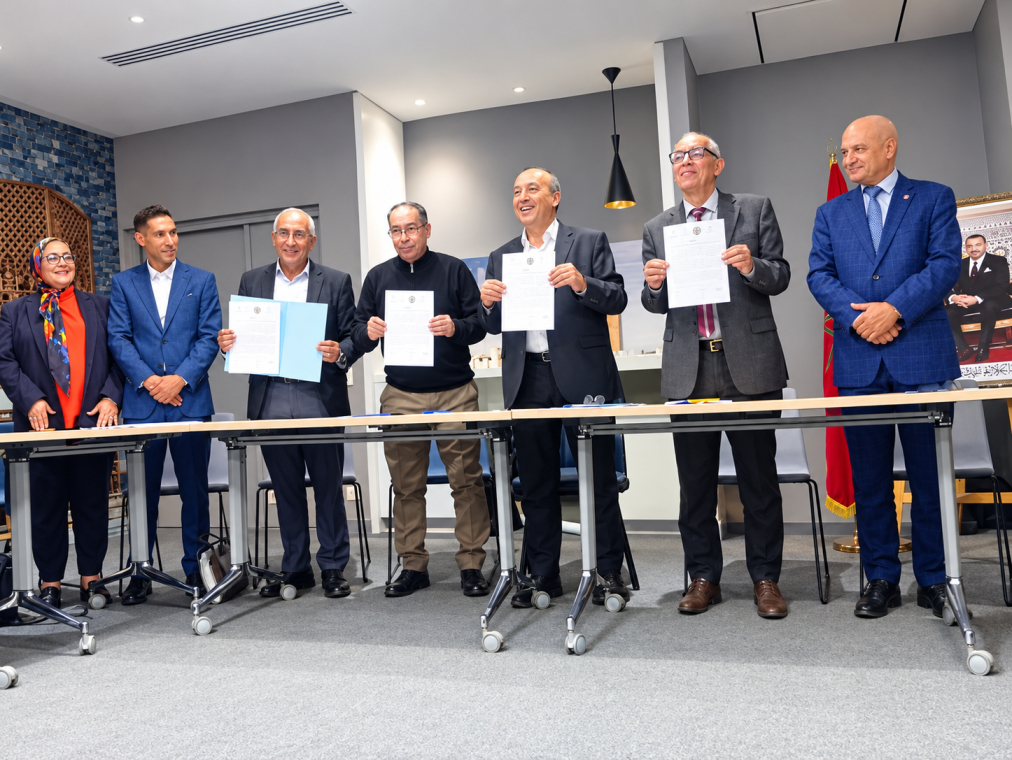
Marrakech – Four parties represented in the House of Representatives have agreed to form a joint parliamentary group, pooling the six seats they won in the September 23 legislative elections. The announcement came in a joint statement dated October 3.
The four are the Front of Democratic Forces (FFD), the Equity Party (PE, Al Insaf), the Party of the New Democrats (PND), and the Unity and Democracy Party (PUD). Together they hold six of the chamber’s 395 seats, or roughly 1.5%.
That share places the bloc at the far edge of a house led by the Authenticity and Modernity Party (PAM) with 97 seats, the National Rally of Independents (RNI) with 66, the Istiqlal Party with 65, and the Justice and Development Party (PJD) with 54.
The group’s six seats are split unevenly. The FFD and Al Insaf won two each, while the PND and PUD took one apiece. Four of the six came through the regional lists reserved for women, and two through local districts.
In the local races, Abdelaziz Barik – known in the media as “Oussama Barik” – won the Midelt constituency in the Drâa-Tafilalet region for the PUD, in one of the election’s more talked-about stories. He joined the new group about ten days after entering parliament.
Larbi Chrii took the Settat district in the Casablanca-Settat region for Al Insaf. On the women’s regional lists, Nadia Nouam (FFD) and Amal Idouq (Al Insaf) won in Casablanca-Settat, Hanane Zmizem (PND) in Tangier-Tetouan-Al Hoceima, and Dounia Ezzahir (FFD) in Fez-Meknes.
According to the joint statement, the four leaderships held “deep and responsible” political consultations in light of the election results. They framed the group as an effort to “inject new blood into the arteries of national parliamentary practice” and to move beyond “the logic of numbers.”
The parties also laid out a legislative and oversight agenda. They pledged to put forward weighty legislative and policy proposals capable of shaping alternatives and defending “the pillars of the social state” and citizen dignity.
On oversight, they committed to using parliamentary mechanisms “with greater depth and firmness” to evaluate public policies and to translate pressing public concerns into workable programs. They further pledged to strengthen their presence in parliamentary diplomacy in defense of the kingdom’s constants.
The move reflects an attempt by parties with limited representation to consolidate their weight inside the institution. A joint group gives them a wider margin to influence legislative and oversight debates than their individual numbers would allow.
That margin rests on the chamber’s own rules. Under Articles 40 and 41 of the House’s Rules of Procedure, a parliamentary group requires at least four members, while a parliamentary team needs at least twenty.
Groups are formed at the start of the term and again in the third year during the April session. The group’s president notifies the House president of its signed membership list, which must be deposited at least 48 hours before the plenary session that announces it and its publication in the Official Gazette.
Membership also carries advantages unavailable to unaffiliated MPs. The group’s president serves as its official spokesperson and sits on the Conference of Presidents, the body that helps set the chamber’s agenda and schedule debates – a seat a lone MP does not get. The Rules further oblige the House Bureau to provide groups with premises, staff, funding, and logistical support.