
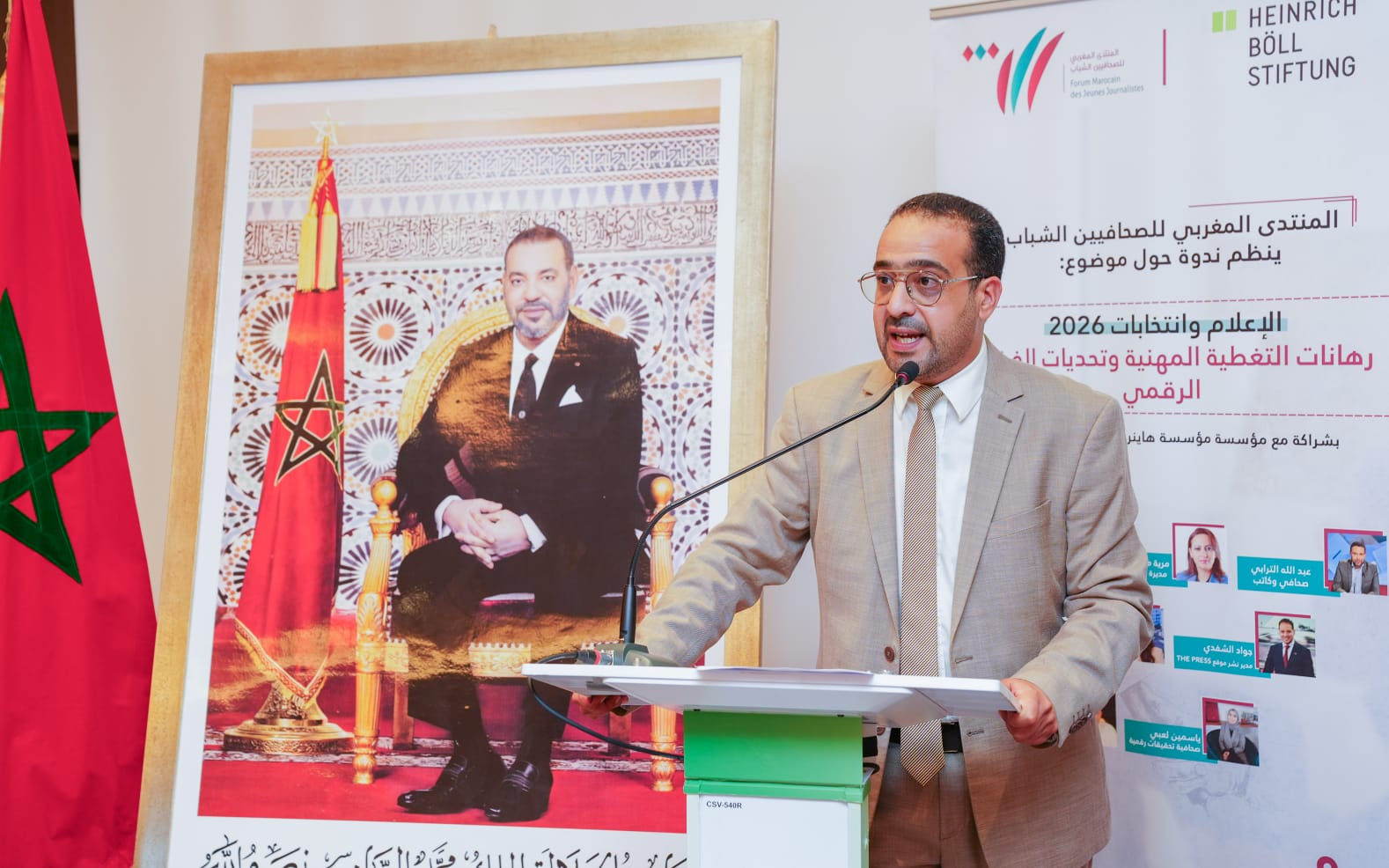
Rabat – The Moroccan Young Journalists Forum has published a new report that takes stock of nearly a decade of work to strengthen journalism skills, promote professional debate, and contribute to discussions on media and human rights in Morocco.
The report, titled “Assessment of the Moroccan Young Journalists Forum: From Capacity Building to Impact Creation,” covers the Forum’s work from 2017 to 2026 and documents its transition from individual initiatives to a more structured program of training, research, advocacy, and partnerships.
The Forum held 49 training sessions and activities over that period, reaching nearly 1,000 participants. Its programs addressed issues ranging from freedom of expression and journalists’ rights to ethical reporting, access to information, data journalism, digital security, and disinformation.
The Forum also tackled gender and diversity in the media, alongside advocacy, leadership, and strategies to influence public policy.
Beyond training, the organization sought to create spaces where journalists and other stakeholders could debate the challenges facing the profession. It held 36 professional discussion and consultation events between 2018 and 2026, including conferences, roundtables, workshops, study days, and a summer university.
The events brought together journalists, academics, researchers, human rights advocates, civil society groups, and institutional representatives to examine changes in the media sector, including legislative, economic, technological, and professional challenges.
From training to knowledge production
The Forum’s work also expanded into research and publishing. Its record shows 20 publications and knowledge and advocacy documents between 2018 and 2026.
The output includes seven advocacy memoranda, four books and conference proceedings, three professional guides, three reports, and two studies.
The report presents this body of work as part of a broader shift in the Forum’s approach to advocacy. Rather than relying primarily on statements and individual initiatives, the organization has increasingly based its positions on research, monitoring, policy proposals, and dialogue with public institutions.
Its advocacy has covered several major issues affecting Moroccan journalism, including reform of the National Press Council, media self-regulation, the legal framework for press freedom, pluralism, journalists’ protection, and professional working conditions.
One of the clearest examples came through the Forum’s work with the United Nations Human Rights Council’s Universal Periodic Review mechanism.
In 2022, the organization prepared a parallel report on Morocco’s human rights record. It later engaged with diplomatic missions, took part in UPR pre-sessions in Geneva, and followed up on recommendations addressed to Morocco. In 2025, it released a mid-term parallel report to assess progress on those recommendations.
A broader international network
Over the years, the Forum also established partnerships with 20 national and international institutions and organizations, including multilateral bodies, Moroccan public institutions, international cooperation agencies, donors, and international NGOs.
The organization said these partnerships supported more than its activities financially. They also helped shape programs, develop working methods and tools, broaden its institutional network, and create longer-term and more specialized initiatives.
The Forum reached a new milestone in 2025 when it obtained consultative status with UNESCO, following years of cooperation on data journalism, access to information, digital security, fact-checking, disinformation, and media and information literacy.
The new report presents the Forum’s trajectory as a shift from capacity-building for young journalists toward a wider role in professional debate, knowledge production, and advocacy on issues affecting the media and journalists’ rights in Morocco.