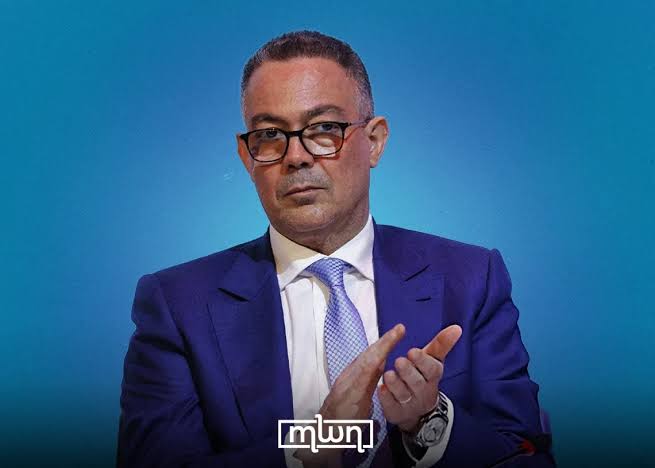
Rabat – Royal Moroccan Football Federation President Fouzi Lekjaa took part in the CAF Strategy Conference in Cape Verde on Thursday, with the gathering placing Africa’s development beyond the 2026 World Cup at the center of discussions.
Lekjaa attended in his dual capacity as FRMF president and CAF’s first vice president, a position he has held since April 2025. The conference, held from October 7 to 9 in Santa Maria on Sal Island, has brought together the presidents of CAF’s 54 member associations, members of the continental body’s executive committee, zonal leaders, national-team coaches and international football experts.
CAF has framed the meeting around two broad questions: how to make football structures across its member associations stronger and more sustainable, and how African national teams can build on their strongest collective World Cup showing to date.
Africa sent a record 10 teams to the 2026 World Cup, with nine reaching the knockout phase. Morocco advanced to the quarterfinals before losing 2-0 to France, which made the Atlas Lions the first African nation to reach the last eight at consecutive World Cups.
That Moroccan experience will also form part of Friday’s technical discussions.
Morocco head coach Mohamed Ouahbi is among the coaches selected for a high-level review panel alongside Arsène Wenger, FIFA’s Chief of Global Football Development, as well as Hossam Hassan, Sébastien Desabre, Carlos Queiroz and former Cape Verde coach Bubista. The group is due to assess what African teams did well in 2026 and what still needs to improve before the 2030 World Cup.
The Moroccan delegation therefore has a presence on both the administrative and technical sides of the conference, with Lekjaa involved in the wider strategic discussions and Ouahbi contributing to the review of Africa’s performance on the pitch.
Thursday’s opening session was attended by CAF President Patrice Motsepe, FIFA President Gianni Infantino and Cape Verde President Janira Hopffer Almada. CAF said one of the conference’s central objectives is to help all 54 member associations develop stronger and more self-sustaining football structures while raising the level of its competitions.
Infantino also used the meeting to highlight Africa’s recent progress and the need to create more opportunities for players from the continent. FIFA said more than $1 billion has been invested in African football through the FIFA Forward program over the past decade.
The final day today shifts the focus more heavily toward technical analysis of the 2026 World Cup, with coaches and development experts expected to turn the tournament’s lessons into longer-term planning for 2030 and beyond.