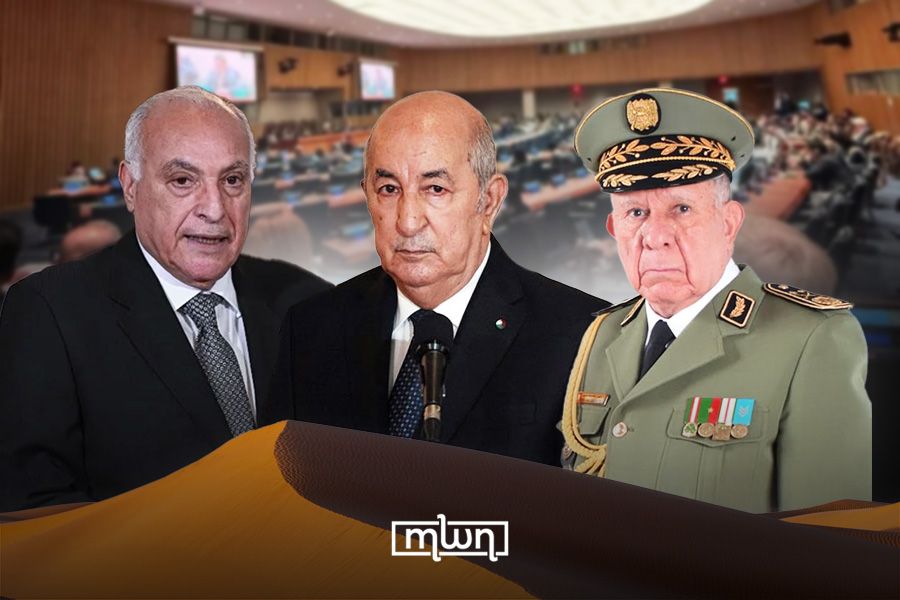
Rabat – An increasing number of countries continue to renew their support for Morocco’s Autonomy Plan as a basis for negotiations to resolve the dispute over Western Sahara. Amid this growing international momentum, Algeria continues to advocate for separatism in the region, challenging Morocco’s territorial integrity and sovereignty over its southern provinces.
At the UN Fourth Committee meeting on Tuesday, several countries reaffirmed their support for Morocco’s position, specifically the Autonomy Plan, which the UN Security Council and the UN Secretary-General have recognized as a genuine basis for resolving the dispute over Western Sahara.
Comoros, Ghana, Saint Lucia, and the UAE renewed their support for the Moroccan proposal on Tuesday, while Algeria used the same UN Fourth Committee platform to reiterate its opposition to Rabat’s position.
Morocco’s Autonomy Plan keeps gaining momentum
Saint Lucia’s representative welcomed the growing support for the Moroccan Autonomy Plan, encouraging all parties to the dispute to continue engaging in “good faith negotiations in order to preserve the momentum garnered by Resolution 2797.”
“We encourage the parties to build on this so that a pragmatic and mutually acceptable lasting political solution could be achieved in accordance with Security Council Resolution 2797,” the Saint Lucia representative said at the meeting.
Ghana reaffirmed its support for Security Council Resolution 2797 of October 2025 and the UN-led political process aimed at finding a mutually acceptable political solution to end the dispute over Western Sahara.
Ghana emphasized that it considers the Autonomy Plan a realistic basis for a just resolution, urging that rigid positions “must give way to constructive and forward-looking engagements focused on concrete outcomes.”
Comoros also reiterated its full support for the Moroccan Autonomy Initiative, describing it as a “very realistic, serious and credible basis for achieving a lasting political solution to this dispute.”
It also expressed support for the UN-led political process.
The Central African Republic also reiterated its support for the Moroccan Autonomy Initiative presented in 2007, stating that it “consider[s it] as the most serious, credible, and realistic basis to reach a definitive solution to this dispute while respecting the sovereignty and territorial integrity of the Kingdom of Morocco.”
The Democratic Republic of the Congo adhered to the same position, describing the Moroccan proposal as a credible, serious, and constructive basis for reaching a definitive political solution while respecting the parameters established by the UN.
The UAE also emphasized its support for Morocco’s efforts to find a solution to the dispute, renewing its support for Rabat’s sovereignty over its southern provinces in Western Sahara.
“My country reaffirms its support for the autonomy initiative put forward by Morocco as a realistic, practical, and sustainable approach to settling this dispute in a manner that preserves the territorial integrity of the Kingdom,” the UAE representative said, renewing support for Resolution 2797.
The growing international support, which also includes several other countries that have taken the floor at the UN General Assembly and the Fourth Committee to back the Autonomy Plan, comes against a backdrop of Algeria’s continued adherence to what Morocco considers an outdated narrative in support of separatism in the region.
Algiers rejects accountability for its role in Western Sahara dispute
The Algerian regime took the floor at the Fourth Committee to reiterate its position that it is merely “an observer” to the dispute rather than a party responsible for its continuation, despite hosting, financing, arming, and supporting the Polisario Front’s independence claims in Western Sahara.
The Algerian representative claimed that his country welcomes direct negotiations between the “two parties to the conflict,” referring to the Polisario Front and Morocco, rather than acknowledging Algeria’s involvement in the dispute.
The Algerian regime, which critics accuse of oppressing Sahrawis in the Tindouf camps, where residents face restrictions on their freedom of movement beyond Tindouf and dire living conditions, including diseases such as anemia, also claimed that Sahrawis are “dispersed within Algeria, Mauritania, and elsewhere they have found refuge.”
Algeria has also rejected calls for a census in the Tindouf camps, opposing UNHCR’s role in establishing the actual number of Sahrawis living there. Former Polisario members have testified that many of those in the camps are of Tuareg origin or come from Algeria itself.
Morocco reaffirms Sahara Autonomy Plan
The Algerian regime appealed to the General Assembly to “promote this and sustainable solution that would guarantee the Sahrawi people the exercise of their inalienable right to self-determination,” referring to a referendum.
Morocco’s Permanent Representative to the UN, Omar Hilale, responded to these claims during the same meeting, recalling the historic UN Security Council resolution adopted last year, which marked a significant turning point in addressing the Western Sahara dispute.
“This resolution was applauded by all parties, and it was an irreversible turning point compared to all the previous resolutions of the Council for several reasons,” Hilale said, recalling that the text “enshrines the Moroccan autonomy initiative as the only basis to resolve this regional dispute.”
“Optimism born out of resolution 2797 and the Washington negotiations and the Madrid negotiations is linked to a lasting solution over the regional dispute over Moroccan Sahara that is 50 years old but Its scope is even bigger,” Hilale said, reminding Algeria that the decolonization of Morocco’s southern provinces took place half a century ago with the return of the Sahara to “its mother, Morocco.”