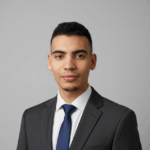

Marrakech – Morocco has backed Emirati diplomat Lana Zaki Nusseibeh in her bid to become the next Secretary-General of the United Nations. A source at the Ministry of Foreign Affairs confirmed that the kingdom received news of her nomination with satisfaction.
Rabat considers that Nusseibeh’s qualifications, her wide professional experience, and her institutional track record qualify her for the senior UN post.
According to the same source, the candidacy arrives at a delicate international moment that calls for stronger multilateral action and a reinforced role for the United Nations in preserving international peace and security, in line with the purposes and principles of its charter.
The ministry source also conveyed Morocco’s confidence that the candidate’s competence and vision would help strengthen the organization’s effectiveness and standing. That support, the source added, reflects the North African country’s firm principles of backing qualified talent and promoting sound international governance.
Nusseibeh thanked Morocco for its support and confidence. She shared the kingdom’s conviction on the need to strengthen multilateralism and the UN’s role in safeguarding international peace and security, noting that a more effective organization, guided by its charter, is essential to meeting current challenges.
أتقدم بالشكر إلى المملكة المغربية على دعمها وثقتها بترشحي.
وأتفق مع المملكة المغربية على أن المرحلة الراهنة تستوجب تعزيز العمل متعدد الأطراف، ودعم دور الأمم المتحدة في صون السلم والأمن الدوليين. إن وجود أمم متحدة أكثر فاعلية، تسترشد في عملها بمبادئ ميثاقها، بات ضرورة ملحّة للتصدي… https://t.co/4spdG5Ha3f— Lana Nusseibeh (@Lana_Nusseibeh) October 26, 2026
The UAE formally nominated Nusseibeh on October 21, when President Sheikh Mohamed bin Zayed Al Nahyan submitted her candidacy in a letter to the presidents of the General Assembly and the Security Council.
She entered the contest as a late contender to succeed António Guterres, whose second and final term ends on December 31. The next Secretary-General is expected to take office on January 1, 2027.
If selected, Nusseibeh would become the first woman to lead the United Nations since its founding in 1945. She would also be the first Emirati and Gulf Arab in the role, and only the second Arab after Egypt’s Boutros Boutros-Ghali, who served from 1992 to 1996.
Born in Abu Dhabi in 1978, Nusseibeh traces her Palestinian heritage to one of Jerusalem’s oldest Muslim families, whose presence in the city dates to the arrival of Islam in the seventh century.
According to family tradition, the second Rashidun caliph, Umar ibn al-Khattab, entrusted the Sunni Muslim family with responsibility for the doors of the Church of the Holy Sepulchre, Christianity’s holiest site, to prevent disputes among Christian denominations.
The arrangement later evolved under Saladin, following his reconquest of Jerusalem in 1187, with the Joudeh family becoming custodians of the keys while the Nusseibehs retained the ceremonial duty of opening and closing the church, a centuries-old tradition that continues today.
Her grandfather, Anwar Nusseibeh, was a Palestinian political figure, while her father, Zaki Nusseibeh, settled in Abu Dhabi after the 1967 war and built a career as a journalist and cultural figure close to the UAE’s founder, Sheikh Zayed bin Sultan Al Nahyan.
She is a niece of the Palestinian intellectual Sari Nusseibeh. Known for her advocacy of the Palestinian cause and the two-state solution, she holds the endorsement of the State of Palestine.
Her academic background runs through two British institutions. Nusseibeh studied history at Queens’ College, University of Cambridge, earning her bachelor’s and master’s degrees there. In 2003, she completed a master’s with distinction in Israeli and Jewish Diaspora Studies at SOAS, University of London. She speaks Arabic, English, and French, and is also reported by some media outlets to be fluent in Hebrew.
Her diplomatic career spans nearly two decades. After early work with UNESCO in Paris, she established the Policy Planning Department at the UAE Foreign Ministry in 2009.
She became in 2013 the first woman to serve as the UAE’s Permanent Representative to the United Nations in New York, a post she held until April 2024. She presided over the Security Council twice during the UAE’s 2022-2023 term, led humanitarian efforts on Gaza, and served as President of the UN Women Executive Board in 2017.
Nusseibeh was appointed Minister of State in September 2025, then stepped back from those duties in October 2026 to focus on her campaign, titled “A United Nations for the Next Eighty Years.”
The race itself remains unsettled. After six rounds of voting, the Security Council has yet to coalesce behind any of the remaining candidates, with Costa Rica’s Rebeca Grynspan holding the lead in the latest straw poll despite objections from two permanent members.
A group of Latin American and Caribbean states has objected to Nusseibeh’s late entry, and her candidacy faces criticism from rights advocates over the UAE’s human rights record and its contested role in Sudan’s conflict. The appointment ultimately requires a Security Council recommendation followed by General Assembly approval.