
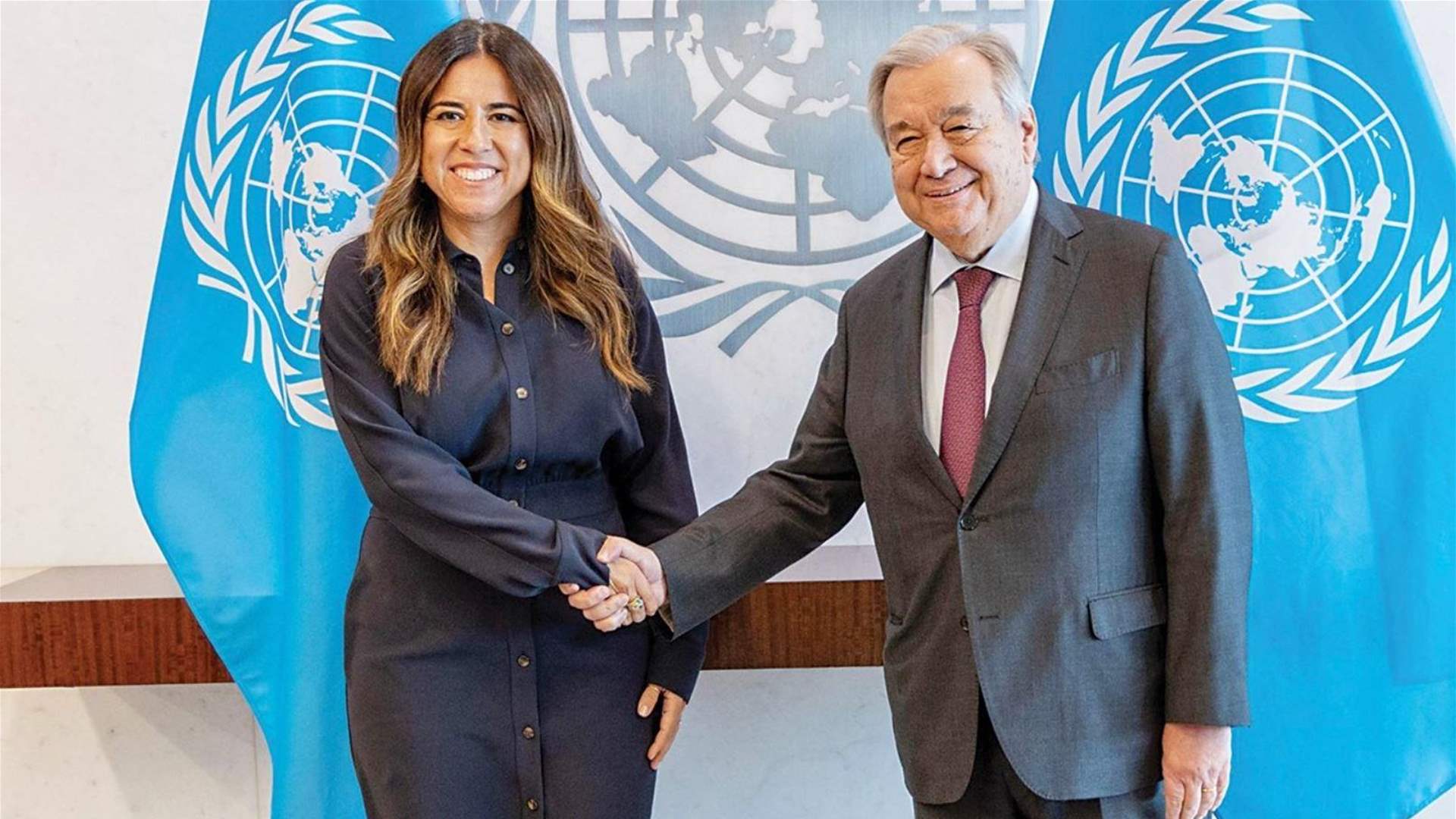
Marrakech – The United Arab Emirates has formally nominated Lana Zaki Nusseibeh, its minister of state for foreign affairs, as a candidate for United Nations secretary-general, adding a prominent Middle Eastern contender to a contest that has failed to produce a consensus choice.
President Sheikh Mohamed bin Zayed Al Nahyan submitted the nomination Wednesday in a letter to the presidents of the General Assembly and the Security Council. The letter pointed to Nusseibeh’s experience at the world body, her judgement, and her record of constructive work.
Nusseibeh, 48, served as the UAE’s permanent representative to the UN from 2013 to 2024. Over that decade, she was a vice-president of the General Assembly, president of the executive board of UN Women, and co-chair of processes on General Assembly revitalization and Security Council reform. She twice held the Security Council presidency during the UAE’s 2022-2023 term.
Her candidacy arrives late, and into a deadlock. The incumbent, Antonio Guterres of Portugal, ends his second term on December 31, leaving his successor an organization in a budgetary crisis and under US pressure for radical cuts.
After six months of public hustings, the leading candidates have struggled to win over all five permanent Security Council members – Britain, China, France, Russia, and the US – each able to wield a veto.
At the latest straw poll, on October 16, every contender drew at least two vetoes. Costa Rica’s Rebeca Grynspan, a former vice-president and head of the UN trade body, took nine “encourage” votes but also two disapprovals. Argentina’s Rafael Grossi, who leads the UN nuclear watchdog, drew two as well.
Senegal’s Macky Sall then withdrew, leaving a field that also includes Guyana’s Carolyn Rodrigues-Birkett, Ecuador’s Ivonne A-Baki and Maria Fernanda Espinosa, and Uganda’s Olara Otunnu. The Donald Trump administration reportedly opposed all seven contenders to that point.
Against that gridlock, Nusseibeh wants to restore the UN as a problem-solver. “It’s clear that today we need a secretary-general that can recommit to the future of multilateralism,” she told Reuters, calling for an institution that is not “a spectator to the world’s crises.”
She described being approached by several countries during the last General Assembly, and framed her method as “creative entrepreneurial diplomacy,” citing a council visit she arranged to the Rafah crossing that helped pass Resolution 2720 on Gaza aid in 2023.
The nomination carries complications. As a senior Emirati diplomat, Nusseibeh has defended Abu Dhabi’s assertive foreign policy, including its role in Sudan, where UN sanctions monitors found credible the allegations that the UAE armed the paramilitary Rapid Support Forces (RSF). The UAE denies the claims.
She has taken leave from her post, she told Reuters, to focus on Sudan’s humanitarian crisis. Analysts also question Saudi Arabia’s response; Giorgio Cafiero of Gulf State Analytics warned that an Emirati chief “could raise concerns in Riyadh,” given a rivalry that “tends to play out in a zero-sum manner.”
Washington’s close ties with Abu Dhabi, shared by the other permanent members, could yet break the impasse. A win would make Nusseibeh the first woman to lead the UN and the second chief from the Middle East, after Egypt’s Boutros Boutros-Ghali.
She rejects running on gender. “I’m not running because I’m a woman; I’m running because I am stubbornly optimistic about the future of the United Nations,” she told Reuters.