The Wikimedia Foundation developed the teacher training initiative, “Reading Wikipedia in the Classroom,” with the goal of equipping educators with vital media and information literacy skills.

Morocco has been one of just three countries to pilot the scheme, which adapted to fit the local context of Morocco’s education system.
About “Reading Wikipedia in the Classroom”
With on-the-ground coordinators employed in each location, the foundation implemented the teacher training scheme in Bolivia, Morocco, and the Philippines.
After completion of the training scheme, teachers had all the skills necessary to understand how media is produced, access and evaluate content online, and recognize biases and knowledge gaps in the information consumed.
The Wikimedia Foundation is a nonprofit organization supporting information sharing platforms like Wikipedia, to cultivate a thriving online environment of accessible knowledge.
In addition, the Wikimedia Foundation is responsible for hosting Wikipedia and guarding its status as a free encyclopedia, which volunteers create, edit, and verify. The Wikimedia Foundation is also host to a wide range of wider projects in the realm of free knowledge.
As each location requires special attention, the program tailored the needs of each location. Local coordinators across Morocco were responsible for interviewing educators and uncovering the ways in which the program must be adapted for the country.
The Wikimedia Foundation sought to work in three countries with vastly different political contexts, languages, and education systems. The final report of the project cites Morocco’s multilingual educational environment and regional performance disparities as the two key challenges that set Morocco apart.
The World Bank noted an inconsistency between government investment in Moroccan schools and educational outcomes. Moroccan students are relatively low performing on international assessments and are failing to reflect the developing nature of Morocco’s economy.
Morocco had a 74% adult literacy rate as of 2018, ranking 125th in the world. It appears that Morocco was a perfect candidate for the innovative pilot scheme as it is a country with both the resources to launch a nationwide digital literacy scheme and a high demand for improved educational strategies.
Soukaina Abelhad and Brahim Faraji were two of the first local coordinators for the pilot in Morocco and have provided Morocco World News insight into the program. Their roles involved conducting research on the educational needs of the area, conducting weekly webinars, and coordinating with the Wikimedia education team.
For Soukaina Abelhad, the goal was “to create a localized set of tools that would be adapted to the local context of Morocco.” Together, local coordinators conducted in-depth interviews with teachers and a survey which reached over 200 educators in Morocco.
A total of 96 teachers enrolled in the pilot scheme in Morocco and the training materials that were used (in a progressive three module layout, culminating in a certificate) are accessible for free on Wikimedia Commons. The Teacher’s guide was localized and translated from English into Spanish, Arabic, and Tagalog.
What’s more, the curriculum of the program was aligned with UNESCO’s Media and Information Literacy Framework: the program ensures that all educators involved take meaningful steps to lasting digital literacy.
The “Reading Wikipedia in the Classroom” program also saw invitations extended to guest speakers, to share further skills with participating teachers. Guests touched upon topics such as how to encourage reading in the online classroom and how to maintain privacy on the internet, catering to the interests of participating teachers. Reda Benkhadra and Anass Sedrati – co-founders of the Wikimedia user group in Morocco – are just two of the speakers who were able to share their expertise.
A Unique Set of Challenges
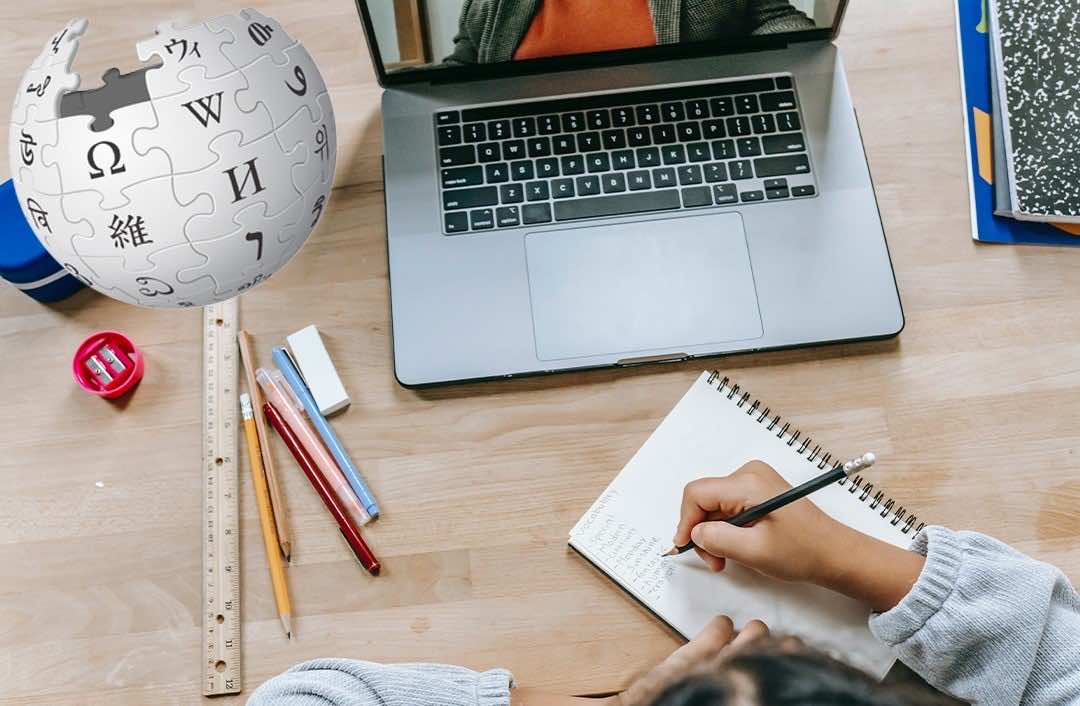
Designed before the COVID-19 pandemic swept across the world, the mission of “Reading Wikipedia in the Classroom” took on a new urgency when it was piloted in 2020. Amidst lockdowns and school closures, lessons were thrust into the digital space and thousands of teachers were expected to grapple with unfamiliar internet platforms to continue educating.
“With this COVID-19 crisis, teachers find themselves switching brutally from one way of teaching to another one” says Soukaina Abelhad. “Now they have to do everything online which is totally new to them.”

The Wikimedia team devised a virtual training program in the wake of national lockdowns and adapted to the demands of the crisis. Soukaina Abelhad describes a “double gain” for participating teachers who not only gained new knowledge from the three modules, but also picked up basic digital skills just by participating.
Joining a Zoom meeting, using social media platforms and taking part in online lessons can be a daunting challenge for many. The teachers involved were able to learn the basics in a safe and interactive learning community.
It could be the case that virtual learning, online meetings, and interacting in the digital world will become a fixture in professional and academic life following the pandemic. “Teachers must learn these new skills in order to be aligned with the future of education” adds Soukaina Abelhad.
Overcoming Classroom Stereotypes
Many of us are well aware of the stigma attached to information sourced on Wikipedia, which many teachers dub as unreliable. However, it turns out that this is just a misconception, a fallacious stereotype that incites apprehensiveness about a platform that is actually the world’s largest collaboratively verified, free source of knowledge.
Reading Wikipedia in the Classroom and the Wikimedia Foundation aim to break down the stereotypes attached to Wikipedia and show people that the information is both neutral and verifiable.
Before embarking on the pilot scheme in Morocco, coordinators interviewed teachers about their preconceived ideas about Wikipedia. Most teachers reported that they felt Wikipedia was unreliable and “could be edited by anyone.” Instructors certainly did not see the online encyclopedia as a versatile academic resource that they could integrate into their own lesson planning.
Over the course of the three modules, the Wikimedia team effectively deconstructed these preconceptions. According to Soukaina Abelhad and Brahim Faraji, 100% of teachers interviewed at the end of the pilot scheme now see Wikipedia as a useful educational resource.
“For me, the biggest challenge was what everyone thought about Wikipedia,” says Faraji. It seems that the program was an overwhelming success in shifting attitudes towards Wikipedia in the realm of education.
Upscaling Wikimedia in the Classroom: What’s Next?
Future iterations of the program are much anticipated among the Wikimedia network. The reach of the “Reading Wikipedia in the Classroom” program can be easily scaled by supporting partners to translate, adapt and contextualize the teachers’ guide.
Wikimedia Foundation will be growing the fledgling program through a training of trainers program. Coordinators Abelhad and Faraji describe a system where the core modules and training materials are widely accessible and so current “trainees” have all of the digital tools and skills to become the “trainer.”
Next steps will hopefully involve the incorporation of more partners such as the Ministry of Education and expanding the program to include more teachers, schools and regions.
The pilot in Morocco is a case study of a massively successful endeavour in open knowledge. When asked to sum up her motivation to participate in the Wikimedia scheme, Abelhad says simply that “Wikipedia belongs to education.”
Free knowledge for all stands well within reach thanks to the noble efforts of coordinators and affiliates of the Wikimedia Foundation: breaking down stereotypes and transferring knowledge from the hands of the few to the hands of the many.