 Join on WhatsApp
 Join on Telegram
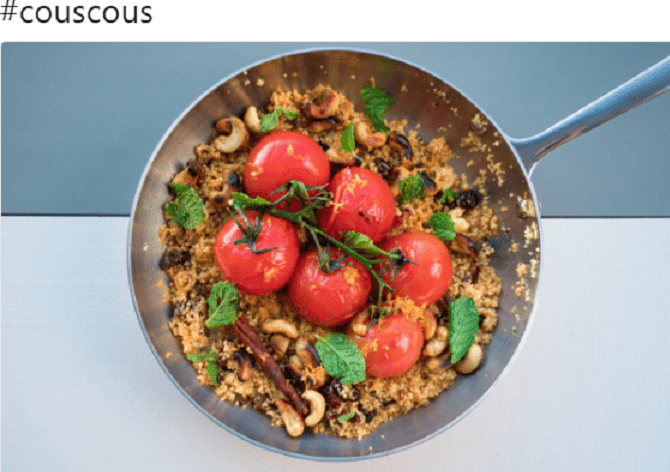
Rabat – Italian-American chef Frankie Celenza recently shared with his Twitter fans an image, captioning it “Couscous.” However, Celenza’s tweet did not get the reactions he expected from his fans, especially from the Moroccan Twittersphere.
On January 14, Celenza featured a platter of grains, peanuts, tomatoes, and a bunch of mint leaves. His post was heavily trolled by fans who argued that his meal looked nothing like the traditional Maghrebi dish.
#couscous pic.twitter.com/sdna1jJ6he
— Frankie Celenza (@frankiecooks) January 7, 2018
Twitter users from all over the world tweeted photos of dishes and miscaptioned them on purpose.
One of the tweeps advised the chef to travel to the origin country of couscous. “please travel to countries of origin of #couscous and learn before you post anything and call it #couscous.”
Please travel to countries of origin of #couscous and learn before you post anything and call it #couscous .This is tunisian kosksi(a.k.a couscous) made by le last weekend pic.twitter.com/bhTRAsHmCx
— Claude (@KcClaude) January 11, 2018
Des lasagnes pic.twitter.com/I0Jax5X8FD
— Badr-edine Tounsi ? (@tounsi9213) January 8, 2018
2018 Mercedes-Benz AMG E63 S pic.twitter.com/pmoB9rXtoN
— Ugh Lee the 1st (@UghLeethe1st) January 7, 2018
Couscous is a Moroccan specialty usually eaten for lunch following Friday prayers. It is a staple of the cuisines of Morocco, Tunisia, Mauritania, Libya, and Algeria. Each country has its own way to prepare this rich meal, typically prepared with a mix of vegetables, lamb, or chicken and chickpeas.
The dish, deep-rooted in the Moroccan culture, also holds cultural significance and symbolizes hospitality, sharing, and collectiveness. Morocco has also another couscous variant, made with caramelized onions and raisins, called “Tfaya.”