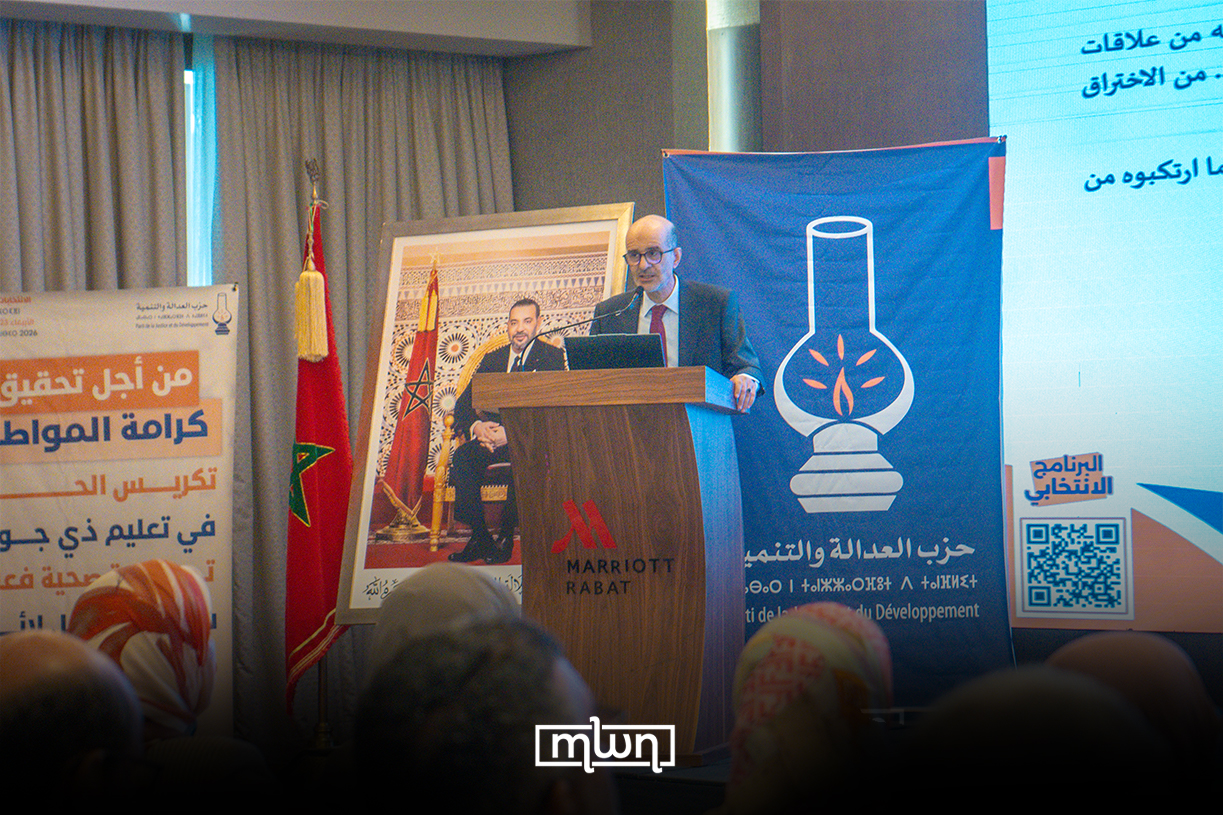
Rabat – The Justice and Development Party (PJD) presented its electoral program for the 2026 elections at a press conference today in Rabat.
The program puts employment, especially youth employment, at the center of the party’s economic plans, pointing to more than 1.6 million unemployed people in 2025 and a youth unemployment rate of more than 37% among people aged 15 to 24.
The PJD says Morocco should focus on “sustainable growth for employment”, making job creation a main measure of economic success.
Focus on young people
The party proposes new training and retraining programs for young people who are not in education or employment.
It also supports professional integration, entrepreneurship and self-employment. The program identifies digital technology and the green economy as areas that could create new jobs.
Support for small businesses
The PJD says it wants to give small and medium-sized businesses better access to public contracts and financing.
It proposes linking some government support and tax incentives to job creation, local purchasing, innovation, and the timely payment of suppliers.
The party also proposes lower corporate tax rates for some very small and small businesses that meet certain conditions.
Fighting monopolies
The program calls for stronger competition rules and more transparency between the state and private companies.
The PJD also proposes higher corporate taxes for sectors with monopoly or oligopoly structures.
The party says these measures would help create fairer competition and reduce unfair advantages in access to markets and public resources.
Economic policy focused on ‘dignity’
The Party also proposes stronger monitoring of prices and the quality of basic food products, measures against speculation, and reforms to wholesale markets.
These proposals are part of PJD’s broader idea of “dignity.” The party says economic policies should create decent jobs, improve living standards, and give citizens better access to economic opportunities.
The program also supports Moroccan production and greater economic independence in key sectors such as food, water, energy, and health.
The main challenge will be whether these proposals can lead to more jobs and better economic opportunities for Moroccans.