 Join on WhatsApp
 Join on Telegram
Rabat – The US Supreme Court ruled on Thursday that political organizations and nonprofits no longer need to disclose their donors. In the case of Americans for Prosperity Foundation v. Bonta, the court ruled 6-3 in favor of the plaintiff, Americans for Prosperity.
In addition to Americans for Prosperity, the case was combined with Thomas More Law Center v. Bonta. Robert Bonta is California’s incumbent Attorney General and represented the state in the Supreme Court trial.
The court’s decision overturned a 2010 ruling in the case of Citizens United v. FEC. Citizens United, a US political organization dedicated to empowering the common people, won its case against the Federal Election Commission and set a new precedent for political funding in the US.
The decision in Citizens United held that disclosure laws would be upheld provided there was “a ‘substantial relation’ between the disclosure requirement and a ‘sufficiently important’ governmental interest.”
However, the most recent ruling has returned the power to America’s richest and many political analysts argue that the 1% will be able to manipulate US politics covertly.
The Americans for Prosperity Foundation argued that the California state law, which forced donors of nonprofit organizations to disclose their identity, violated the donors’ first amendment rights.
“The upshot is that California casts a dragnet for sensitive donor information from tens of thousands of charities each year, even though that information will become relevant in only a small number of cases involving filed complaints,” stated US Chief Justice John Roberts after the ruling.
Partisanship, or prejudice, is another leading factor for the Supreme Court’s decision to overturn the ruling on disclosure laws. Although US court justices are supposed to be apolitical, the panel of judges that sit on the Supreme Court bench and ruled against the California law have historically supported right-leaning positions.
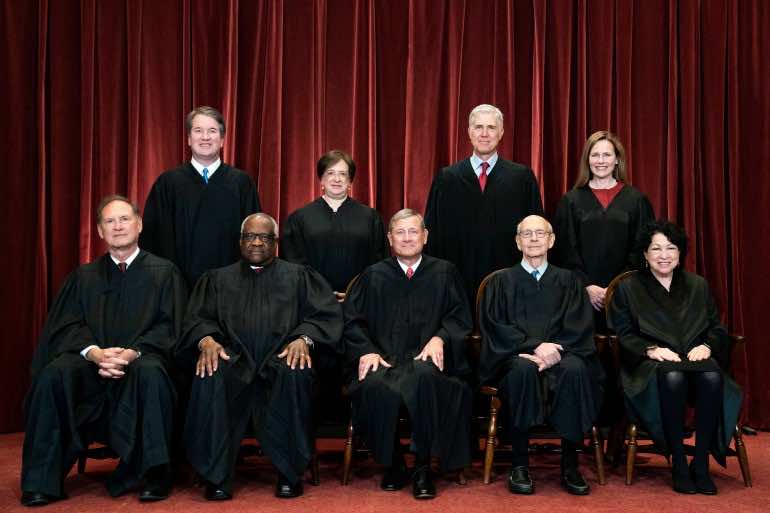
The judges that ruled in favor of Americans for Prosperity and Thomas More Law Center alongside Chief Justice John Roberts include Justices Amy Coney Barrett, Brett Kavanaugh, Clarence Thomas, Neil Gorsuch, and Samuel Alito.
Before the end of his four year term, former President Donald Trump controversially appointed both Amy Coney Barrett and Brett Kavanaugh. Critics have described both justices as being too political and unfit to serve a lifelong term on the Supreme Court.
Justice Sonia Sotomayor, joined by Justices Stephen Breyer and Elena Kagan, wrote a dissenting opinion on the court’s ruling stating it “trades precision for blunt force and creates a significant risk that it will topple disclosure regimes that should be constitutional.”
The court’s ruling extends beyond nonprofit organizations, lobbyists, and other wealthy donors who are now permitted to fund political campaigns anonymously.
In 2019, the Republican Party came under fire for violating campaign finance laws. The US justice system indicted two Soviet-born US citizens for funding Republican candidates ahead of the 2018 midterm elections with over $500,000 in cash payments. Both individuals worked with the Ukranian government, according to the former US ambassador to Ukraine.
The court’s most recent decision will allow for similar cases to go unnoticed in the campaign finance system and will make it more difficult for regulatory agencies to track political donations.