Read on app Read on app
✕
Prayer Times
  • Morocco
  • Lifestyle
  • Western Sahara
  • Login
Morocco World News
  • Home
  • Culture
  • Politics
  • Society
  • Economy
  • Opinion
  • Education
  • Sustainability
  • Tech
  • Sport
  • World Cup 2026
No Result
View All Result
Morocco World News
  • Home
  • Culture
  • Politics
  • Society
  • Economy
  • Opinion
  • Education
  • Sustainability
  • Tech
  • Sport
  • World Cup 2026
No Result
View All Result
Morocco World News

Home > Headlines > Akhannouch Pushes Fes-Meknes to Lead Morocco’s Health System Overhaul

Akhannouch Pushes Fes-Meknes to Lead Morocco’s Health System Overhaul

The head of government acknowledged that Fes-Meknes, despite its demographic weight and its historical, academic, and medical significance, still faces stark territorial disparities between its urban, rural, and mountainous components.

Adil FaouzibyAdil Faouzi
Jun, 10, 2026
0 0
A A
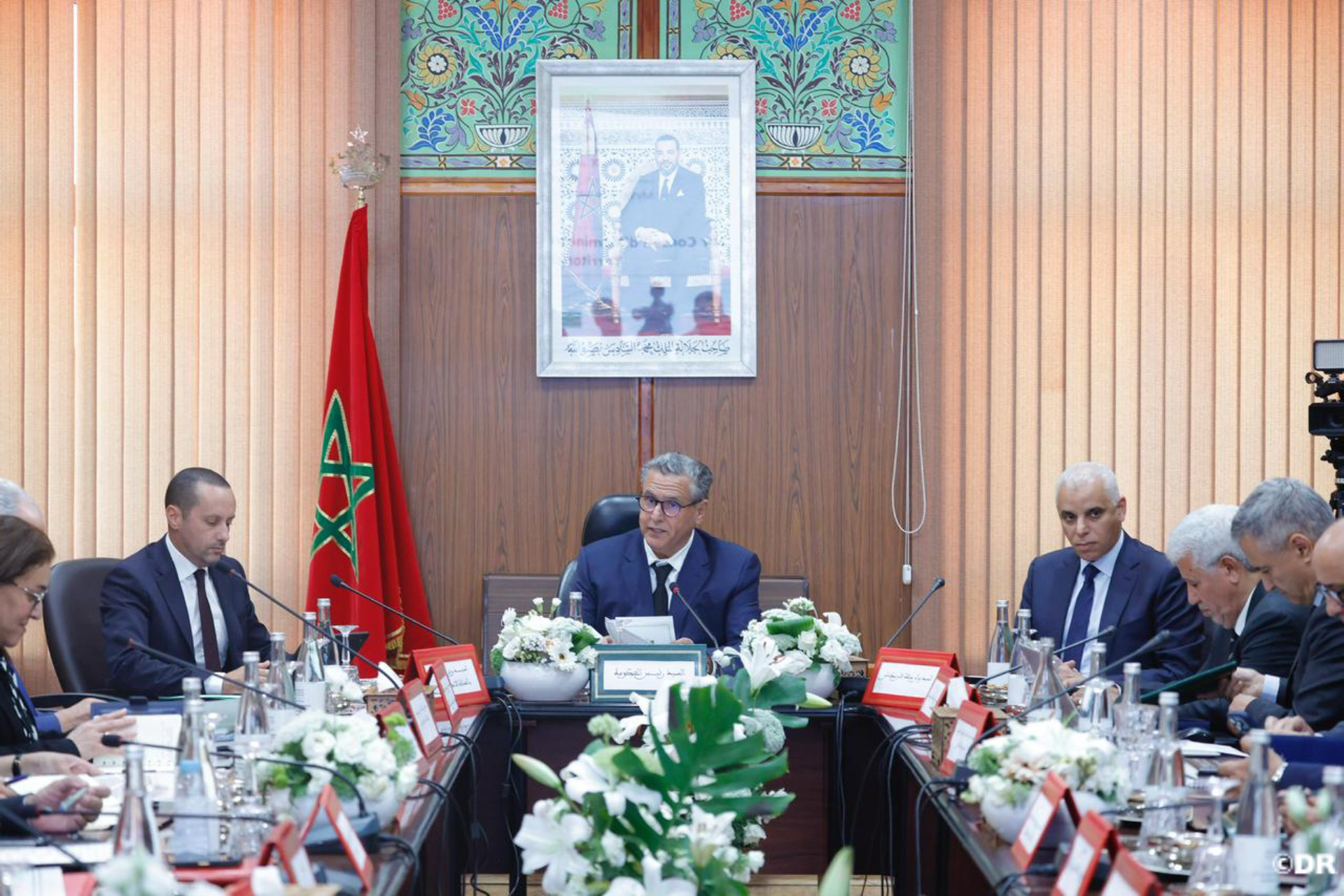
Speaking Tuesday in Fes at the GST’s inaugural board meeting, Akhannouch framed the session as “a moment of strategic orientation rather than a simple formal step of approval.”

Speaking Tuesday in Fes at the GST’s inaugural board meeting, Akhannouch framed the session as “a moment of strategic orientation rather than a simple formal step of approval.”

Follow the latest news from Morocco World News

Join on WhatsApp Join on Telegram

Marrakech – Head of Government Aziz Akhannouch called on the Fes-Meknes region to serve as a national model for implementing Morocco’s sweeping health system reform, describing the official launch of the region’s Groupement Sanitaire Territorial (GST) as a “decisive step” in bringing the overhaul to the regional level.

Speaking Tuesday in Fes at the GST’s inaugural board meeting, Akhannouch framed the session as “a moment of strategic orientation rather than a simple formal step of approval.” He placed the reform squarely within King Mohammed VI’s social-state agenda, noting that citizens’ health, dignity, and social security remain at the center of the royal vision.

The GST is designed to reorganize healthcare delivery across the region by integrating hospitals, primary care centers, and proximity networks under a single territorial governance structure.

Akhannouch wants Fes-Meknes to demonstrate this model through three pillars: transforming the CHU of Fes into the driving force of the regional health apparatus, establishing proximity of care as an enforceable right, and anchoring territorial equity as a benchmark for success.

Akhannouch was blunt about citizen expectations. “The citizen does not expect a speech, but a tangible health service,” he told the board – “a faster appointment, an available doctor, an accessible medication, dignified reception and a clear care pathway.”

He defined this as “the very essence of the social state as envisioned by His Majesty the King – a state that does not merely proclaim rights, but guarantees the conditions for their access and their real impact on citizens’ lives.”

The head of government acknowledged that Fes-Meknes, despite its demographic weight and its historical, academic, and medical significance, still faces stark territorial disparities between its urban, rural, and mountainous components.

That gap, he argued, gives the GST a major responsibility in restructuring healthcare supply along the principles of complementarity, equity, and efficiency.

Akhannouch pressed for an integrated regional system rather than a collection of scattered facilities. Patient pathways, he insisted, must flow seamlessly from primary care centers through provincial hospitals to university-level institutions when necessary – “without unjustified delays or dysfunction.”

He singled out the CHU of Fes as a potential locomotive for the GST, citing its advanced development trajectory and capacity in training, research, and specialty medicine.

But he cautioned that the CHU “cannot function in isolation.” It must pull the entire system forward – provincial hospitals, primary care facilities, proximity networks, and human resources – within a unified, data-driven governance framework built on measurable, results-based decision-making.

The real challenge in Fes-Meknes, Akhannouch argued, is not simply expanding the healthcare offer but reorganizing it. “It is pointless to create new structures if this does not translate into an improvement of the citizen’s experience,” he told the board. “Investment only makes sense if it becomes effective service, and governance only has value if it produces concrete impact on the ground.”

He tasked the GST with operating as a “genuine regional control room” – one capable of identifying gaps, dysfunction, and obstacles in care pathways while directing resources, equipment, and expertise in a rational and efficient manner.

Akhannouch also called for strengthening equity in the distribution of resources, consolidating provincial hospitals, modernizing equipment, accelerating digitalization, and establishing a culture of accountability tied to measurable outcomes.

Read also: Morocco Launches New Phase of Territorial Health Governance in Souss-Massa

Tags: Aziz AkhannouchFez-Mekneshealth reformhealthcare in MoroccoTerritorial Health Group (GST)
TweetShareShareSendShareScan

Recent News

Morocco has become Africa's highest-earning national team across the last two FIFA World Cups after collecting a total of $58 million in prize money from the 2022 and 2026 tournaments.

Atlas Lions Become Africa’s Highest-Earning Team Across the Last Two World Cups

July 11, 2026
Morocco Talbi World Cup

Chemsdine Talbi Sends Touching Message After Morocco’s Painful World Cup Exit

July 10, 2026
Morocco concluded its 2026 FIFA World Cup campaign with another historic run, reaching the quarterfinals for the second consecutive tournament and reinforcing its status as the most successful Arab and African national team on the global stage.

Morocco Rewrites History at 2026 World Cup with Record-Breaking Campaign

July 10, 2026
Hugo Broos is No Longer South Africa Coach After 2026 World Cup Run

Hugo Broos is No Longer South Africa Coach After 2026 World Cup Run

July 10, 2026
Morocco's inspiring run at the 2026 FIFA World Cup came to an end on Thursday after a quarterfinal defeat to France at Gillette Stadium in Boston. Despite the disappointment, the Atlas Lions leave the tournament with a significant financial reward.

Morocco’s World Cup Journey Ends with $19 Million FIFA Reward

July 10, 2026

USEFUL LINKS

  • About
  • Privacy Policy
  • Contact
  • Careers
  • Terms Of Use
  • Cookies Policy

TOPICS

  • Mawazine 2025
  • Environment
  • Politics
  • Lifestyle
  • Sports
  • Western Sahara

REGIONS

  • International
  • Maghreb
  • Middle East
  • Africa

Download our App


Download the Morocco World News app on Google Play for Android

Download the Morocco World News app on the Apple App Store for iPhone and iPad

Copyright 2026 Morocco World News. All rights reserved. Morocco World News is not responsible for the content of external sites.
Read about our approach to external linking.

Welcome Back!

Login to your account below

Forgotten Password?

Retrieve your password

Please enter your username or email address to reset your password.

Log In
  • Login
No Result
View All Result
  • Home
  • Culture
  • Politics
  • Society
  • Economy
  • Opinion
  • Education
  • Sustainability
  • Tech
  • Sport
  • World Cup 2026

Useful Links

  • Prayer Times

Useful Links:

  • Prayer Times

All Right Reserved © 2026 Morocco World News .

Contact us
Are you sure want to unlock this post?
Unlock left : 0
Are you sure want to cancel subscription?