Join on WhatsApp
 Join on Telegram
Rabat – The trailer for Hakim Belabbes’ 2022 movie “Collapsed Walls” promises no entertainment in the ordinary sense. Rather, it’s a collage of seemingly disjointed clips: people carrying on with their mundane lives, meandering through nature, or simply staring into the camera lens. Without dialogue or narration, the clip is only accompanied by soft instrumental music.
Yet, it is deeply evocative, inviting the audience to find out more.
“Collapsed Walls” would be akin to an independent movie — or indie — in the US where the genre was founded and popularized. Produced outside of the major studio’s system such as Hollywood, indies are made by directors hoping to realize an artistic vision or deliver a political message, often with lower budgets.
But here in Morocco, the country’s unique cinema history and context complicates classification.
‘Moroccan cinema was born independent’
For Mohammed V University professor and researcher in Moroccan cinema Jamal Bahmad, independence should be defined as the filmmaker’s freedom of expression to tackle any subject without fear of censorship or repercussions.
“Therefore when you look at the body of Moroccan films made since the country’s independence [in 1956], most of it is not independent,” Bahmad told Morocco World News.
Moroccan cinema first took the form of news reels used by the new government for nation-building purposes such as spreading the message that people should get vaccinated and send their children to school.
Then in the 1960s, Moroccan film students returning from their education in Europe grew dissatisfied with only making newsreels and wanted to make their own productions such as fiction or documentaries. However, producers were either not interested or in fear of repercussions if people found a political reference in a film that they distributed.
But because Moroccan films were not distributed in cinemas, filmmakers enjoyed the freedom of expression. Rather, they made films for small audiences in clubs and festivals without expecting a financial return.
Still, filmmakers remained careful, using heavy symbolism to refer to taboo topics such as politics, religion, and sexuality. One prominent example is Hamid Benani’s “Wechma,” in which a rebellious young man oppressed by his family and society is used as an allegory for the newly-independent Morocco.
Because filmmakers understood where the redlines were, no censorship was necessary, “so you could say Moroccan cinema was born independent,” Bahmad said.
‘The red lines are still there’
The 1980s saw the intervention of the Moroccan Cinema Centre (CCM), founded to support filmmakers but also to curb them from making films partially outside of the system.
In return for funding and subsidies, filmmakers must meet a set of conditions including the submission of their scripts in order to obtain permission to shoot.
With everyone making films within the system, independent cinema almost disappeared, Bahmad said. “It’s not Hollywood but it’s still a state film industry. It’s small but it doesn’t mean you are free.”
Amateur films still existed outside of the system, but they were very invisible, nowhere influential enough to influence public discourse.
Then the Arab Springs of 2011 did away with the culture of fear. It gave rise to “citizen cinema,” whereby filmmakers exercise less self-censorship than they did historically and try to work outside the system to speak openly on different topics that they wouldn’t have touched before.
That led to censorship from the CCM.
Director Ismael El Iraki’s “Zanka Contact,” for example, was initially approved for filming but subsequently banned for using an unscripted song by a singer associated with the Polisario Front.
“Ironically, people started noticing more censorship in Moroccan cinema after 2011,” Bahmad said. “Before, people knew that there was no freedom of expression so they worked within the red lines. But after 2011 when they started using freedom of expression, they discovered that the red lines are still there, maybe even more than before.”
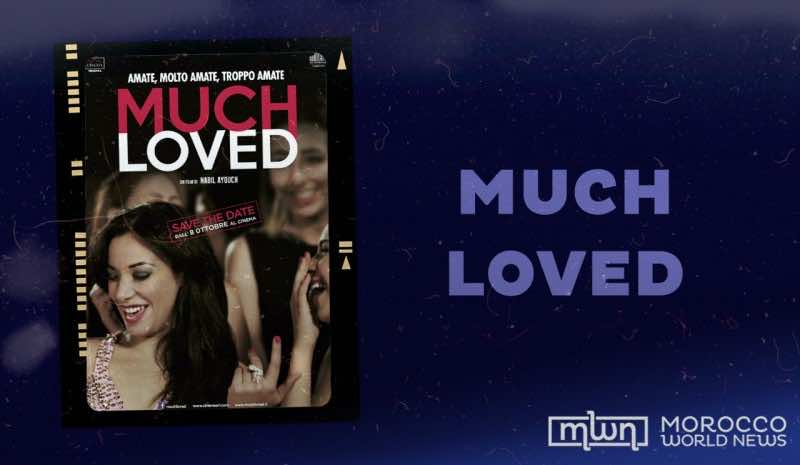
For example, the movie “Much Loved” by influential Moroccan filmmaker Nabil Ayouch was banned for nudity surrounding the topic of sex tourism in Marrakech. Bahmad believes that “Much Loved” would have been allowed before 2011, but not now because “the arrival of Islamists at the top of the government meant a lot of moral censorship.”
‘Not everybody can be like Ayouch’
However, films banned in Morocco are often encouraged internationally because the CCM supports cinema — through taxpayer money — for film diplomacy.
When people abroad watch “Much Loved” or “The Blue Caftan,” a film about sexuality directed by Ayouch’s wife Maryam Touzani, it is good for Morocco’s image on freedom of expression, human rights, and respecting multiculturalism, Bahmad said.
“It’s window dressing in a sense, a soft power that allows Morocco to have a better image for the European Union and the United States that care a lot about human rights.”
Bahmad explained that while Ayouch said filmmakers can make independent productions within the CCM system, he is one of a few who has achieved a level of fame such that he gets plenty of funding abroad and has no need for CCM money.
“Not everybody can be like Ayouch,” Bahmad said. “He can do whatever he wants, and even if his films get banned in Morocco sometimes, he’s fine with that. Nobody told Ayouch to appear before a judge or the actresses to go to jail.”
Due to the current climate, few independent filmmakers exist. One of them is Nadir Bouhmouch, who made underground cinema deliberately outside of the system, such as “My Makhzen and Me” on the pro-democracy February 20 Youth Movement, “475” on Article 475 of the Moroccan penal code that allows rapists to avoid jail if the attacker marries his victim, and “Amussu” on a powerful silver mine’s exploitation of the Imider village.
Without funding from CCM, Bouhmouch turned to other means such as crowdfunding, which in itself serves as a message against the film funding system.
Another form of independent cinema takes form in the Amazigh languages. Whereas before the 1990s filmmakers were not allowed to feature Amazighs or Moroccan Jews, the decade saw the emergence of completely independent Amazigh language films distributed via VHS tapes and DVDs.
After Morocco officially recognized the Amazigh language in 2011, more Amazigh films began to receive funding, but not as much as Arab-language films, Bahmad explained. Still, Amazigh filmmakers have some maneuvering space and freedom of expression that filmmakers in other arenas do not have.

‘There is no real diversity’
Beyond politics, the aesthetics of a movie calls for a different definition of independence.
Researcher at the Pantheon-Sorbonne University in Paris Mariam El Ajraoui, spoke to Morocco World News about the link between funding and a movie’s style.
Internationally-funded films tend to discuss social or political issues, which gives off an image of free expression. But El Ajraoui pointed out that while sponsors may claim to support independent and auteurist movies, they have a set idea and criterion, especially for movies from Morocco, Algeria, and the rest of Africa.
“The problem is when you compare all these movies [from the Arab countries], you will see that there is no real diversity,” she said. “These movies have the same themes because these are the subjects that interest the European funds: for example, women in the Arab world against patriarchy.”
Moreover, these movies share the same way of expressing their theme: the hero has a problem, a development, and eventually a solution of some sort — the classical way of storytelling found in Hollywood entertainment movies. The Oscar-shortlisted “The Blue Caftan,” for example, follows this blueprint.
These movies with easily-understood stories and aesthetics enjoy wider visibility when it comes to distribution because Morocco selects this type of movie for international festivals or awards.
“It’s always the same image and the same discourse, a story that people in Europe actually already know because it comes from colonial ideas about Morocco,” El Ajraoui said.

‘More independent in spirit’
For El Ajraoui, some CCM-funded movies are more “independent in spirit” than the internationally-funded ones.
Belabbes’s “Collapsed Walls” is one such movie. With no beginning, development, nor ending in the classic way, the movie is made of 18 seemingly disjoint storylines that intertwine. The audience may notice a small aspect of a character’s story for a few minutes and then never see it again.
El Ajraoui hopes that movies such as “Collapsed Walls” can gain a larger audience and recognition because there is an injustice against Morocco’s auteurist films — movies so artistically unique and expressive of its creator’s personality that one can often recognize the filmmaker without seeing the credits.

In its nonlinear form, “Collapsed Walls” does not seek to teach a lesson or present an image, but rather to evoke emotions.
“You feel the pain and joy and humanity of every character,” El Ajraoui said.
In the same way that humans portrayed in “Collapsed Walls” are Morocco in microcosm form, the movie itself is an epitome of Moroccan cinema’s complicated definition of independence.