 Join on WhatsApp
 Join on Telegram
Marrakech – As Morocco marks Youth Day on August 21, the country also celebrates the 61st birthday of His Majesty King Mohammed VI. This day holds special significance for Moroccans, serving as a moment to reflect on the King’s dedication to empowering youth and his visionary leadership over the past 25 years.
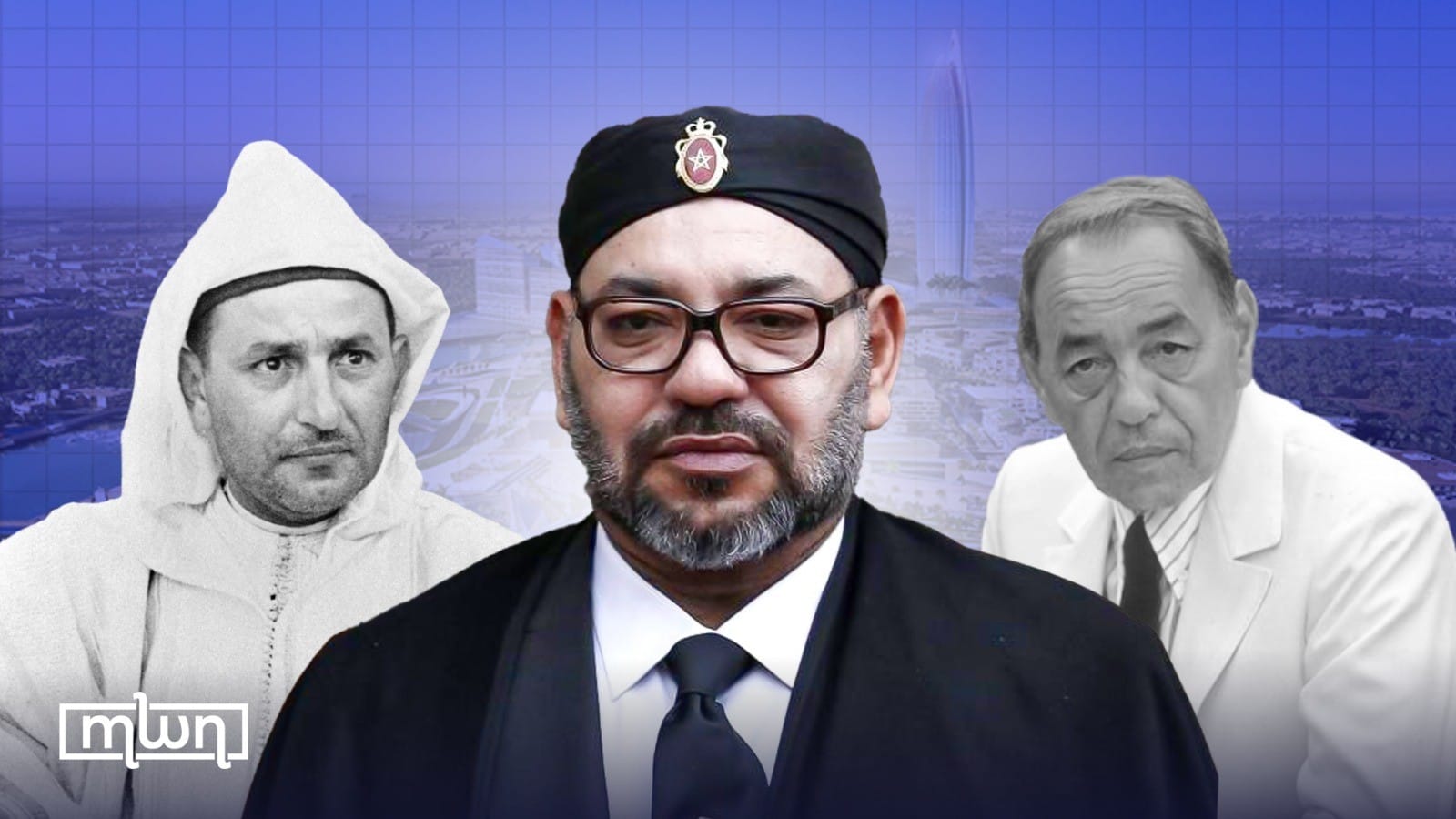
The history of Youth Day in Morocco traces back to July 1956, shortly after the country gained independence. The late King Mohammed V decided to celebrate the birthday of his heir, Moulay Hassan – the future King Hassan II – and declared it “Youth Day.”
This decision was a response to the desires of Moroccan youth themselves, who, as Ahmed Bensouda, former Director of the Royal Cabinet, recounts in “Dawat al-Haq” magazine, “came to ask and desire that the occasion of the birthday of His Highness the Crown Prince Moulay Hassan be the occasion in which the youth of independent Morocco gather in a great national celebration.”
King Mohammed V embraced this idea, wanting the day to be “a feast for all the youth, sharing the joy of his heir’s birthday with them, meeting with them on the level of mutual love and shared will.” As Bensouda notes, this “confirms the depth of that fatherly affection that Mohammed V had for the youth of his nation.”
The first Youth Day celebration in 1956 was a massive, jubilant national event. Over 2,500 young men and women gathered in an unprecedented national youth march in Rabat.
Read also: Youth Day: Celebrating Morocco’s Youth, King Mohammed VI’s Youthful Years
Bensouda, who was Secretary of State for Youth and Sports at the time, vividly describes the atmosphere: “The Moroccan youth were the vanguard of that joy and its bright, expressive face and exploding energy… that day was a day to remember in the annals of my life.”
“The crowds gathered, and groups of youth organizations lined up in different uniforms waiting for the moment to start the parade in front of the Crown Prince… the Crown Prince ascended the podium to that festive crowd… and the Moroccan flag was raised fluttering in the sky,” he added.
In a spontaneous speech that day, the future King Hassan II, then Crown Prince Moulay Hassan, “overflowed with the heart of a son with love and reverence for his father and patron and the patron of the nation’s youth, and overflowed with the heart of Moulay Hassan the resistance fighter and militant, and the heart of the young man bursting with enthusiasm and faith.”
Bensouda sees Youth Day 1956 as a profound moment of covenant between Moroccan youth and the monarchy. “The truth is that day, with its majesty, joy and greatness, was a day of covenant and commitment, the covenant of Moroccan youth to walk on the path of pure national ancestors, and a commitment to build this nation and protect it,” he writes.
He notes that the youth of 1956 went on to shoulder great responsibility in building the modern Moroccan state and rising to the challenges of the post-independence era.
Ahmed Boudhane, a member of the Supreme Council of Ulema, situates the emergence of Youth Day as a “modern holiday” in the context of the mid-20th century era of decolonization and national awakening across the world.
He argues that Morocco was a pioneer in establishing a holiday dedicated to youth, with King Mohammed V taking the initiative to transform the birthday of his heir into a national youth celebration.
Youth as a metaphor for national vigor and commitment to unity
Like Bensouda, Boudhane emphasizes how the name “Youth Day” carried rich symbolism, reflecting Morocco’s demographic youth, hopes for the future, and the dynamic energy of the young Crown Prince Moulay Hassan. He quotes a Moroccan poet to capture the spirit of the time: “Every difficulty is easy for youth / This is how the ambition of men is.”
Moreover, Boudhane suggests that Youth Day represents Moroccans’ recognition of the monarchy’s historical role in unifying the nation and preserving its identity.
He writes: “When we analyze this phenomenon of Moroccans expressing popularly and spontaneously their great joy in these Hassanian holidays, we find that it will not come randomly or be just a superficial tradition, but rather something much deeper than that, it is a kind of gratitude.”
Gratitude, Boudhane argues, for the Alaouite dynasty’s leadership in “uniting the ranks and unifying speech” over the centuries and through Morocco’s independence struggle.
For Boudhane, part of Youth Day’s significance stems from its association with key moments in Morocco’s modern history – the popular mobilization led by King Mohammed V against the French protectorate, the future King Hassan II’s role in the independence struggle and his post-independence leadership in building Moroccan democracy and national unity.
Youth Day has become a cherished tradition over the decades, a time for Morocco’s youth to express their love, loyalty, and commitment to the nation. It represents a sacred pact between the King and the country’s young generations to carry forward the legacy of their ancestors in building a modern Morocco.
Notably, the celebration of this occasion has evolved under King Mohammed VI’s reign, moving from July 9 under King Hassan II to August 21.
However, the holiday is no longer observed nationally after King Mohammed VI canceled the festivities in 2019, permanently discontinuing them. Despite the cessation of widespread celebrations, the holiday remains a significant part of the Kingdom’s history as one of its earliest and oldest celebrated occasions.
An occasion to reflect on King Mohammed VI’s achievements
Since ascending to the throne on July 23, 1999, King Mohammed VI has ushered in an era of significant political, economic, and social reforms. Often described as the “King of the Poor,” he has placed the well-being and advancement of his people at the heart of his vision for Morocco.
Under King Mohammed VI’s leadership, Morocco has pursued an ambitious agenda of economic modernization and diversification. Flagship projects like the Tanger-Med port have positioned Morocco as a regional hub for trade and investment. The King’s commitment to sustainable development is reflected in strategic reforms across various sectors.
Morocco’s foreign policy under King Mohammed VI has been characterized by a proactive and diversified approach, strengthening ties with traditional partners while deepening engagement with Africa.
The country has also made significant strides in resolving the Western Sahara issue, with its Autonomy Plan gaining recognition from major powers as a serious and credible basis for a resolution.
Empowering Moroccan youth
Throughout his reign, King Mohammed VI has placed youth at the forefront of Morocco’s development agenda. In his 2018 Throne Day speech, he emphasized “the necessity of placing youth issues at the heart of the new development model.”
The government has implemented numerous programs and initiatives to improve youth education, employability, and participation.
The government has targeted enhancements in youth education through reforms and investments aimed at improving the quality and accessibility of educational facilities and curricula.
This includes upgrading infrastructure in 1000 youth houses, training and camping centers, and child care centers.
Additionally, there is a push towards the qualification of education frameworks to ensure that young people are receiving education that is not only comprehensive but also modern and relevant to the evolving job market.
A key focus has been on increasing the employability of young Moroccans. Programs designed to incentivize self-employment in rural areas and create digital working spaces to promote telework are part of this effort.
In 2016, Morocco adopted the National Strategy for Vocational Training (2016-2021) as an integral part of the 2015-2030 strategic vision for reform recommended by the Higher Council for Education, Training and Scientific Research (CSEFRS).
This strategy aimed to ensure and guarantee education for all and life-long learning. It was initiated by signing program contracts with various VET operators.
The Cities of Professions and Skills project is establishing 12 regional training centers to equip youth with relevant professional skills.
These initiatives are complemented by targeted training programs aimed at aligning young people’s skills with the needs of the local and global economies, particularly through vocational training aimed at bridging the gap between education and employment.
The government also recognizes the importance of healthcare in ensuring the well-being of its youth. Efforts have been made to improve access to essential health services for young people across the country.
This includes expanding coverage and enhancing the quality of healthcare services, ensuring that young Moroccans have the physical and mental health support needed to contribute effectively to society.
Encouraging the active participation of youth in civic life is another pillar of the government’s strategy. This includes the creation of the Advisory Council of Youth and Community Action, which aims to give young people a formal voice in economic, social, and cultural policy-making.
By fostering a more inclusive environment for youth engagement, the government aims to empower young individuals to become proactive contributors to Morocco’s development.
According to the High Commission for Planning, Morocco is home to 5.9 million young people aged 15-24, representing 16.2% of the total population.
While challenges persist in terms of youth unemployment (31.8% for ages 15-24) and labor force participation, the government has intensified efforts to promote youth entrepreneurship, self-employment, and access to finance.
In his Throne Day speech on July 29, 2023, King Mohammed VI exalted the seriousness of Moroccan youth, noting their ability to amaze the world with their accomplishments when provided with the right conditions and opportunities.
He also highlighted their prowess in areas requiring creative genius and an innovative spirit—two powerful assets they possess in various fields.
He praised the production of the first locally-made Moroccan car, achieved through national competencies and Moroccan financing, as well as the presentation of the first prototype of a hydrogen-powered car developed by a young Moroccan.
The King noted that these projects bear witness to Moroccan genius and attest to the confidence placed in the intrinsic capabilities of Moroccan youth, thus encouraging them to redouble their inventiveness and creativity.
His unwavering commitment to empowering youth is further exemplified by the National Initiative for Human Development (INDH), launched in 2005 to combat poverty, vulnerability, and social exclusion.
In the third phase of the INDH, countless young Moroccans across the country have been given the opportunity to enter the world of entrepreneurship and become successful business owners, contributing to the nation’s multifaceted development efforts.
The INDH, through its philosophy, realism, and innovative approach, has enabled this segment of society to achieve financial independence – a dream cherished by many young people eager to become active entrepreneurs.
Looking to the future
As Morocco reflects on the progress and reforms achieved under King Mohammed VI’s leadership, the country looks to the future with optimism and determination. The King’s vision for a Morocco led by its youth, imbued with competence, creativity, and the values of true citizenship, serves as a guiding light for the country’s continued development.
While challenges remain, Morocco has demonstrated its resilience and capacity for transformation. With the leadership of King Mohammed VI and the energy and talent of its youth, Morocco is poised to achieve its aspirations as a democratic, economically vibrant, and socially just nation.
On this Youth Day, as Moroccans celebrate the 61st birthday of their King, they renew their commitment to the sacred pact between the monarchy and the people – to work hand in hand towards a brighter future for all.
“The greatest gift God has given me is the love of my people,” the late King Hassan II once said. King Mohammed VI has surely earned that love through his tireless dedication to the well-being and progress of his nation, especially its youth.