New York – “And say, the truth is from your Lord, so whoever wills – let him believe; and whoever wills – let him disbelieve.” Surah The Cave (Verse 29). “There shall be no compulsion in [acceptance of] the religion. The right course has become clear from the wrong.” Surah The Cow (Verse 256).
As the above Quran verses make abundantly clear, believing in Islam is based categorically and irrefutably on one’s free will; the truth has been provided for those who seek inquiry. As such, resorting to tautology in explaining the obvious is unnecessary. Individual freedoms are at the heart of Islamic teachings, which, since the dawn of Islam, strengthened, promoted and revered personal liberties of human beings and raised the status of women to full citizens worthy of respect and equality. One must distinguish between cultural norms and religious teachings, between regional specificities and ethnic peculiarities to objectively comprehend the diversity of Islamic philosophy. This variety of thought that has always been characteristic of Islam and Muslims everywhere mirrors the nuanced perceptions allowing the believers to lean towards one of the conservative, moderate or strict schools of thought. It also shows the inclusiveness of Islam as a social order inherently endowed with the precepts to solidify hybrid, intertwined societies within its realm.
With this in mind, we cannot deny the fact that Muslim societies are different from other societies in numerous aspects and have distinct life styles, priorities, ideologies, convictions, principles and schools of thought. And although Muslim societies share the same aspirations as all other societies for a better future and prosperity, security and good quality of life, Muslim societies maintain their distinct and unique identity. Sporadic attempts to copy other nations’ political, social, and cultural systems with the aim to replace our own denote an absence of maturity and are bound to fail because they are often built on illusions and produce unsustainable states of affairs.
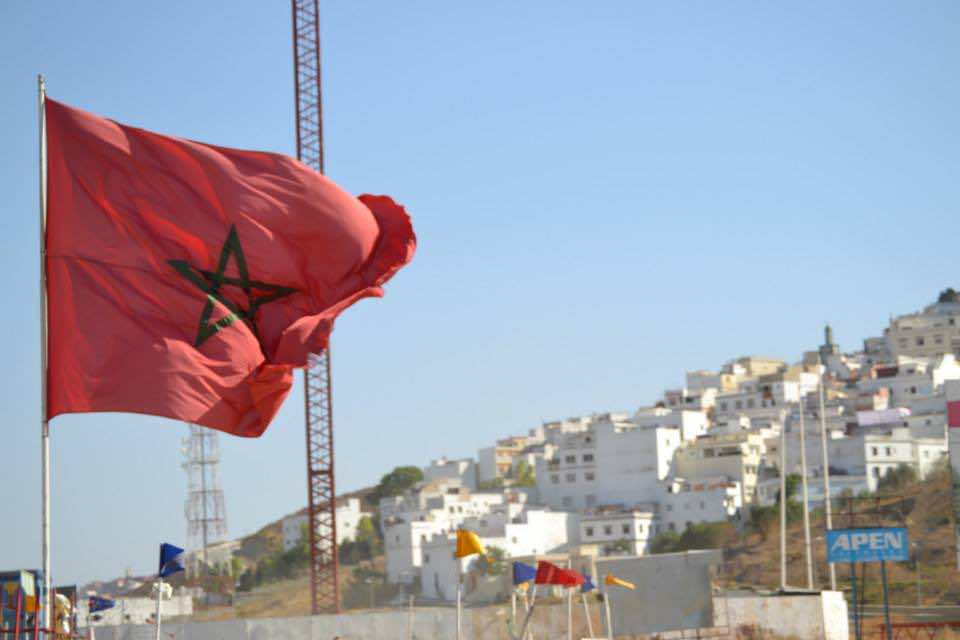
In this respect, Morocco is not a blank billboard for anyone to post on according to his or her moody endeavors. Rather, it is a deep-rooted society that bases its social contract on centuries old heritage. Morocco’s conventional wisdom as well as its jurisprudence are based on domestic institutional structures, native experiences, historical events and cultural evolution accentuated with religious beliefs and moral values specific to the Moroccan context.
Due to the fragmentary definition of the limits of freedom, coupled with a profound misunderstanding of secular/ conservative concepts, tackling these topics becomes an enterprise fraught with controversy.
Apparently, both liberal proponents of the expansion of freedoms and conservative proponents of a more traditional approach claim the ultimate truth. While people, in the developed world, strive to use reason and logic to contend ideas and refute concepts; the people in the developing world tend to resort to contempt, slander and incitement of hate as common aspects of dialogue, taking sometimes the form of personal confrontation that drains the principal topic of its essence. In the developed societies, there is respect for the rule of law while in developing societies people tend to breach the law for personal gains.
Some ponder the ethics upon which the Moroccan secular movement founded its logic to incessantly launch campaigns against the Moroccan penal code, precisely Article 222 and Article 490. They contend that for someone to give himself the right to judge society based on his own ideology is wrong and consider this to be hypocritical. They even claim that Morocco is under the attack of a perverse and insidious ideology disguised in the mask of modernism, liberalism and/or liberation. Thus, they believe that this increasing incitement to belittle Moroccan society and demonize its ethical tenets should not be understated. We should profoundly reflect upon this “unprecedented encroachment,” as traditionalists argue, on the social system to comprehend whether the abovementioned claims are legitimate concerns, or are false assumptions worthless of consideration.
Let us first understand what human rights activists and secular proponents stand for in a country smitten with numerous phenomena, including, but not limited to, corruption, rentier capitalism, social vulnerability, and a huge unbalance of wealth between the haves and have nots.
Khadija Ryadi, president of the Moroccan Association for Human Rights, calls on Morocco “to respect the ratification of international conventions of human rights and that these conventions should take precedence over national laws.” She continues: “the threat and accusation are ineffective to solve problems relating to children and women and freedom of young people who have bypassed the traditions of society,” calling for the repeal of Article 490 of the Penal Code because “sexual freedom is an individual right.”
Abdel Samad Dialmi, sociologist and university professor, declared that “sex between a man and a woman who are adults and based on consent and compatibility should not be considered a crime of [moral] corruption, because that is the heart of the individual liberties that must be guaranteed by law.” “We must live a sexual liberty with no restrictions on sex, because it is the largest value that we live to achieve, and is the basis of relationships and communication,” he continued.
Khadija Rouissi, president of House of Wisdom and a member of the Authenticity and Modernity Party said that “the law that prohibits Moroccans from the purchase and consumption of alcohol should be abolished, because this is a matter of individual freedom.”
Elmokhtar Laghzioui, editor-in-chief of the Moroccan daily Al Ahdath Al Mghribiya, said on a satellite television channel that he supports personal freedoms, especially sexual freedom, even in the case of one’s “mother or sister.”
People as those label themselves as the saviors of individual liberties and purport to defend the rights of the Moroccan population from what they consider as the anomalies of Moroccan laws. But the fact is that their choosing to defend certain rights over others and to bombard society with parochial causes that lay as an afterthought, if ever, of the citizens’ attention is not inconsequential or arbitrary. It reveals their bias and ideologically-driven motives. It also demonstrates their deep-rooted hypocrisy and double standard approach vis-à-vis public concerns.
Activism is an open field full of benign, legitimate causes to fight for. That is, to effectively achieve sustainable results, one has to know one’s priorities, abide by one’s ethical boundaries and respect one’s cultural heritage. Activists have to understand that rights consist of two categories: individual rights and collective rights, and that the former cannot be promoted and advanced at the expense of the latter.
Some ambitious people, who are driven by thirst for fame, know that all they have to do, nowadays, is to come up with shocking, ludicrous ideas and then, frame them within the scope of free speech and all the corresponding rhetoric that has lost vigor and meaning due to its extremely excessive manipulation under hidden agendas. Others, especially incompetent or opportunistic people who long for opportunity, know that they only need to defame Islam, issue collective judgments on Muslims and Islamic societies with abusive, insolent expressions to be hailed as stars and brave icons defending emancipation and modernization. In fact, one could have a psychological disorder, but instead of seeking therapy for his or her condition, he or she could hold responsible the social system for his condition, and therefore, destructively criticizes and smears it.
There are those who smartly use political polarization, religious provocation and collective incitement for long term personal gains. They usually accuse their opponents of being conspiracy theorists as though they themselves are angels of change. They systematically infiltrate the vibrant social, economic and political sectors, controlling decision making, affecting national policies and allocating huge resources to tame the masses into empty-headed herds. These are the demagogues, ideologues and the masterminds of creative anarchy. This neo-liberalism has built its philosophy on the residues of western peripheral beliefs. Sadly, instead of introducing real and effective modernization that targets the mind and construct unlimited boundaries for free thinking and sublime reasoning, they purposefully opt to pull Morocco back into the mud of cheap, consumed discourse.
This mishmash of notions stemmed from a flawed approach that casted its shadow on the viability of liberalism and secularism on conservative societies. Those notions are partly due to misreading of original theories of liberal premises by means of which the developed nations took the lead in science and technology. A blind imitation of foreign systemic institutions deliberately or not falls short of considering the stages those systems took to finally reach maturity. It can be blamed on globalization that affects weakly structured nations, whose approach to democracy and good governance is on the verge of transformation.
The inconsistent course pursued here is a false analysis of society that gave pertinence to social phenomena while neglecting to study the key causes to those phenomena. This is a structural flaw, which, in the absence of empirical research, emphasizes that prevalence of certain illegal and/or religiously unaccepted habits within society reflects a contradiction between principles and actions, and therefore concludes that society needs to come into conformity through agents of change.
One can also discern from the neo-liberals’ attitudes in dealing with human rights issues a perception of disdain towards society as a whole. Not to mention a tendency to use provocative language that pushes the emotional buttons of people. The fundamental error, as I see it, is the conviction that “whatever works for them will work for us”. In other words, if secularism works and if individual liberties can be achieved in France, for example, then ultimately, this system and those sets of freedoms can necessarily work in Morocco. This is not totally true, because Morocco is not France. We apparently have different historical trajectories and look at the truth through dissimilar lenses.
In addition, ratifying international human rights’ conventions is not tantamount to disposing of our own internal laws. We have the right to be different not only racially and culturally but also through creating our own binding laws that unite us together as a nation and protect our social fabric. Any rationale that negates a nation’s inalienable ability to be free as a sovereign country and deny its people the right to uphold their principal code of ethics is founded on a logic of exclusion and discrimination.
The top priorities of governments remain the protection of their societies’ general interests. International treaties come as a supplementary mechanism to reinforce national decrees with a view to enabling peoples to enjoy their fundamental freedoms. States parties are liable to respect the provisions set forth by these treaties and are simultaneously bound to adhere to their internal laws. Open multilateral treaties are supposed to be of great importance to the international community. They show the extent to which a state honors its obligations under international law.
It is clear that individual liberties are crucial to the functioning of a democratic system. The controversy lies in the interpretation of these sets of freedoms. Should personal liberty be restrained by society’s values and principles? Should the calculation of freedom stay immune from governmental and social institutions? I think it is crucial to understand the distinction between the right and the good, and to find common ground whereby we can promote the autonomy of the individual without neglecting the virtues, qualities and the moral obligations needed for a coherent society.
Adnane Bennis is co-founder and managing editor of Morocco World News. You can follow him on twitter @BennisAdnane
© Morocco World News. All Rights Reserved. This material may not be published, rewritten or redistributed