 Join on WhatsApp
 Join on Telegram
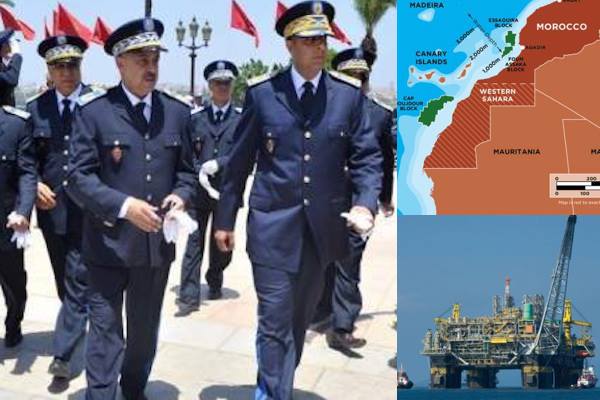
Luxembourg – On March 2, 2015, Kosmos Energy released a statement that its CB-1 exploration well, located in Cap Boujdour offshore of the Moroccan desert, tapped 46 feet of gas and condensate reservoirs. The discovery, however, did not amount to commercial and quality levels, and therefore the oil operator decided to plug and abandon the well.
That was, by no means, surprising news. It was just the latest in a string of failed attempts to usher Morocco into the league of oil-producing countries.
The eminent question that usually comes along with shortcomings of this kind is: Does oil represent a curse or a blessing? To reach a fair verdict, it is essential to look at the context that defines whether an oil boom is a catalyst to an economic turnaround or a set up for political decline.
Regardless of what the future is holding for Morocco in terms of an oil boom, and independently of how fragile or robust its political fabric is, pursuing security on the age of global insurgency, without breaching the rule of law, has proven itself to be a tricky one for secure and fragile democracies alike.
The country has recently been stripped of its title as ‘the exception’ in the MENA region and dragged into the war on terror with the Islamic State as a main counter-threat target. This will definitely bear its own implications and will forcefully pull the political climate of the country more towards the rules of engagement.
As in the case of the U.S., U.K. and the rest of Europe, Morocco will fight its threats on the ground the best way it can. We have been watching how counter-threat policies have triggered significant criticism from civil rights advocates in the cases of detainees held by the US at the Guantanamo base. There have been concerns about the treatment of defendants in terrorism trials and their full access to the judicial system, including the right to habeas corpus and legal representation. The legal spectrum in the U.S. seemed at some point to have granted carte blanche to law enforcement bodies.
Bearing in mind the relative novelty of this threat and how different judicial systems are trying to deal with it, Morocco will have its fair share of the issue. We will not, however, witness the same dilemmas experienced by the American system, given the incomparable rules of engagement between the two countries. All defendants in terrorism cases are being tried in civilian courts, partly because the majority of them are entirely Moroccan citizens or hold dual citizenships, primarily French or Belgian. Morocco has even been courted by France, Belgium, and the Netherlands to bolster judicial cooperation in order to speed up extradition processes and allow access to cases that cut across the security affairs of these countries. The main concern here is not the trials per se, but it is rather the risk of having the fight against terrorism as a ‘free ride’ against the rights of individuals and pinning cases à la carte, which could clip the wings of the undeniably significant headways that have been made in the aftermath of the Arab Spring.
Halted oil exploration and eventual production does not mean Morocco will be spared the evils of insurgents using oil revenues and ransom to finance their enterprise. It rather puts a moratorium on domestic tensions lurking to break out at any moment. Ask the U.S. or any major world power and they will tell you they would rather go blind than see a new pocket for another IS offshoot in the region and we have seen how oil and the urge to rule have been fueling one another in Iraq and Syria.
Morocco is remotely out of this calculus, but it has the separatist movement of Polisario as a ticking bomb on its southern borders. So far, tensions have not gone beyond assertions of territorial integrity on the Moroccan side and the right of secession on the Polisario’s. The CB-1 exploration well literally lies at the heart of this spectrum and it does not take a rocket scientist to connect the dots for what happens when oil rigs get up and running; suffice it to look at the two Sudans, Kurdistan, and most recently, the Houthis in Yemen.
Drawing on this picture, there has been a wide consensus that oil is a curse in certain contexts, including in so-called failed states and fragile democracies.
Oil per se is not a curse. It is the context in which it happens that defines whether it gears towards being a curse or a blessing. Consider the oil boom in the United States. The transition from being an importer to a rising exporter of natural gas has been happening smoothly and no lives have been taken militarily, nor does it seem to impoverish middle classes by strengthening the rich and well-off. And this is a success model that does not stand a chance in the aforementioned contexts. the current situation articulately speaks to that.
Therefore, it all comes down to the notion of rule of law and accountability. The U.S. has been navigating its oil boom smoothly but not corruption-free. In traditional democracies, corruption is amazingly opaque. It takes the form of awarding large contracts to businesses with political influence, selling political seats and the like. In aspiring democracies such as Morocco or any other country in the region, corruption is taking front stage for everyone to see. It is so imbedded in everyday life that so many practices are not even questioned anymore and this is not the biggest issue of all. The trouble resides in the type of accountability this issue is given. Rule of law without accountability is just a meaningless forgazi.
Consider U.S. policing, for instance. Everybody remembers Michael Brown, the unarmed teenager who was shot dead by police officer Darren Wilson in Ferguson, Missouri. A grand jury in that matter decided against indicting the police officer. On July 17, 2014, two weeks earlier in Staten Island, New York City, Eric Garner engaged in a confrontation with police officer Daniel Pantaleo who put an illegal chokehold that ultimately took Garner’s life. Again, the police officer was let free. The two incidents and their outcomes prompted protests that roiled the country for weeks and following stiff pressure from the public, things started taking a new turn. Walter Lamer Scott, 50, was stopped for having a broken rear light on his car in North Charleston, South Carolina. As he was running away, police officer Michael Slager shot him eight times from behind. Mr. Scott died on the spot and Mr. Slager was charged with murder. In another incident, Texas police officer Eric Casebolt threw a female teenager to the ground and pointed his gun at other teenagers during a pool party 911 call. The scene went viral and the officer resigned from the police force.
In other words, these instances indicate a positive trend in shifting from a ‘raw’ rule of law pattern to a system that has accountability at its core. Communities need to keep their faith in the rule of law by seeing law enforcement bodies held accountable for their actions and this is exactly the missing part in aspiring democracies. In Morocco, there have been a slew of amateur videos posted on Facebook of police officers taking bribes from truck drivers and informal transport workers in rural areas. After those footages overwhelmed the social media, police came hard on some of their accusers and that opens the question of accountability and rule of law wide open. The identities of these police officers have not been disclosed and there is no news of what has become of them. Later on, the King appointed Abdellatif Hammouchi to the top of the General Directorate for National Security. He started off his tenure by cracking down on top-level officials involved in cases of corruption and embezzlement. While people take serious offense in backstage corruption, they are not hurt nor do they directly benefit from having senior officials being ousted from their positions. Public eye would like to see ground-level reforms that give them a sense of ‘holding accountable’ the stewards of their communities, be they law enforcement individuals or business decision-makers.
This is Morocco’s milieu on the eve of a possible oil discovery and it foreshadows the likely trajectory once oil comes on stream as a revenue source. It could thus be said that having failed to reach viable volumes of gas at this critical point in time is a blessing. There have not been any major explorations in the Kingdom. Yet, few gulf countries are stepping in again to invest in reconnaissance operations, which level the field for Morocco to be an energy-producing country, without necessarily having to endure the evils of oil when geopolitics and domestic governance go awry.
© Morocco World News. All Rights Reserved. This material may not be published, rewritten or redistributed without permission.
The views expressed in this article are the author’s own and do not necessarily reflect Morocco World News’ editorial policy